How Gold Purity (18K, 20K, 22K, 24K) Directly Impacts the Assessed Value Per Gram You Receive?
Gold Purity
Gold Loans remain a widely used option for meeting short-term financial needs in India. While borrowers often focus on gold weight, purity plays a more decisive role in determining the final loan value. Lenders assess gold based on its actual gold content, not its design or appearance. Even small variations in karat value can materially affect the assessed value of gold and, in turn, the loan amount offered.
Regulatory guidelines require lenders to follow standardised valuation practices, including purity assessment and the use of recognised reference prices. Understanding how 18K, 20K, 22K, and 24K gold are valued helps borrowers estimate eligibility more accurately and compare offers more effectively.
What Gold Purity Represents?
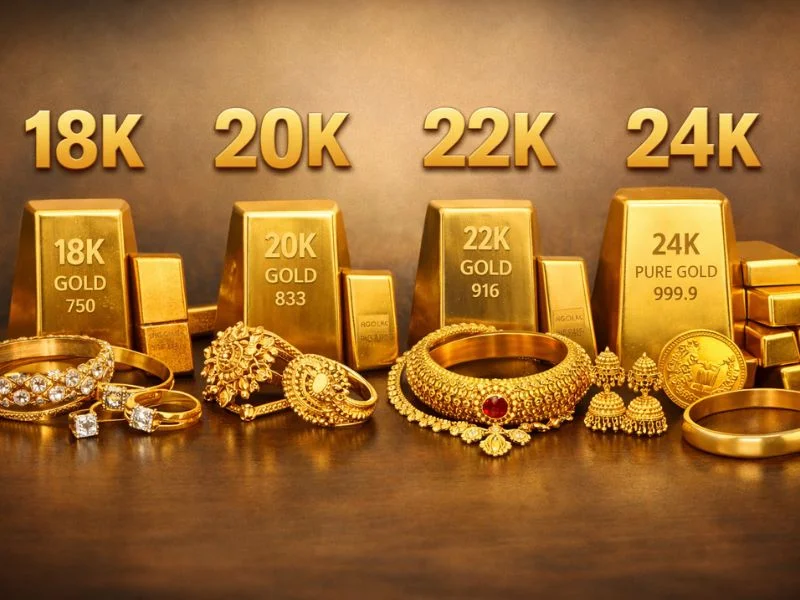
Gold purity refers to the proportion of pure gold present in an ornament or article. Karat values express this proportion clearly.
- 24K gold: approximately 99.9 per cent pure (rare in ornaments)
- 22K gold: approximately 91.6 per cent pure
- 20K gold: approximately 83.3 per cent pure
- 18K gold: approximately 75 per cent pure
The remaining portion consists of other metals added for durability. These alloys may strengthen jewellery but reduce the intrinsic gold value. Since valuation is based on the actual gold content, higher purity results in a higher assessed value for the pledged gold.
Why Lenders Rely On Purity-Based Valuation?
Lenders follow regulated valuation standards to ensure transparency and consistency. They cannot rely on retail jewellery prices or estimated market premiums. Valuation considers:
- Actual purity confirmed through assaying
- Net gold weight after deductions
- Reference prices published by authorised bodies
This approach ensures that every borrower receives a fair and standardised assessment, regardless of ornament type or design.
How Is The Assessed Value Per Gram Calculated?
The Gold Loan per gram depends on purity and reference pricing. Regulatory norms require lenders to use the lower of the following:
- The average closing price of that purity over the previous 30 days
- The closing price of that purity on the previous day
If an exact price for a specific purity is unavailable, lenders may adjust the nearest available purity price proportionally.
Impact Of Purity On Gold Loan Per Gram
Purity directly affects how much value lenders assign to each gram. For example:
- 1 gram of 24K gold equals nearly 1 gram of pure gold
- 1 gram of 22K = 0.9167 grams pure gold (22/24)
- 1 gram of 18K gold equals only 0.75 grams of pure gold
Even when two ornaments weigh the same, higher purity results in a higher Gold Loan per gram. This adjustment occurs before the Loan Value limits are applied.
Understanding Different Purity Categories
The following are the different purity categories of gold to consider :
18K gold
18K gold is common in studded and designer jewellery. Valuation impact:
- Lower intrinsic gold content
- Lower per-gram value
- Greater deductions during assaying
Borrowers pledging 18K jewellery may receive lower loan amounts despite similar weight.
20K gold
20K gold offers a balance between durability and purity. Valuation impact:
- Higher gold content than 18K
- Moderate improvement in Gold Loan per gram
This category may appear frequently in older ornaments.
22K gold
22K gold dominates traditional Indian jewellery. Valuation impact:
- High purity
- Strong per gram valuation
- Consistent acceptance across lenders
Several borrowers may achieve better eligibility with 22K ornaments.
24K gold
24K gold contains the highest gold content. Valuation impact:
- Maximum intrinsic value per gram
- Highest base valuation before LTV limits
- Limited use in ornaments due to softness
Although purity is highest, acceptance depends on regulatory eligibility.
Why Stones And Making Charges Do Not Add Value?
Many borrowers assume gemstones or craftsmanship increase loan value. Regulations clearly exclude these components. Valuation considers:
- Only the intrinsic gold content
- Net weight after removing stones and attachments
- No value for design or workmanship
This rule protects borrowers from subjective assessments and ensures uniform valuation.
How Assaying Protects Borrower Interests?
Assaying confirms:
- Purity in carats
- Gross and net gold weight
- Deductions for non-gold elements
This process happens in the borrower’s presence. Lenders issue a detailed certificate documenting every aspect. This transparency ensures borrowers understand how purity affects the Gold Loan per gram.
Purity And Interest Rate Considerations
Purity does not directly determine interest rates. However, it affects the loan amount, which changes the overall borrowing impact. Borrowers often compare offers based on a better Gold Loan interest rate. This approach can be misleading without valuation clarity. Important points to remember:
- Better purity can increase loan eligibility
- Larger eligible amounts can improve flexibility
- Comparing only a better Gold Loan interest rate ignores valuation differences
A complete comparison considers both rate and purity-based valuation.
Common Borrower Misconceptions
Borrowers often believe:
- Heavier jewellery assures higher loans
- Decorative value improves valuation
- All gold receives the same assessed value per gram
In reality, purity remains an influential factor in valuation.
Practical Checklist Before Pledging Gold
Before pledging the gold, borrowers should:
- Check the karat markings carefully
- Ask how purity affects valuation
- Understand deductions before final approval
- Compare the valuation alongside a better Gold Loan interest rate
These steps prevent surprises later.
Conclusion
Gold purity directly shapes how lenders calculate value per gram. While weight matters, purity determines how much of that weight qualifies as pure gold. Higher karat gold results in a better Gold Loan per gram, subject to regulated pricing and Loan-to-Value limits. Borrowers who understand purity-based valuation can assess offers more accurately and avoid misleading comparisons. Instead of focusing solely on a better Gold Loan interest rate, evaluating purity, valuation methods, and regulatory limits provides a clearer, more practical understanding of borrowing potential.
About The Author