Advanced PVDF Ball Valve for Precision Flow Regulation
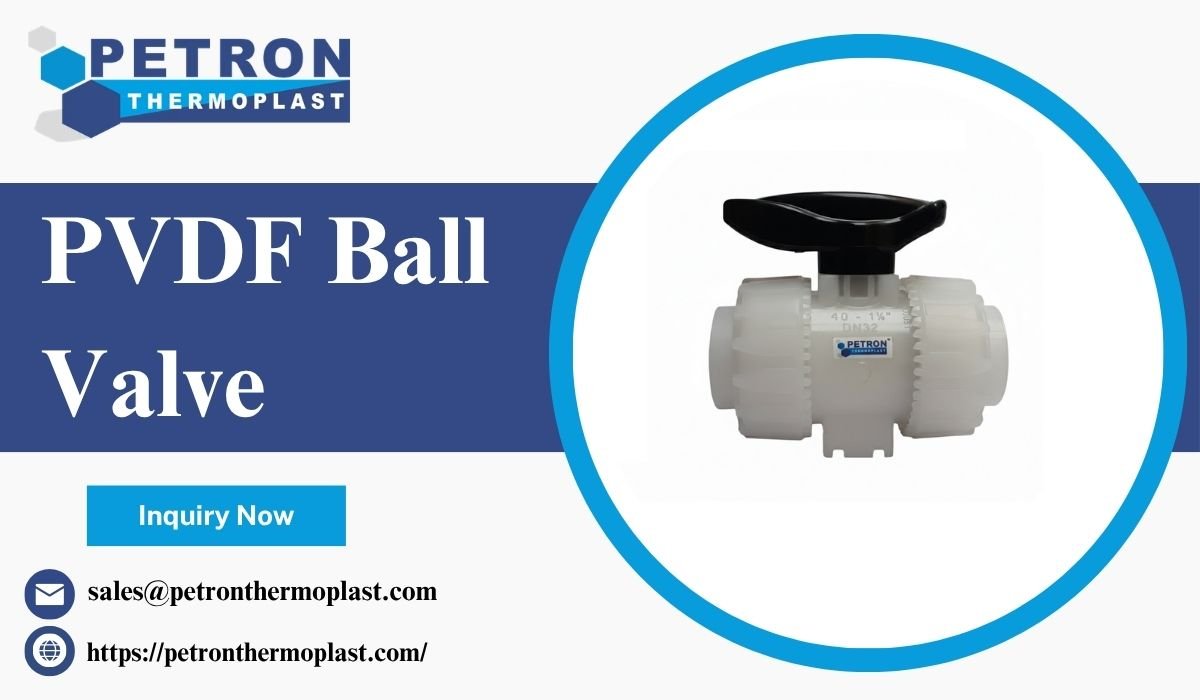
Polyvinylidene fluoride (PVDF) ball valves are engineered for high-performance flow control in industrial systems where chemical resistance, thermal stability, and operational precision are critical. These valves are widely used in chemical processing, pharmaceutical production, semiconductor manufacturing, and water treatment systems. An advanced PVDF ball valve designed for precision flow regulation ensures accurate control, minimal leakage, and long-term reliability under demanding operating conditions.
Overview of PVDF Material
PVDF is a high-performance fluoropolymer known for its exceptional resistance to aggressive chemicals and elevated temperatures. Its semi-crystalline structure provides a unique combination of mechanical strength and chemical stability.
Key Material Properties
- Density: 1.75 – 1.78 g/cm³
- Tensile Strength: 40 – 55 MPa
- Operating Temperature Range: -40°C to +140°C
- Melting Point: ~170°C
- Thermal Conductivity: ~0.19 W/m·K
- Excellent resistance to acids, halogens, and oxidizing agents
These characteristics make PVDF an ideal material for manufacturing valves used in corrosive and high-purity environments.
Design and Working Principle of PVDF Ball Valves
A PVDF ball valve operates using a spherical closure element (ball) with a bore through its center. Rotation of the ball by 90 degrees allows or blocks fluid flow.
Key Components
- Valve Body (PVDF construction)
- Ball (precision machined for smooth rotation)
- Seats (typically PTFE for tight sealing)
- Stem (transmits torque from handle or actuator)
- Seals and O-rings
Working Mechanism
- Open Position: Bore aligned with pipeline, allowing full flow
- Closed Position: Bore perpendicular to pipeline, stopping flow
Precision machining ensures minimal friction and accurate positioning, enabling fine flow regulation.
Advanced Features for Precision Flow Regulation
- Tight Sealing Performance
- PTFE or modified fluoropolymer seats
- Low leakage rates
- Bubble-tight shutoff capability
- Low Torque Operation
- Smooth surface finish of ball and seats
- Reduced operational effort
- Suitable for manual and automated systems
- Full Bore Design
- Unrestricted flow path
- Minimal pressure drop
- High flow efficiency
- Chemical Compatibility
- Resistant to strong acids, solvents, and oxidizers
- Suitable for highly corrosive process fluids
- Thermal Stability
- Maintains performance at elevated temperatures up to 140°C
- Minimal deformation under thermal stress
Types of PVDF Ball Valves
Manual PVDF Ball Valves
- Operated using lever handles
- Suitable for simple on/off control
Actuated PVDF Ball Valves
- Equipped with electric or pneumatic actuators
- Enables remote and automated operation
Double Union Ball Valves
- Easy removal and maintenance
- Ideal for systems requiring frequent servicing
True Union Ball Valves
- Allows disassembly without disturbing pipeline alignment
Manufacturing and Quality Control
Advanced PVDF ball valves are produced using precision molding and machining processes combined with strict quality control protocols.
Manufacturing Steps
- Material Selection
- Use of high-grade virgin PVDF resin
- Controlled additives for enhanced performance
- Injection Molding / Machining
- High-precision molds for valve body
- CNC machining for ball and internal components
- Assembly
- Integration of seals, seats, and stem
- Torque calibration for smooth operation
- Testing and Inspection
- Hydrostatic pressure testing
- Leak testing under operational conditions
- Dimensional verification
Standards Compliance
- ISO 9001: Quality Management
- ASTM standards for PVDF materials
- DIN and EN standards for valve design
Industrial Applications
Chemical Processing Plants
Used for handling aggressive chemicals, acids, and solvents with high safety and reliability.
Water and Wastewater Treatment
Suitable for dosing systems, filtration units, and distribution pipelines.
Semiconductor Industry
Preferred for high-purity chemical delivery systems due to low contamination risk.
Pharmaceutical Industry
Ensures precise flow control in sterile and cleanroom environments.
Oil and Gas Sector
Used in auxiliary systems handling corrosive fluids and chemicals.
Advantages Over Conventional Valve Materials
| Parameter | PVDF Ball Valve | PVC / Metal Valves |
| Chemical Resistance | Excellent | Moderate |
| Temperature Resistance | Up to 140°C | Lower |
| Corrosion Resistance | Excellent | Requires coating |
| Weight | Lightweight | Heavy |
| Maintenance | Low | Moderate to High |
Installation Guidelines
- Ensure proper alignment with pipeline
- Use compatible fittings and sealing materials
- Avoid over-tightening to prevent stress
- Verify pressure and temperature ratings before installation
Jointing Methods
- Threaded connections (BSP/NPT)
- Socket welding
- Flanged connections
Proper installation ensures leak-proof performance and extended service life.
Maintenance and Serviceability
PVDF ball valves are designed for low maintenance and long-term operation.
Maintenance Practices
- Periodic inspection of seals and seats
- Cleaning to prevent debris accumulation
- Lubrication of moving parts if required
Service Advantages
- Replaceable internal components
- Easy disassembly in union-type valves
- Minimal downtime during servicing
Automation and Control Integration
Advanced PVDF ball valves can be integrated with automation systems for precise control.
Automation Features
- Electric actuators for controlled positioning
- Pneumatic actuators for rapid operation
- Position indicators and feedback systems
These features enable accurate flow regulation in complex industrial processes.
Lifecycle Performance and Reliability
PVDF ball valves are engineered for extended service life in harsh environments.
Performance Benefits
- Resistance to chemical degradation
- Stability under cyclic thermal conditions
- Reduced wear and tear
- Consistent sealing performance
This results in lower maintenance costs and improved system reliability.
Customization Options
Manufacturers offer customized PVDF ball valves to meet specific industrial requirements:
- Size range: From small bore to large diameter valves
- Pressure ratings: PN10, PN16, or higher
- Special seat materials for enhanced sealing
- Custom actuation systems
Sustainability and Environmental Benefits
- Long service life reduces material replacement
- Recyclable thermoplastic material
- Reduced need for chemical coatings
- Lower environmental impact compared to metal valves
Conclusion
Advanced PVDF ball valves for precision flow regulation provide a technically superior solution for industries requiring accurate, reliable, and corrosion-resistant flow control. With exceptional chemical resistance, high thermal stability, and precision-engineered components, these valves ensure optimal performance in demanding applications.
By combining advanced material properties, strict quality control, and compatibility with automation systems, PVDF ball valves deliver efficient fluid management, reduced maintenance, and long-term operational reliability across a wide range of industrial sectors.
About The Author