

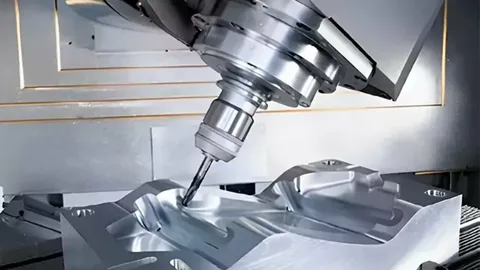
Semiconductor manufacturing is one of the most precision-driven industries in the world, where even microscopic errors can lead to product failure. Semiconductor CNC machining plays a crucial role in producing high-accuracy components used in chips, wafers, and microelectronic systems. However, this field comes with significant technical challenges that demand advanced solutions and continuous innovation.
Below is a detailed look at the key challenges and practical solutions in semiconductor CNC machining processes.
Extreme Precision and Micron-Level Tolerances
Semiconductor components require machining accuracy at micron and even sub-micron levels. Achieving such precision with CNC systems is extremely difficult due to machine limitations, vibration, and tool wear. Even a slight deviation can compromise the performance of semiconductor devices.
In semiconductor CNC machining, maintaining dimensional accuracy is a constant challenge, especially when working with ultra-small and delicate parts. Thermal expansion of machine components and environmental fluctuations further complicate the process.
Key challenges:
- Maintaining sub-micron tolerances consistently
- Machine vibration affecting precision
- Tool wear impacting accuracy over time
- Environmental temperature fluctuations
To overcome these issues, manufacturers implement high-end CNC systems with advanced feedback controls and ultra-stable machine bases.
Solutions include:
- Use of ultra-precision CNC machines with closed-loop control
- Temperature-controlled manufacturing environments
- Regular tool calibration and replacement schedules
- Vibration dampening systems and isolation tables
Material Sensitivity and Fragility
Semiconductor materials such as silicon wafers, gallium arsenide, and specialized ceramics are extremely fragile. During machining, even minimal mechanical stress can cause cracking or structural damage.
The challenge in semiconductor CNC machining is to process these materials without introducing microfractures or surface defects. Traditional machining forces are often too aggressive for these sensitive materials.
Key challenges:
- High brittleness of semiconductor materials
- Risk of micro-cracks during cutting
- Surface damage affecting electrical performance
- Limited tolerance for mechanical stress
To address this, manufacturers use non-traditional machining techniques combined with CNC precision control.
Solutions include:
- Ultra-low force cutting tools
- Laser-assisted CNC machining methods
- Diamond-coated tools for reduced friction
- Advanced coolant systems to minimize heat stress
Heat Generation and Thermal Deformation
Heat generation during machining is a major concern in semiconductor CNC machining. Even slight temperature increases can cause thermal expansion, leading to dimensional inaccuracies in components.
Semiconductor parts are highly sensitive to heat, and excessive thermal exposure can permanently damage their structural and electrical properties. This makes thermal management a critical aspect of the machining process.
Key challenges:
- Heat buildup during high-speed machining
- Thermal expansion affecting tolerances
- Damage to heat-sensitive semiconductor materials
- Uneven temperature distribution in machines
Without proper control, heat can significantly reduce yield quality and increase production costs.
Solutions include:
- Advanced coolant and cryogenic machining techniques
- Real-time temperature monitoring systems
- Low-heat cutting strategies and optimized spindle speeds
- Thermally stable machine tool materials
Tool Wear and Process Consistency
Tool wear is a persistent issue in semiconductor CNC machining due to the hardness and abrasiveness of materials used. As tools degrade, machining accuracy decreases, leading to inconsistent output quality.
Maintaining process consistency is essential in semiconductor production, where batch uniformity is critical. Frequent tool replacement increases costs and downtime, making it a significant operational challenge.
Key challenges:
- Rapid tool wear during high-precision machining
- Inconsistent surface finish quality
- Increased production downtime
- Higher operational costs due to tool replacement
To ensure consistent performance, manufacturers must carefully monitor tool conditions throughout the machining cycle.
Solutions include:
- Use of diamond or carbide-coated cutting tools
- Predictive maintenance using AI-based monitoring
- Automated tool wear detection systems
- Optimized cutting speeds and feed rates
Cleanroom Compatibility and Contamination Control
Semiconductor manufacturing requires ultra-clean environments, as even microscopic particles can contaminate components and lead to failure. Integrating CNC machining systems into cleanroom environments presents unique challenges.
Semiconductor CNC machining must be performed in conditions where dust, oil, and airborne particles are strictly controlled. Machine lubrication, tool debris, and external contamination are major concerns.
Key challenges:
- Maintaining ISO-class cleanroom standards
- Preventing particle contamination during machining
- Lubricant and coolant residue control
- Machine integration within sterile environments
Even minor contamination can render semiconductor components unusable, making strict control essential.
Solutions include:
- Enclosed CNC machining systems for cleanrooms
- Dry or minimal-lubrication machining techniques
- HEPA and ULPA filtration systems
- Regular cleanroom certification and monitoring
Conclusion
The semiconductor industry depends heavily on precision manufacturing technologies, and semiconductor CNC machining is at the heart of this process. However, achieving the required levels of accuracy, cleanliness, and consistency comes with significant challenges, including extreme tolerances, material fragility, heat management, tool wear, and contamination control.
Despite these difficulties, continuous advancements in CNC technology, automation, AI-driven monitoring, and specialized machining techniques are providing effective solutions. As the demand for smaller, faster, and more efficient semiconductor devices continues to grow, CNC machining will remain a critical enabler of innovation in the global electronics industry.
By addressing these challenges with modern engineering solutions, manufacturers can ensure higher productivity, improved quality, and long-term sustainability in semiconductor production.





















Leave a Reply