

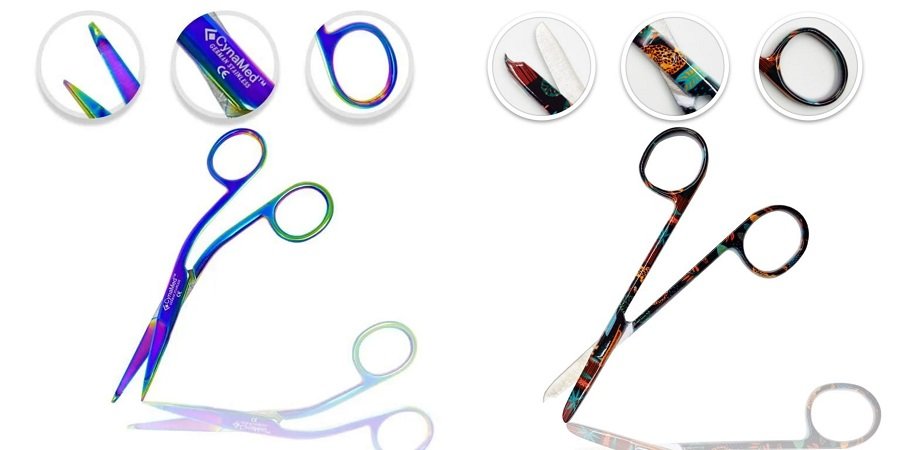
Wound closure gets clinical attention. Suture removal gets treated as the straightforward part that follows — a quick procedure, minimal skill required, any scissors will do. That assumption produces patient discomfort, wound disruption, and complications at the final stage of a healing process that went well up until that point.
Suture removal scissors designed specifically for this procedure solve problems that general-purpose scissors create consistently when applied to suture removal — and understanding why the design difference matters changes how clinicians approach instrument selection for this specific task.
What Makes Littauer Suture Removal Scissors the Clinical Standard
The Littauer design represents one of the most widely recognised suture removal instrument configurations in clinical practice, and the features that define it reflect specific functional requirements rather than arbitrary design decisions.
The hooked lower blade tip characterises Littauer suture removal scissors across every manufacturer producing this pattern. That hook slides beneath the suture knot and lifts it away from the skin surface before the cutting action begins — which means the blade cuts the suture material itself rather than dragging it through tissue as straight-bladed scissors require when used for the same purpose.
That distinction matters considerably for patient experience and wound integrity. Dragging suture material through a healing wound track pulls contaminated external suture through tissue that has closed around it — a mechanism that introduces bacteria along the suture path and causes discomfort disproportionate to what the procedure should involve at this healing stage.
The hook elevates, the blade cuts cleanly at the skin surface, and the suture pulls free without dragging through tissue. That sequence produces a faster, cleaner, more comfortable removal than any improvised alternative manages consistently.
How Suture Removal Scissors Design Affects Patient Outcomes
Blade sharpness at the hook tip determines how cleanly the instrument cuts through suture material without requiring multiple attempts or sawing motions that disturb the wound edges. A dull tip that compresses rather than cuts the suture before severing it applies traction to the wound edges during what should be a tension-free procedure.
Blade length suits close work in areas where access is limited — facial sutures, sutures placed in skin folds, and sutures in anatomical areas where surrounding tissue limits instrument approach angles. Shorter, precisely controlled blades allow accurate placement in these areas without the risk of inadvertent tissue contact that longer general scissors carry in confined spaces.
Handle design determines how steadily the instrument sits in the hand during the controlled movements that suture removal requires. A procedure that looks simple from a distance involves precise placement, controlled lifting, and accurate cutting at a specific point along the suture — movements that reward ergonomic handle geometry and penalise instruments that require grip compensation to position accurately.
Choosing Between Reusable and Disposable Suture Removal Scissors
High-volume wound care environments sometimes favour disposable suture removal scissors for specific protocol contexts — infection control requirements, single-use procedure packs, or clinical areas where instrument reprocessing logistics create compliance complications.
Reusable instrument-grade scissors suit general clinical environments where sterilisation infrastructure supports regular instrument cycling and the cost-per-use economics favour quality reusable instruments over disposable alternatives across a full clinical year.
Cynamed supplies Littauer suture removal scissors and suture removal scissors across reusable and disposable configurations — instrument-grade stainless steel construction, precision hook geometry, and handle ergonomics built for the close, controlled work that suture removal requires across busy clinical environments.
The final stage of wound management deserves the same instrument quality attention as the closure that preceded it. Suture removal scissors chosen for clinical performance rather than purchase price complete the healing process cleanly — which is the outcome both clinician and patient invested the preceding weeks working toward.





















Leave a Reply