Why Choose a Vertical Laminar Flow Hood for Clean Air?
Maintaining a clean, particle-free workspace is essential when you work with sensitive materials, sterile samples, or precision components. Even microscopic airborne contaminants can compromise research, manufacturing, and quality control. If your work requires consistent protection from airborne particles, you need equipment designed to deliver reliable clean airflow.
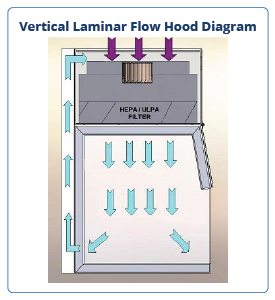
A vertical laminar flow hood creates a controlled environment by directing HEPA-filtered air downward over your workspace. This continuous stream of clean air helps reduce contamination and supports accurate, repeatable processes across laboratories, electronics manufacturing, pharmaceutical facilities, medical device production, and research environments.
What Is a Vertical Laminar Flow Hood?
A vertical laminar flow hood is a clean air workstation that uses a high-efficiency particulate air (HEPA) filter to remove airborne contaminants before delivering purified air vertically from the top of the cabinet toward the work surface.
Unlike turbulent airflow, vertical laminar airflow moves in parallel layers, minimizing particle circulation within the workspace. This controlled airflow helps protect samples, instruments, and products from contamination while maintaining a clean working environment.
Although these systems protect your work, they are not intended to protect the operator from hazardous chemicals or biohazards. Understanding the intended application ensures optimal performance and workplace safety.
Why Vertical Airflow Matters
Choosing the right airflow direction can significantly impact cleanliness and operational efficiency.
Vertical airflow offers several advantages:
- Directs filtered air downward across the work area.
- Reduces the chance of airborne particles settling on sensitive materials.
- Creates consistent airflow throughout the cabinet.
- Minimizes turbulence around equipment.
- Supports cleaner production and laboratory processes.
Because the airflow exits through the front opening after passing over the work surface, contaminants generated outside the cabinet are less likely to interfere with your work.
Benefits of Using a Vertical Laminar Flow Hood
Superior Clean Air Performance
Your primary goal is maintaining product quality. A vertical laminar flow hood continuously supplies HEPA-filtered air that removes most airborne particles before they reach your work.
This controlled environment improves cleanliness during:
- Sample preparation
- Sterile assembly
- Optical inspection
- Electronics manufacturing
- Medical device production
- Laboratory testing
Cleaner air often leads to fewer rejected products and more reliable results.
Protect Sensitive Products
Many laboratory materials and electronic components are highly susceptible to contamination.
Using a vertical laminar flow hood helps protect:
- Laboratory cultures
- Optical components
- Semiconductor parts
- Precision instruments
- Pharmaceutical products
- Medical devices
Maintaining a particle-controlled environment helps preserve product integrity throughout your workflow.
Excellent Workspace Visibility
Vertical laminar flow hoods typically feature an open-front design that provides clear visibility and comfortable access.
You can perform delicate procedures with greater confidence while maintaining an unobstructed view of your work area.
Improved visibility also supports better precision during repetitive laboratory tasks.
Efficient Air Distribution
One of the biggest strengths of vertical airflow is its uniform air distribution.
Instead of creating uneven airflow patterns, filtered air moves consistently across the workspace, helping reduce stagnant air pockets where particles could accumulate.
This consistency supports dependable cleanroom practices.
Industries That Benefit from Vertical Laminar Flow Hoods
You can use these systems in numerous industries that require contamination control.
Common applications include:
- Pharmaceutical manufacturing
- Biotechnology laboratories
- University research
- Medical device production
- Electronics assembly
- Aerospace component manufacturing
- Food quality testing
- Optical equipment production
Any process requiring clean, particle-controlled air can benefit from vertical laminar airflow.
How to Choose the Right Vertical Laminar Flow Hood
Not every laboratory has identical requirements. Selecting the right model depends on your workflow and available space.
Consider these factors before purchasing:
Workspace Size
Choose a hood large enough to accommodate your equipment while allowing unrestricted airflow around your materials.
Overcrowding the work surface can disrupt airflow performance.
HEPA Filtration Efficiency
High-quality HEPA filters capture extremely small airborne particles, supporting cleaner operating conditions and longer filter life.
Construction Materials
Stainless steel interiors provide excellent durability, corrosion resistance, and easy cleaning, making them suitable for demanding laboratory environments.
Lighting
Proper LED lighting improves visibility while reducing eye strain during extended work sessions.
Noise Level
A quieter blower system creates a more comfortable work environment, especially for laboratories operating throughout the day.
Best Practices for Maximum Performance
Proper operation helps maintain clean airflow and extends equipment life.
Follow these recommendations:
- Clean the work surface before and after use.
- Allow the blower to operate before beginning work.
- Avoid blocking front or rear airflow.
- Keep materials organized.
- Limit unnecessary movement inside the hood.
- Replace filters according to manufacturer recommendations.
- Schedule routine inspections and maintenance.
These simple practices help maintain consistent clean air performance.
Why Equipment Quality Makes a Difference
A laminar flow hood is a long-term investment in product quality and operational efficiency.
High-quality equipment delivers:
- Reliable airflow
- Durable construction
- Consistent filtration
- Lower maintenance requirements
- Improved operational confidence
If you’re looking for a high-performance free-standing vertical laminar flow hood for advanced laboratory contamination control, explore the Vertical Laminar Flow Hood solutions designed for demanding clean air applications.
You can also discover additional laboratory equipment and cleanroom solutions from CleaTech LLC, a trusted manufacturer serving laboratories, research facilities, and industrial environments.
If you need expert guidance selecting the right clean air workstation for your application, Contact us today to discuss your laboratory requirements with experienced specialists.
Conclusion
Choosing a vertical laminar flow hood is one of the most effective ways to improve contamination control for sensitive laboratory and manufacturing applications. Its downward HEPA-filtered airflow helps maintain a consistently clean workspace, protecting valuable samples, components, and finished products.
By selecting the right hood, following proper operating procedures, and investing in quality equipment, you can improve productivity, reduce contamination risks, and support reliable results across a wide range of clean air applications.
Frequently Asked Questions
What is a vertical laminar flow hood used for?
A vertical laminar flow hood provides HEPA-filtered clean air to protect sensitive samples, products, and components from airborne contamination during laboratory and manufacturing processes.
How does a vertical laminar flow hood work?
It draws room air through a HEPA filter and directs purified air vertically downward across the work surface in a uniform laminar airflow pattern.
Is a vertical laminar flow hood suitable for handling hazardous chemicals?
No. A vertical laminar flow hood protects the product, not the user. Hazardous chemicals require an appropriate laboratory fume hood or other containment equipment.
Which industries commonly use vertical laminar flow hoods?
Pharmaceuticals, biotechnology, electronics manufacturing, medical device production, aerospace, research laboratories, and optical industries commonly use these clean air workstations.
How often should a vertical laminar flow hood be maintained?
You should inspect airflow regularly, clean the workspace after each use, and replace HEPA filters according to manufacturer recommendations and operational requirements.
About The Author