Advanced PVDF Pipe Fittings for High Purity Process Piping
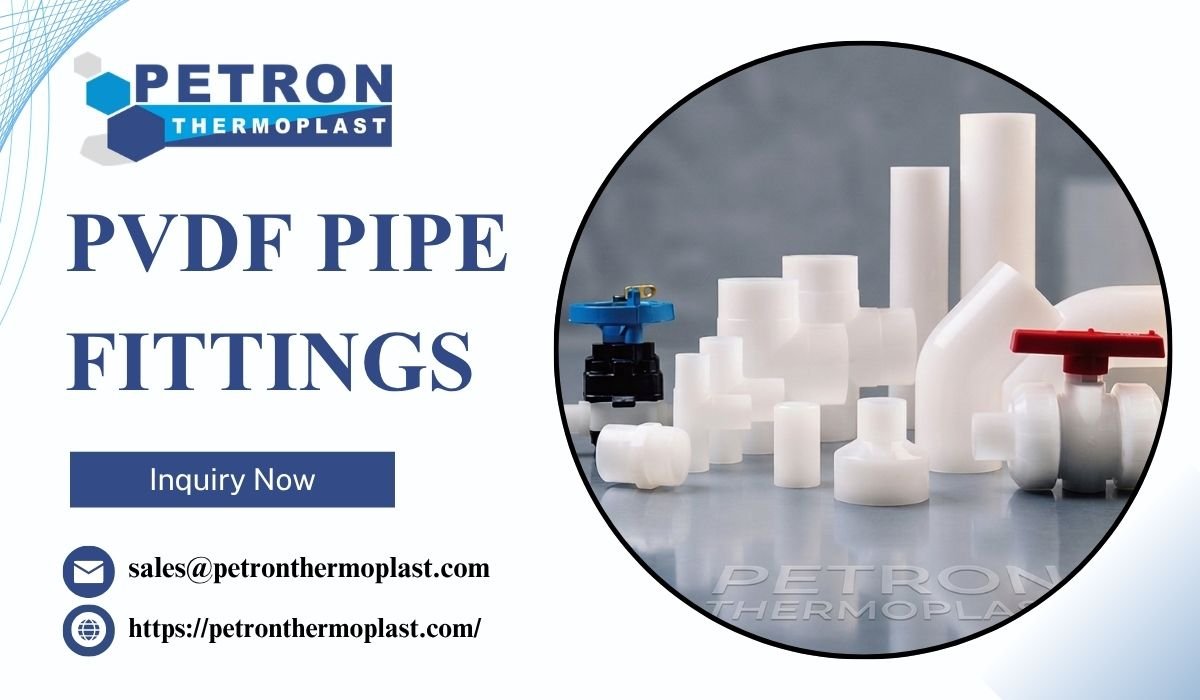
PVDF Pipe Fittings
High purity process piping systems require advanced materials capable of delivering exceptional chemical resistance, thermal stability, structural integrity, and contamination-free fluid handling. Among modern thermoplastic materials, PVDF pipe fittings have become one of the most reliable solutions for critical industrial applications where process purity and corrosion resistance are essential.
At Petron Thermoplast, advanced PVDF pipe fittings are manufactured for high purity process piping systems used across semiconductor, pharmaceutical, chemical processing, biotechnology, and water treatment industries. These fittings are engineered to maintain fluid purity while delivering long-term performance in highly aggressive operating environments.
What are PVDF Pipe Fittings?
PVDF stands for Polyvinylidene Fluoride, a high-performance fluoropolymer known for its outstanding resistance to chemicals, heat, UV radiation, and mechanical stress. PVDF pipe fittings are used to connect, divert, regulate, and terminate fluid flow within high purity piping systems.
These fittings are widely used in industries handling:
- Ultra-pure water
- Aggressive acids
- High-purity chemicals
- Solvents
- Corrosive process fluids
- Semiconductor-grade media
PVDF fittings are available in multiple configurations including:
- Elbows
- Tees
- Reducers
- Couplers
- Flanges
- Unions
- End caps
- Stub ends
- Adapters
- Socket fittings
The material’s superior purity characteristics and chemical stability make PVDF one of the most preferred materials for advanced process piping systems.
Importance of High Purity Process Piping
High purity industries require piping systems that prevent contamination, maintain chemical integrity, and ensure reliable fluid transportation. Even small levels of contamination can affect production quality, process accuracy, and product safety.
Traditional metallic piping systems often suffer from:
- Corrosion
- Particle generation
- Scaling
- Chemical degradation
- Metal ion contamination
PVDF pipe fittings eliminate these challenges by offering:
- Non-reactive surfaces
- High chemical resistance
- Smooth internal finish
- Low extractable properties
- Excellent purity retention
This makes PVDF ideal for applications where contamination control is critical.
Key Features of Advanced PVDF Pipe Fittings
Excellent Chemical Resistance
PVDF pipe fittings provide exceptional resistance against aggressive acids, alkalis, solvents, oxidizing agents, and corrosive chemicals. The material maintains structural integrity even under harsh chemical exposure.
High Purity Performance
PVDF exhibits low leaching and minimal contamination characteristics, making it suitable for ultra-clean fluid handling systems.
Superior Thermal Stability
PVDF can withstand elevated temperatures compared to conventional thermoplastics such as UPVC and PP. This allows reliable operation in high-temperature process environments.
Outstanding Mechanical Strength
The material offers high tensile strength, impact resistance, and dimensional stability under pressure conditions.
UV and Weather Resistance
PVDF demonstrates excellent resistance against ultraviolet radiation and environmental degradation, making it suitable for both indoor and outdoor installations.
Smooth Internal Surface
The smooth bore surface reduces particle accumulation, scaling, and pressure losses while improving fluid flow efficiency.
Long Service Life
PVDF fittings deliver long operational lifespan due to their superior resistance to corrosion, wear, and chemical attack.
Technical Specifications of PVDF Pipe Fittings
Petron Thermoplast manufactures industrial-grade PVDF pipe fittings according to international standards for critical process piping applications.
Standard Technical Parameters
| Parameter | Specification |
| Material | PVDF |
| Size Range | 20 mm to 315 mm |
| Pressure Rating | PN10 / PN16 |
| Temperature Range | Up to 140°C |
| Jointing Method | Socket Fusion / Butt Fusion / Flanged |
| Color | Natural / White |
| Standards | ASTM, DIN, ISO |
| Applications | High Purity Chemicals, Acids, Ultra-Pure Water |
Types of PVDF Pipe Fittings
PVDF Elbows
Used to change the direction of flow while maintaining smooth fluid transfer and minimal pressure loss.
PVDF Tees
Provide branch connections within process piping systems for fluid distribution applications.
PVDF Reducers
Connect different pipe sizes while maintaining flow efficiency and system stability.
PVDF Couplers
Used for joining two PVDF pipes securely with leak-proof performance.
PVDF Flanges
Enable easy dismantling and maintenance of industrial piping systems.
PVDF Unions
Allow quick removal and servicing of piping components without disturbing the entire pipeline system.
Industrial Applications of PVDF Pipe Fittings
Semiconductor Industries
Semiconductor manufacturing requires ultra-clean piping systems capable of handling high-purity chemicals without contamination. PVDF fittings are extensively used for ultrapure water and chemical distribution systems.
Pharmaceutical Industries
Pharmaceutical processing facilities use PVDF piping systems to maintain hygienic and contamination-free fluid handling.
Chemical Processing Plants
PVDF pipe fittings are ideal for transporting corrosive acids, solvents, and aggressive chemicals under demanding operating conditions.
Biotechnology Facilities
Biotech applications require chemically stable and high-purity piping systems to maintain process integrity.
Water Treatment Systems
Advanced water purification plants use PVDF systems for ultrapure water transportation and chemical dosing applications.
Solar and Electronics Manufacturing
High-purity fluid systems used in electronics and photovoltaic manufacturing rely on PVDF piping solutions for contamination-free operations.
Advantages of PVDF Over Conventional Materials
Better Chemical Resistance than UPVC
PVDF can handle more aggressive chemicals and higher temperatures compared to UPVC systems.
Higher Thermal Stability
The material maintains structural performance at elevated temperatures where standard thermoplastics may fail.
Lower Contamination Risk
PVDF provides excellent purity characteristics suitable for cleanroom and critical processing environments.
Superior UV Resistance
Unlike several thermoplastics, PVDF retains long-term stability under sunlight exposure.
Improved Mechanical Properties
The material offers enhanced impact resistance and pressure-handling capability for demanding industrial operations.
Factors to Consider While Selecting PVDF Pipe Fittings
Chemical Compatibility
Always verify compatibility between process chemicals and PVDF material for long-term operational reliability.
Temperature Conditions
Evaluate operating temperatures to ensure system performance within material limitations.
Pressure Requirements
Select appropriate pressure ratings according to process pipeline conditions.
Purity Requirements
High purity applications require fittings manufactured under controlled production standards.
Installation Method
Choose suitable fusion welding or flanged systems depending on operational and maintenance requirements.
Why Industries Choose Petron Thermoplast PVDF Pipe Fittings?
Petron Thermoplast supplies premium-quality PVDF pipe fittings engineered for high purity industrial applications. The company focuses on delivering precision-manufactured thermoplastic piping products designed for chemical resistance, purity retention, and long service life.
Advantages Offered by Petron Thermoplast
- High-performance PVDF raw materials
- Precision-engineered manufacturing
- Excellent dimensional stability
- High purity production standards
- Reliable fusion welding compatibility
- Corrosion-resistant construction
- Wide product range availability
- Technical support for industrial projects
The company also manufactures and supplies:
- PVDF Pipes
- UPVC Pipe Fittings
- CPVC Valves
- PPH Piping Systems
- HDPE Pipes and Fittings
- Industrial Thermoplastic Valves
- Chemical Storage Tanks
Installation and Maintenance Guidelines
Proper installation is essential for maintaining system purity and long-term piping performance.
Recommended Installation Practices
- Maintain clean installation environments
- Use approved fusion welding procedures
- Prevent contamination during assembly
- Ensure proper pipeline support spacing
- Perform leak and pressure testing before commissioning
Maintenance Recommendations
- Inspect joints periodically
- Monitor pressure and temperature conditions
- Clean piping systems using compatible procedures
- Replace damaged fittings immediately
- Maintain proper chemical compatibility records
PVDF piping systems generally require minimal maintenance due to their excellent corrosion resistance and chemical stability.
Future Demand for PVDF Process Piping Systems
Industries are increasingly shifting toward high-performance fluoropolymer piping systems because of growing demands for process purity, corrosion resistance, and operational reliability. Expansion in semiconductor manufacturing, pharmaceutical production, and advanced chemical processing continues to drive the demand for PVDF pipe fittings worldwide.
Modern industrial facilities require piping systems capable of supporting automated, contamination-free, and high-efficiency operations, making PVDF an important material for future industrial infrastructure.
Conclusion
Advanced PVDF pipe fittings provide reliable solutions for high purity process piping applications requiring exceptional chemical resistance, thermal stability, and contamination-free fluid handling. Their superior performance characteristics make them highly suitable for critical industries including semiconductor, pharmaceutical, biotechnology, and chemical processing sectors.
Petron Thermoplast manufactures advanced PVDF pipe fittings designed for demanding industrial environments where purity, durability, and long-term operational reliability are essential. With extensive expertise in thermoplastic piping systems, the company delivers high-performance solutions for modern industrial process applications.
About The Author