

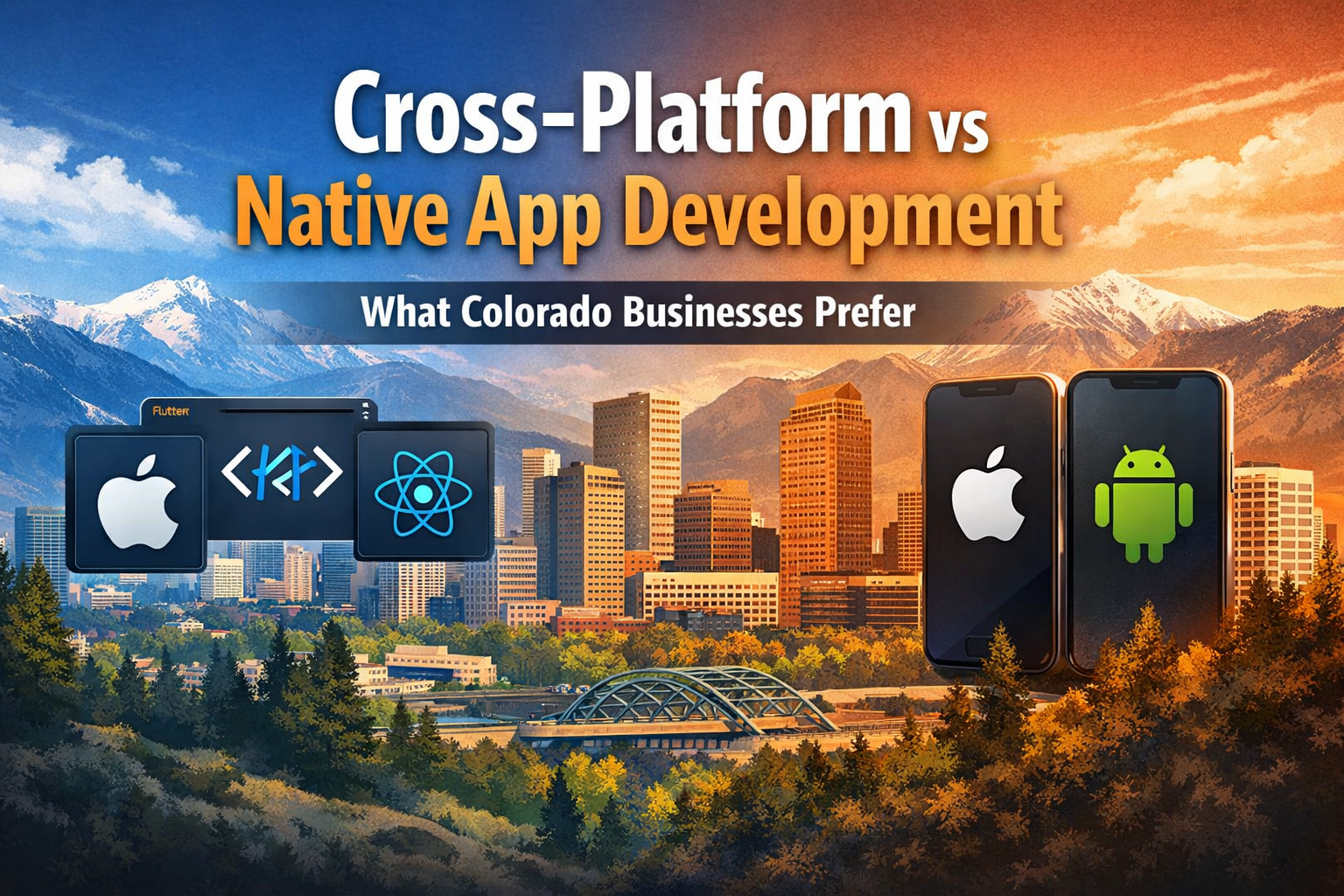
In today’s digital-first economy, businesses across Colorado—from startups in Boulder to enterprises in Denver—are investing heavily in mobile applications to enhance customer engagement and streamline operations. One of the most critical decisions in this journey is choosing between cross-platform and native app development.
Both approaches have their advantages, and the choice largely depends on business goals, budget, timeline, and user expectations. In this blog, we’ll explore the differences, benefits, and what Colorado businesses truly prefer when working with a mobile app development company in Colorado.
Understanding Native App Development
Native app development involves building applications specifically for a single platform, such as iOS or Android, using platform-specific programming languages.
- iOS apps: Swift or Objective-C
- Android apps: Kotlin or Java
Advantages of Native Apps
1. High Performance
Native apps are optimized for their specific platforms, resulting in faster performance and smoother user experiences.
2. Better User Experience
They follow platform-specific design guidelines, making them more intuitive for users.
3. Full Access to Device Features
Native apps can seamlessly integrate with device hardware like GPS, camera, and sensors.
4. Enhanced Security
With platform-specific security features, native apps offer better protection for sensitive data.
Limitations of Native Apps
- Higher development cost
- Separate codebases for iOS and Android
- Longer development time
Understanding Cross-Platform App Development
Cross-platform app development allows developers to create a single codebase that runs on multiple platforms like iOS and Android. Technologies like Flutter, React Native, and Xamarin are commonly used.
A reliable cross platform app development company can help businesses build scalable apps faster without compromising much on performance.
Advantages of Cross-Platform Apps
1. Cost Efficiency
A single codebase reduces development and maintenance costs.
2. Faster Time to Market
Businesses can launch their apps quickly across multiple platforms.
3. Easier Maintenance
Updates and bug fixes can be implemented simultaneously for all platforms.
4. Wider Audience Reach
Apps can target both Android and iOS users from day one.
Limitations of Cross-Platform Apps
- Slightly lower performance compared to native apps
- Limited access to some device-specific features
- Dependency on third-party frameworks
Cross-Platform vs Native: Key Differences
| Factor | Native App Development | Cross-Platform Development |
|---|---|---|
| Performance | High | Moderate to High |
| Development Cost | Expensive | Cost-effective |
| Time to Market | Longer | Faster |
| User Experience | Superior | Good |
| Code Reusability | No | Yes |
| Maintenance | Complex | Easier |
What Colorado Businesses Prefer
Colorado’s business ecosystem is diverse, ranging from tech startups and SaaS companies to healthcare and fintech firms. Their preferences vary based on specific needs.
1. Startups Prefer Cross-Platform Development
Startups in cities like Denver and Boulder often operate with limited budgets and tight timelines. For them, working with a cross platform app development company is a practical choice.
Why?
- Lower development costs
- Faster MVP launch
- Ability to test ideas quickly
Cross-platform development helps startups validate their concepts before investing heavily in native solutions.
2. Enterprises Lean Towards Native Apps
Large organizations and enterprises in Colorado prioritize performance, security, and scalability. They often choose native app development.
Reasons include:
- High-performance requirements
- Complex functionalities
- Enhanced data security
A trusted mobile app development company in Colorado typically recommends native development for enterprise-grade applications.
3. SMEs Choose a Hybrid Approach
Small and medium-sized businesses often adopt a mix of both approaches. They may start with cross-platform development and later transition to native apps as their business grows.
Industry-Wise Preferences in Colorado
Healthcare Industry
Healthcare apps require high security and compliance (HIPAA). Native development is often preferred due to better control over data security.
Fintech Sector
Financial applications demand robust performance and secure transactions. Native apps are usually the first choice.
E-commerce & Retail
E-commerce businesses often prefer cross-platform apps to reach a wider audience quickly.
Travel & Hospitality
Cross-platform apps are popular due to their cost-effectiveness and faster deployment.
Cost Comparison: Cross-Platform vs Native
The cost of development is a major factor influencing business decisions.
Native App Development Cost
- $40,000 – $150,000+ per platform
Cross-Platform App Development Cost
- $25,000 – $80,000 (for both platforms combined)
Working with a mobile app development company in Colorado ensures accurate cost estimation based on project requirements.
Performance Considerations
Performance is often a deciding factor when choosing between the two approaches.
- Native Apps: Ideal for gaming, AR/VR, and heavy applications
- Cross-Platform Apps: Suitable for business apps, e-commerce, and content-based platforms
Modern frameworks like Flutter have significantly improved cross-platform performance, narrowing the gap with native apps.
Time to Market: A Critical Factor
In competitive markets, speed matters.
- Cross-platform apps can be developed 30–40% faster
- Native apps take longer due to separate development processes
For startups and businesses looking to launch quickly, cross-platform is often the preferred choice.
Role of a Mobile App Development Company in Colorado
Choosing the right development partner is crucial for project success.
A professional mobile app development company in Colorado helps businesses:
- Analyze project requirements
- Choose the right development approach
- Ensure compliance with industry standards
- Deliver scalable and secure solutions
They also provide post-launch support and maintenance services.
When to Choose Cross-Platform Development
You should consider cross-platform development if:
- You have a limited budget
- You need a faster launch
- Your app doesn’t require heavy processing
- You want to target both platforms simultaneously
A skilled cross platform app development company can help you achieve these goals efficiently.
When to Choose Native Development
Native development is ideal when:
- Performance is a top priority
- Your app requires advanced features
- You need high security
- You’re building a complex or large-scale app
Future Trends in App Development
1. Rise of Cross-Platform Frameworks
Technologies like Flutter and React Native are becoming more powerful.
2. AI Integration
Apps are increasingly incorporating AI for personalization and automation.
3. 5G Technology
Faster networks will enhance app performance and capabilities.
4. Progressive Web Apps (PWAs)
An alternative approach gaining popularity among businesses.
Final Thoughts
The debate between cross-platform and native app development doesn’t have a one-size-fits-all answer. It ultimately depends on your business goals, budget, and technical requirements.
- Startups and SMEs in Colorado often prefer cross-platform development for its cost-effectiveness and speed.
- Enterprises lean towards native development for superior performance and security.
Partnering with the right mobile app development company in Colorado ensures that you make the best decision for your business.
Whether you choose native or cross-platform, the key is to focus on delivering a seamless user experience and long-term scalability.
FAQs
1. Which is better: cross-platform or native app development?
It depends on your requirements. Cross-platform is cost-effective, while native offers better performance.
2. Is cross-platform development suitable for startups?
Yes, startups prefer it due to lower costs and faster development.
3. Do native apps perform better than cross-platform apps?
Yes, native apps generally offer superior performance.
4. How much does app development cost in Colorado?
Costs range from $25,000 to $150,000+ depending on complexity and approach.
5. Can I switch from cross-platform to native later?
Yes, many businesses start with cross-platform and later transition to native apps.
6. Which industries prefer native apps?
Healthcare, fintech, and gaming industries typically prefer native development.
7. Are cross-platform apps secure?
Yes, with proper development practices, they can be highly secure.
8. How long does it take to develop a mobile app?
Cross-platform apps take 3–6 months, while native apps may take 6–12 months.




























Leave a Reply