White Diesel Uses in Construction & Transport
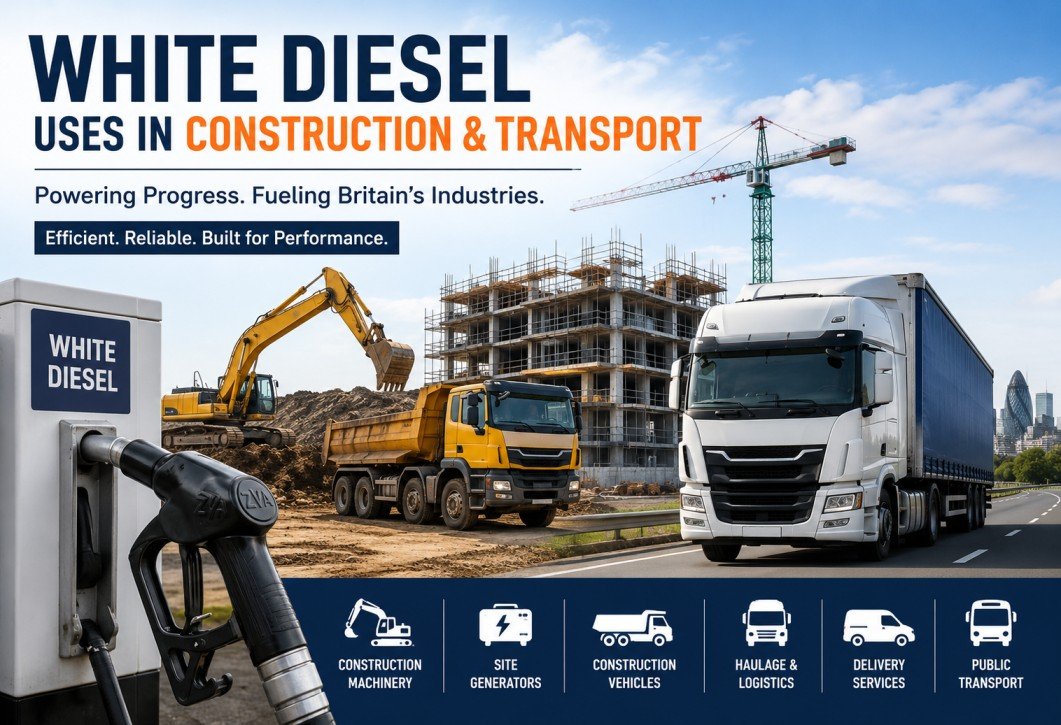
White diesel plays a major role in powering the United Kingdom’s construction, transport, logistics, and commercial industries. From heavy-duty construction equipment to delivery vans travelling across British motorways, DERV remains one of the most widely used fuels because of its efficiency, reliability, and performance under demanding working conditions.
As fuel regulations and environmental standards continue to evolve in the UK, businesses are increasingly looking for practical fuel solutions that balance operational performance with compliance. DERV continues to meet those expectations across multiple sectors.
This article explores the uses of white diesel in construction and transport, why it is preferred in commercial operations, and how businesses across the UK benefit from its performance.
What Is White Diesel or DERV?
White diesel, also known as road diesel or DERV (Diesel Engine Road Vehicle fuel), is the standard diesel fuel sold at UK petrol stations and commercial fuel depots. It is used primarily in vehicles and machinery that operate on public roads.
Unlike red diesel, which is taxed at a reduced rate for specific off-road applications, DERV carries the full UK fuel duty and is legally required for most transport and commercial road operations.
DERV is refined to strict quality standards, offering:
- High energy efficiency
- Cleaner combustion
- Improved engine protection
- Better cold-weather performance
- Reduced sulphur emissions
Its versatility makes it essential in both construction projects and transport fleets throughout the United Kingdom.
White Diesel Uses in Construction Industry
The construction sector relies heavily on diesel-powered machinery because of the high torque, durability, and fuel efficiency diesel engines provide. DERV is particularly important when construction vehicles or equipment are used on public roads or in mixed-use operations.
White Diesel for Construction Vehicles
Many construction companies use DERV for vehicles that regularly travel between sites across the UK. These include:
- Tipper trucks
- Concrete mixers
- Mobile cranes
- Flatbed lorries
- Site transport vans
- Utility vehicles
Because these vehicles operate on public roads, UK regulations require them to use DERV rather than rebated fuels.
Construction firms prefer DERV because it provides dependable engine performance during long working hours and heavy-load transportation.
White Diesel in Road Construction Projects
Road construction and infrastructure projects often involve a combination of off-road machinery and on-road transport equipment.
DERV is commonly used for:
- Asphalt transport trucks
- Highway maintenance vehicles
- Material delivery fleets
- Road sweeping vehicles
- Mobile repair units
Its clean-burning properties help reduce engine wear during continuous operations, which is especially important for large infrastructure contractors working on motorways, city roads, and public developments.
White Diesel for Construction Generators
Temporary power generation is critical on UK construction sites. DERV is frequently used in diesel generators powering:
- Lighting systems
- Site offices
- Security systems
- Water pumps
- Electric tools and machinery
Construction companies choose DERV generators because they provide stable power output and excellent fuel economy, particularly for long-duration projects.
Why Construction Companies Choose White Diesel
Several factors make DERV a preferred fuel in the construction sector:
Reliable Performance
Construction environments demand durable machinery capable of operating in challenging weather and rough conditions. DERV engines deliver consistent power even under extreme workloads.
Better Fuel Efficiency
Diesel engines generally consume less fuel compared to petrol engines for heavy-duty operations. This helps construction firms lower operating costs.
High Torque for Heavy Machinery
DERV engines generate strong pulling power, making them suitable for transporting heavy materials and operating construction equipment.
Improved Engine Longevity
Modern DERV formulations include additives that reduce engine deposits and improve lubrication, helping extend equipment lifespan.
White Diesel Uses in Transport Industry
The UK transport and logistics sector depends heavily on DERV to keep goods moving efficiently nationwide.
From local delivery vans to long-haul freight vehicles, DERV remains the backbone of commercial transportation.
White Diesel for Haulage and Logistics
Logistics companies use DERV in:
- HGVs (Heavy Goods Vehicles)
- Freight lorries
- Refrigerated trucks
- Distribution fleets
- Long-distance transport vehicles
Diesel engines are ideal for long motorway journeys because they offer superior fuel economy and durability over extended distances.
For businesses managing large transport fleets, fuel efficiency directly impacts profitability. DERV helps reduce fuel consumption while maintaining operational reliability.
White Diesel in Public Transport
Public transport systems across the UK also rely on DERV for many vehicles, including:
- Coaches
- Buses
- Airport shuttle services
- Community transport vehicles
Modern diesel-powered buses are designed to meet strict UK emissions standards while delivering dependable service for urban and regional travel.
White Diesel for Delivery Services
The rise of e-commerce and same-day delivery services has significantly increased demand for reliable commercial transport.
DERV powers:
- Courier vans
- Parcel delivery fleets
- Retail supply vehicles
- Food distribution transport
- Warehouse logistics vehicles
Many delivery businesses prefer diesel vehicles because they perform efficiently during high-mileage daily operations.
White Diesel in Agricultural Transport
While agricultural machinery may use different fuel categories depending on regulations, transport vehicles connected to farming operations often rely on DERV.
Examples include:
- Livestock transport trucks
- Produce delivery vehicles
- Farm supply transport vans
- Agricultural logistics fleets
This ensures legal road compliance while maintaining reliable transport across rural UK regions.
Benefits of DERV in Construction & Transport
Excellent Fuel Economy
DERV engines are designed for long operational hours and lower fuel consumption. This makes them highly cost-effective for businesses operating fleets or heavy equipment.
Strong Engine Performance
Diesel-powered vehicles deliver high torque, which is essential for carrying heavy loads, towing equipment, and maintaining stable performance on steep roads or rough terrain.
Durability for Commercial Use
Construction and transport industries require machinery that can withstand constant use. DERV engines are known for their long service life and reliability.
Better for Long-Distance Travel
For transport operators covering hundreds of miles daily, DERV offers improved mileage and reduced refuelling frequency.
Compliance with UK Road Fuel Regulations
DERV ensures businesses remain compliant with UK fuel taxation and transport laws for road-going vehicles.
Using the correct fuel is essential to avoid penalties, inspections, and operational disruptions.
Environmental Considerations of DERV
Modern derv in the UK contains ultra-low sulphur levels designed to reduce harmful emissions compared to older diesel formulations.
Many newer diesel engines also include advanced technologies such as:
- Diesel particulate filters (DPF)
- AdBlue systems
- Selective catalytic reduction (SCR)
- Improved fuel injection systems
These technologies help reduce nitrogen oxide emissions and improve overall fuel efficiency.
Although the UK continues investing in greener transport solutions, DERV remains a practical energy source for industries requiring heavy-duty power and long operational capability.
Future of White Diesel in the UK
The future of DERV will likely involve cleaner fuel technologies, improved engine efficiency, and hybrid commercial systems.
However, sectors such as:
- Construction
- Freight transport
- Infrastructure development
- Long-distance logistics
will continue depending on diesel-powered operations for the foreseeable future because of their demanding energy requirements.
Businesses are also adopting modern fleet management systems and fuel-efficient vehicles to optimise diesel consumption and reduce environmental impact.
Conclusion
DERV remains an essential fuel across the UK construction and transport industries. Its efficiency, reliability, durability, and strong engine performance make it the preferred choice for commercial operations requiring heavy-duty power and long-distance capability.
From construction machinery and site generators to haulage fleets and delivery vans, white diesel continues to support the infrastructure and logistics systems that keep the United Kingdom moving.
As technology advances, DERV is also becoming cleaner and more efficient, helping businesses maintain productivity while adapting to evolving environmental standards.
FAQs
What is white diesel mainly used for?
DERV is mainly used for road vehicles and commercial transport operations, including lorries, vans, buses, and construction vehicles operating on public roads.
Is white diesel legal for construction vehicles in the UK?
Yes, DERV is legally required for construction vehicles that travel on public roads in the United Kingdom.
Why do transport companies prefer DERV?
Transport companies prefer DERV because it offers better fuel economy, engine durability, and strong performance for long-distance travel and heavy loads.
Can generators use DERV?
Yes, many commercial and construction generators use derv for reliable temporary power generation.
What is the difference between DERV and red diesel?
DERV is fully taxed for road use, while red diesel is rebated fuel intended for specific off-road applications and restricted industries.
Is white diesel more environmentally friendly than older diesel fuels?
Modern derv contains ultra-low sulphur levels and works with cleaner engine technologies, helping reduce harmful emissions compared to older diesel fuels.
About The Author