

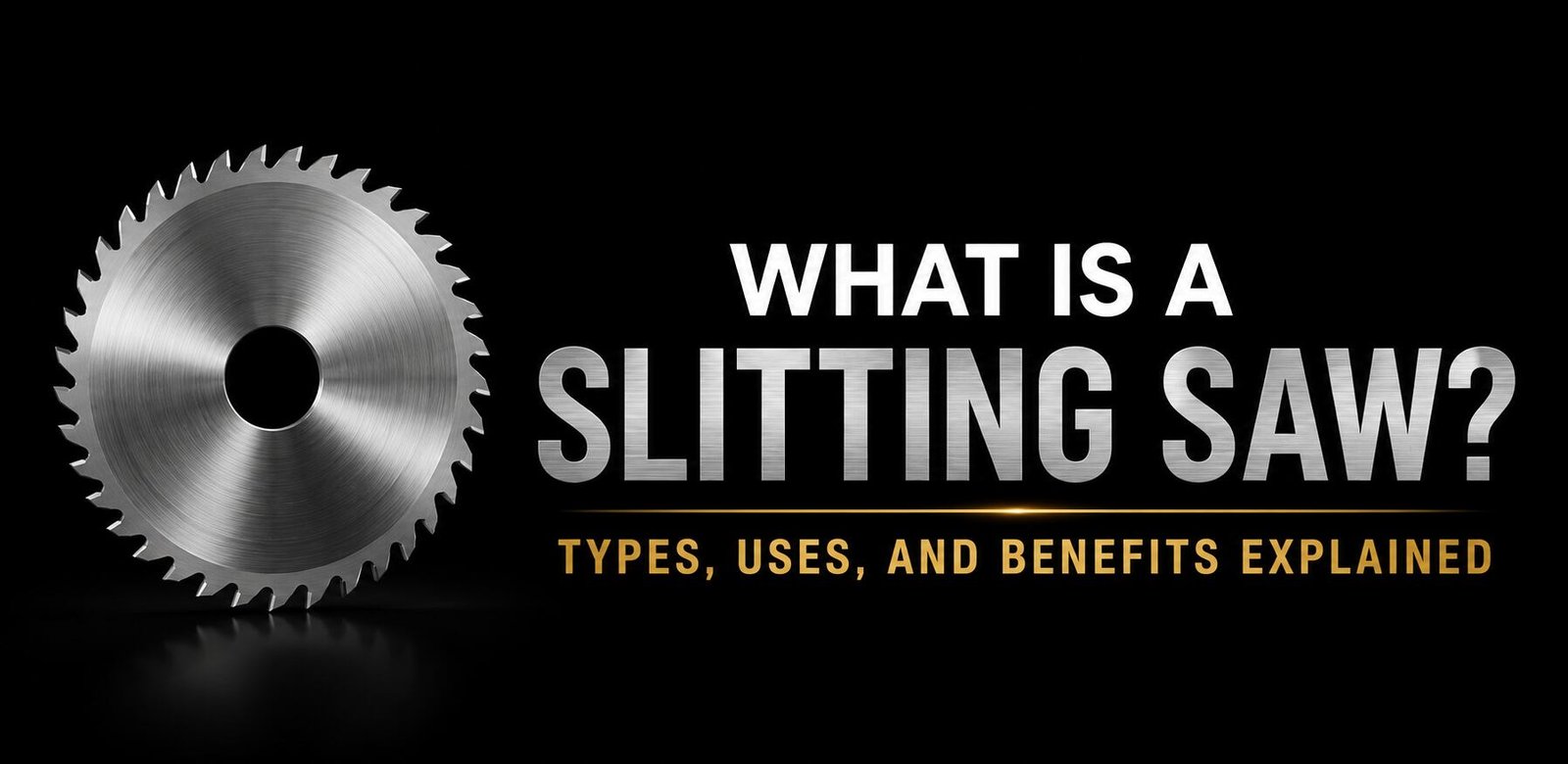
A Slitting Saw is one of the most important cutting tools used in precision machining and metalworking. Designed as a thin circular cutting blade with teeth around its outer edge, a Slitting Saw is primarily used to create narrow slots, grooves, and deep cuts with excellent accuracy. Whether used on milling machines, CNC machining centers, or specialized cutting equipment, this versatile tool helps manufacturers achieve clean cuts while minimizing material waste.
From automotive components to aerospace parts and industrial machinery, a Slitting Saw plays a critical role in delivering precise, consistent results. Choosing the right slitting saw can improve machining efficiency, reduce production costs, and extend tool life.
What is a Slitting Saw?
A Slitting Saw is a circular metal cutting tool that resembles a thin saw blade. It is mounted on an arbor and rotates at high speed to cut through different materials. Unlike standard milling cutters that remove large amounts of material, a slitting saw is designed for narrow cutting applications where precision is essential.
Depending on the material being machined and the desired finish, slitting saws are available in different diameters, thicknesses, tooth profiles, and materials.
These tools are commonly manufactured from:
- High-Speed Steel (HSS)
- Cobalt High-Speed Steel
- Solid Carbide
- Carbide-Tipped Steel
Each material offers distinct advantages in cutting speed, durability, and wear resistance.
How Does a Slitting Saw Work?
A slitting saw rotates at controlled speeds while being fed into the workpiece. The cutting teeth gradually remove material, creating a clean and accurate slot or cut.
The cutting performance depends on several factors, including:
- Blade diameter
- Blade thickness
- Tooth pitch
- Cutting speed
- Feed rate
- Coolant application
- Workpiece material
Proper machine setup and blade selection help reduce vibration, improve surface finish, and extend tool life.
Types of Slitting Saws
Not all slitting saws are built the same. The right type depends on the material, the depth of cut, and the finish you’re aiming for. Here are the most common types used in machine shops today:
1. Plain (Standard) Tooth Slitting Saws
These have straight teeth around the circumference and are best suited for shallow cuts in thin materials. They produce a clean finish and are commonly used for slotting and light parting-off work.
2. Side Chip Clearance Slitting Saws
These feature alternating teeth ground on either side of the blade, which helps clear chips more efficiently during deeper cuts. They’re a strong choice when cutting thicker stock, since the improved chip evacuation reduces heat buildup and tool wear.
3. Staggered Tooth Slitting Saws
With alternating high and low teeth angled in opposite directions, staggered tooth saws are designed for deep slotting work. This design improves chip clearance and helps maintain a straighter, more accurate cut in thicker materials.
4. Fine Tooth Slitting Saws
These have a higher tooth count and are used when a smooth, precise finish is the priority, often in applications involving thin sheet metal or delicate parting operations.
5. Carbide-Tipped Slitting Saws
For cutting harder metals or for high-volume production runs, carbide-tipped saws offer longer tool life and maintain sharper edges under tougher conditions than standard HSS blades.
Common Uses of Slitting Saws
Slitting saws show up across a wide range of industries and applications, including:
- Slotting operations – Cutting narrow, precise slots into metal components, such as screw slots or keyways.
- Parting off (cut-off work) – Separating a finished part from raw stock cleanly and accurately.
- Gear and spline work – Creating narrow grooves in gear blanks or shafts.
- Tool and die making – Producing fine details in molds, dies, and fixtures where tolerances are tight.
- Aerospace and automotive manufacturing – Machining lightweight metal components that require narrow, accurate cuts.
- Jewelry and precision instrument making – Cutting fine grooves or slots in small, delicate parts.
- Electrical and electronics manufacturing – Slitting thin metal sheets or components used in connectors and housings.
Because of their versatility, slitting saws are used both in one-off custom machining jobs and in high-volume industrial production.
Benefits of Using a Slitting Saw
So why do machinists continue to reach for slitting saws even with more advanced cutting technology available? A few key reasons:
1. Precision Cutting: Slitting saws are designed for narrow kerfs and tight tolerances, making them ideal for jobs where accuracy can’t be compromised.
2. Minimal Material Waste: Because the blade is thin, less material is lost to the cut itself, a major advantage when working with expensive metals or small components.
3. Clean, Smooth Finishes: A properly selected slitting saw produces a smooth edge finish, often reducing or eliminating the need for secondary finishing operations.
4. Versatility Across Materials: From soft aluminum to hardened steel, there’s a slitting saw type and material grade suited to nearly any workpiece.
5. Cost-Effective for Repetitive Work: Slitting saws hold their edge well (especially carbide-tipped versions) and are relatively easy to resharpen, making them a cost-efficient choice for repetitive production runs.
6. Compatibility with Standard Milling Equipment: Most slitting saws can be mounted directly onto existing milling machine arbors, meaning shops don’t always need specialized equipment to put them to use.
Choosing the Right Slitting Saw
When selecting a slitting saw for a job, a few factors matter most:
- Material being cut – Match the saw material (HSS, cobalt, carbide) to the hardness of your workpiece.
- Depth of cut required – Deeper cuts generally call for staggered or side chip clearance designs.
- Desired finish – Fine tooth blades produce smoother finishes; coarser teeth cut faster but leave a rougher edge.
- Blade diameter and arbor size – These need to match your milling setup precisely.
- Coating – TiN or TiCN coatings can extend tool life and improve performance on tougher materials.
Conclusion
A Slitting Saw is an essential cutting tool for manufacturers seeking precision, efficiency, and consistent machining performance. Whether you need to produce narrow slots, grooves, keyways, or parting cuts, selecting the right slitting saw significantly improves cutting quality, reduces waste, and increases productivity. By choosing the correct blade material, tooth configuration, and operating conditions, businesses can achieve reliable results across a wide range of industrial applications.
At Maxwell Slitters, we manufacture high-quality slitting saws engineered for precision, durability, and long service life. With advanced manufacturing capabilities and a commitment to quality, Maxwell Slitters delivers cutting solutions that meet the demanding requirements of industries worldwide.
Frequently Asked Questions
Slitting saws can cut a wide range of materials, including mild steel, stainless steel, aluminum, brass, copper, and other non-ferrous metals, depending on the blade’s material and coating.
A slitting saw is much thinner and designed for narrow, precise cuts with minimal material loss, while a regular saw blade is generally thicker and built for faster, less precision-focused cutting.
Yes. Most slitting saws are designed to mount on standard milling machine arbors, making them compatible with equipment already common in most machine shops.
HSS slitting saws are typically more affordable and work well for general-purpose cutting, while carbide-tipped saws offer longer tool life and better performance on harder materials or high-volume production runs.
This depends on usage frequency, the material being cut, and the blade type, but slitting saws are generally resharpenable multiple times before replacement is needed, making them a cost-effective long-term tool.














Leave a Reply