

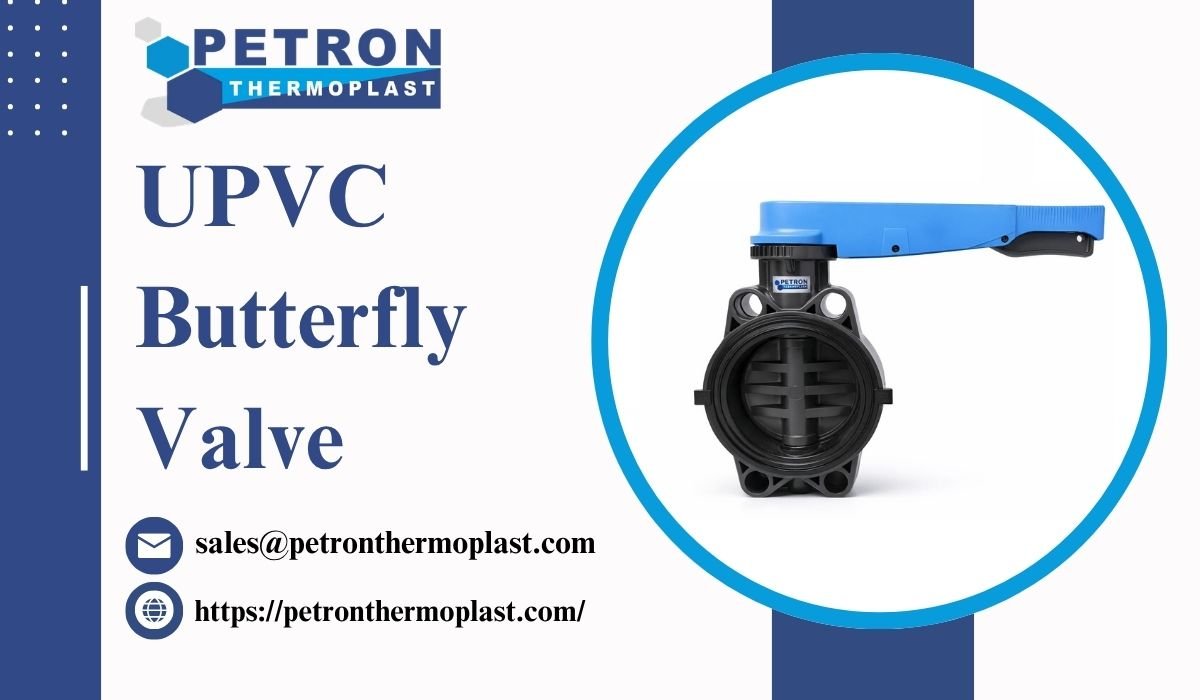
In modern industrial and commercial piping systems, achieving efficient and reliable fluid control is essential for maintaining productivity and reducing operational costs. One of the most effective components for controlling flow in pipelines is the UPVC butterfly valve. Known for its lightweight design, corrosion resistance, and cost-effectiveness, this valve plays a crucial role in optimizing flow performance across a wide range of applications.
This blog explores how UPVC butterfly valves are engineered for optimized flow, their key features, benefits, applications, and why they are a preferred choice for industries seeking efficiency and durability.
What is a UPVC Butterfly Valve?
A UPVC (Unplasticized Polyvinyl Chloride) butterfly valve is a quarter-turn valve that uses a rotating disc to regulate or isolate the flow of fluids in a pipeline. When the valve is turned, the disc rotates either parallel or perpendicular to the flow, allowing for precise control.
UPVC is a rigid thermoplastic material widely used in piping systems due to its excellent resistance to corrosion, chemicals, and environmental factors. Combined with the efficient design of a butterfly valve, it offers an ideal solution for optimized fluid flow.
Understanding Optimized Flow Performance
Optimized flow performance refers to the ability of a valve to regulate fluid movement efficiently with minimal resistance, pressure loss, and turbulence. In industrial systems, this directly impacts:
- Energy consumption
- System efficiency
- Operational costs
- Equipment lifespan
UPVC butterfly valves are specifically designed to enhance flow characteristics, making them an excellent choice for modern pipeline systems.
How UPVC Butterfly Valves Optimize Flow?
- Streamlined Disc Design
The disc in a butterfly valve is engineered to minimize obstruction when fully open. This allows fluid to pass through with minimal resistance, ensuring smooth flow.
- Reduced Pressure Drop
Compared to other valve types, butterfly valves create less pressure loss, improving overall system efficiency.
- Quick Operation
The quarter-turn mechanism allows rapid opening and closing, enabling better control over flow rates.
- Uniform Flow Distribution
UPVC butterfly valves help maintain consistent flow across the pipeline, reducing turbulence and improving performance.
Key Features of UPVC Butterfly Valves
- Corrosion Resistance
UPVC is highly resistant to chemicals, acids, and environmental conditions, making it suitable for demanding applications.
- Lightweight Construction
The lightweight nature of UPVC reduces installation time and structural load on pipelines.
- Leak-Proof Sealing
High-quality sealing mechanisms ensure tight shut-off and prevent leakage.
- Low Maintenance
UPVC valves require minimal maintenance due to their non-corrosive properties.
- Long Service Life
Resistance to scaling and chemical degradation ensures extended durability.
Benefits of Using UPVC Butterfly Valves
- Improved Energy Efficiency
Optimized flow reduces friction and pressure loss, leading to lower energy consumption.
- Cost Savings
Affordable material and low maintenance requirements make UPVC butterfly valves a cost-effective solution.
- Easy Installation and Handling
Lightweight design simplifies installation and reduces labor costs.
- Reliable Performance
Consistent operation ensures smooth and efficient fluid control.
- Versatility
Suitable for a wide range of applications across different industries.
Applications of UPVC Butterfly Valves
UPVC butterfly valves are widely used in various sectors due to their performance and adaptability.
- Water Treatment Plants
Used for regulating water flow in filtration and distribution systems.
- Chemical Processing Industry
Ideal for handling corrosive fluids safely and efficiently.
- Irrigation Systems
Provides reliable flow control in agricultural applications.
- Wastewater Management
Used in effluent treatment systems for managing wastewater flow.
- Industrial Manufacturing
Ensures smooth fluid handling in production processes.
Comparison with Other Valve Types
Understanding how UPVC butterfly valves compare with other valves highlights their advantages.
- vs Gate Valves
Butterfly valves are more compact, faster to operate, and offer better flow control.
- vs Ball Valves
While ball valves provide tight shut-off, butterfly valves are more suitable for large diameter pipelines and offer better flow regulation.
- vs Metal Valves
UPVC valves are corrosion-resistant, lighter, and more cost-effective than metal alternatives.
Factors to Consider When Selecting UPVC Butterfly Valves
- Valve Size
Choose the correct size based on pipeline diameter and flow requirements.
- Pressure Rating
Ensure the valve can handle system pressure.
- Temperature Range
Check compatibility with operating temperatures.
- Chemical Compatibility
Ensure the valve material is suitable for the fluids being handled.
- Actuation Type
Select manual, pneumatic, or electric actuators based on operational needs.
Installation and Maintenance Tips
Installation Tips:
- Ensure proper alignment with the pipeline
- Avoid over-tightening connections
- Use compatible gaskets and fittings
- Test the valve before operation
Maintenance Tips:
- Inspect regularly for wear or damage
- Clean the valve to prevent buildup
- Operate periodically to maintain smooth movement
- Replace seals if needed
Why Choose Petron Thermoplast for UPVC Butterfly Valves?
When selecting UPVC butterfly valves, choosing a reliable supplier is crucial for ensuring quality and performance. Petron Thermoplast is a trusted name in the industry, offering high-quality piping solutions tailored to industrial needs.
Key Advantages:
- Premium grade UPVC materials
- Precision-engineered valve designs
- Wide range of sizes and configurations
- Custom solutions for specific applications
- Competitive pricing and timely delivery
Petron Thermoplast is committed to delivering durable and efficient products that meet the highest standards of quality and reliability.
Future Trends in Flow Control Technology
As industries continue to evolve, the demand for efficient and sustainable flow control solutions is increasing. UPVC butterfly valves are expected to benefit from advancements such as:
- Improved material formulations for enhanced durability
- Smart valve technology for automated control
- Energy-efficient designs for reduced operational costs
- Eco-friendly manufacturing processes
These innovations will further enhance the performance and reliability of UPVC butterfly valves.
Conclusion
UPVC butterfly valves with optimized flow performance are an essential component for modern pipeline systems. Their ability to reduce pressure loss, improve efficiency, and provide reliable flow control makes them a preferred choice for industries worldwide.
With benefits such as corrosion resistance, low maintenance, and cost-effectiveness, these valves offer a practical solution for a wide range of applications. By choosing high-quality products from a trusted manufacturer like Petron Thermoplast, industries can ensure long-term performance and operational efficiency.
If you are looking to enhance your pipeline system, investing in UPVC butterfly valves is a smart and future-ready decision that delivers both performance and value.

















Leave a Reply