

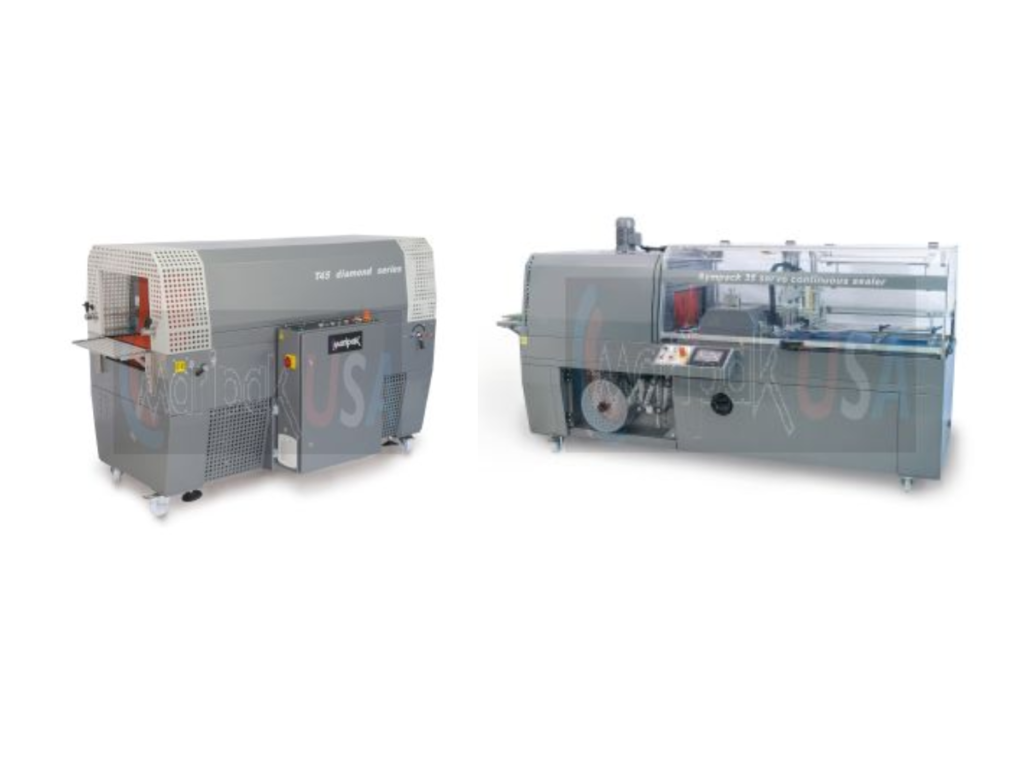
Packaging automation has become an essential part of modern manufacturing, helping businesses improve productivity, maintain product quality, and reduce operational costs. As industries such as food processing, pharmaceuticals, cosmetics, electronics, and consumer goods continue to expand, manufacturers require packaging equipment capable of delivering consistent sealing performance while supporting high production volumes. Reliable sealing is one of the most important steps in the shrink wrapping process because it directly affects package integrity and product presentation.
A high-quality L bar sealer is designed to create clean, secure seals before products enter a heat tunnel for final shrink wrapping. By integrating an advanced L bar sealer into an automated packaging line, manufacturers can achieve greater efficiency, reduce film waste, and produce professional-quality packages with exceptional consistency.
What Is an L Bar Sealer?
An L bar sealer is a packaging machine that seals shrink film around a product using a sealing bar shaped like the letter “L.” The machine simultaneously seals two sides of the film, creating an enclosed package that is ready for the shrinking process.
The standard packaging sequence includes:
- Product placement
- Film positioning
- L-shaped sealing
- Film separation
- Transfer to the heat tunnel
- Film shrinking
- Finished package discharge
This process produces secure packages suitable for both retail display and transportation.
Key Components of an L Bar Sealer
Modern sealing systems combine precision engineering with automated controls to deliver reliable packaging performance.
Typical components include:
- L-shaped sealing frame
- Heated sealing blade
- Film roll holder
- Product conveyor
- Adjustable work surface
- Digital control panel
- Safety protection systems
- Film waste collection system
Each component contributes to accurate sealing and efficient packaging operations.
Advantages of Automated Sealing
An automated L bar sealer provides several operational benefits compared to manual packaging methods.
These advantages include:
- Consistent seal quality
- Faster production cycles
- Reduced labor requirements
- Improved package appearance
- Lower film waste
- Greater operational efficiency
Automation also improves repeatability, helping manufacturers maintain uniform packaging quality throughout extended production runs.
Industries That Use L Bar Sealers
The versatility of an L bar sealer makes it suitable for a wide range of manufacturing and packaging applications.
Common industries include:
- Food and beverage
- Pharmaceuticals
- Cosmetics
- Printed materials
- Consumer electronics
- Household products
- Industrial supplies
- E-commerce fulfillment
Its ability to package products of different sizes and shapes makes it one of the most widely used sealing technologies in modern packaging facilities.
Important Factors When Selecting Equipment
Choosing the right sealing equipment depends on several operational requirements.
Manufacturers should evaluate:
- Production capacity
- Product dimensions
- Film compatibility
- Available workspace
- Automation requirements
- Sealing speed
- Maintenance accessibility
- Future production growth
Selecting equipment that aligns with production needs helps improve long-term efficiency and return on investment.
Improving Packaging Line Performance
An L bar sealer performs most effectively when integrated with complementary packaging equipment.
It commonly operates alongside:
- Shrink heat tunnels
- Conveyor systems
- Product feeding units
- Automatic labeling machines
- Inspection systems
- Cartoning equipment
This synchronized workflow minimizes production bottlenecks while maintaining continuous packaging operations.
Maintenance for Reliable Operation
Routine maintenance is essential for preserving sealing quality and maximizing equipment lifespan.
Recommended maintenance tasks include:
- Cleaning sealing blades
- Inspecting sealing surfaces
- Checking temperature calibration
- Monitoring conveyor alignment
- Replacing worn Teflon coverings
- Verifying electrical connections
- Lubricating moving components
Preventive maintenance helps reduce unexpected downtime while ensuring consistent packaging performance.
The Future of Sealing Technology
Packaging equipment continues to evolve with intelligent automation, digital controls, and energy-efficient operation. Modern sealing systems increasingly feature programmable settings, real-time diagnostics, predictive maintenance capabilities, and seamless integration with automated production lines. These innovations allow manufacturers to improve productivity while maintaining consistent package quality and reducing operational costs.
Conclusion
Maripak USA provides advanced packaging solutions designed to meet the needs of modern manufacturing environments. A reliable L bar sealer delivers precise sealing, dependable performance, and efficient integration with automated shrink wrapping systems, helping businesses improve packaging quality and production efficiency. Whether supporting medium-volume operations or high-capacity manufacturing facilities, investing in a high-performance L bar sealer enables organizations to reduce waste, streamline workflows, and achieve consistent packaging results for long-term operational success.













Leave a Reply