

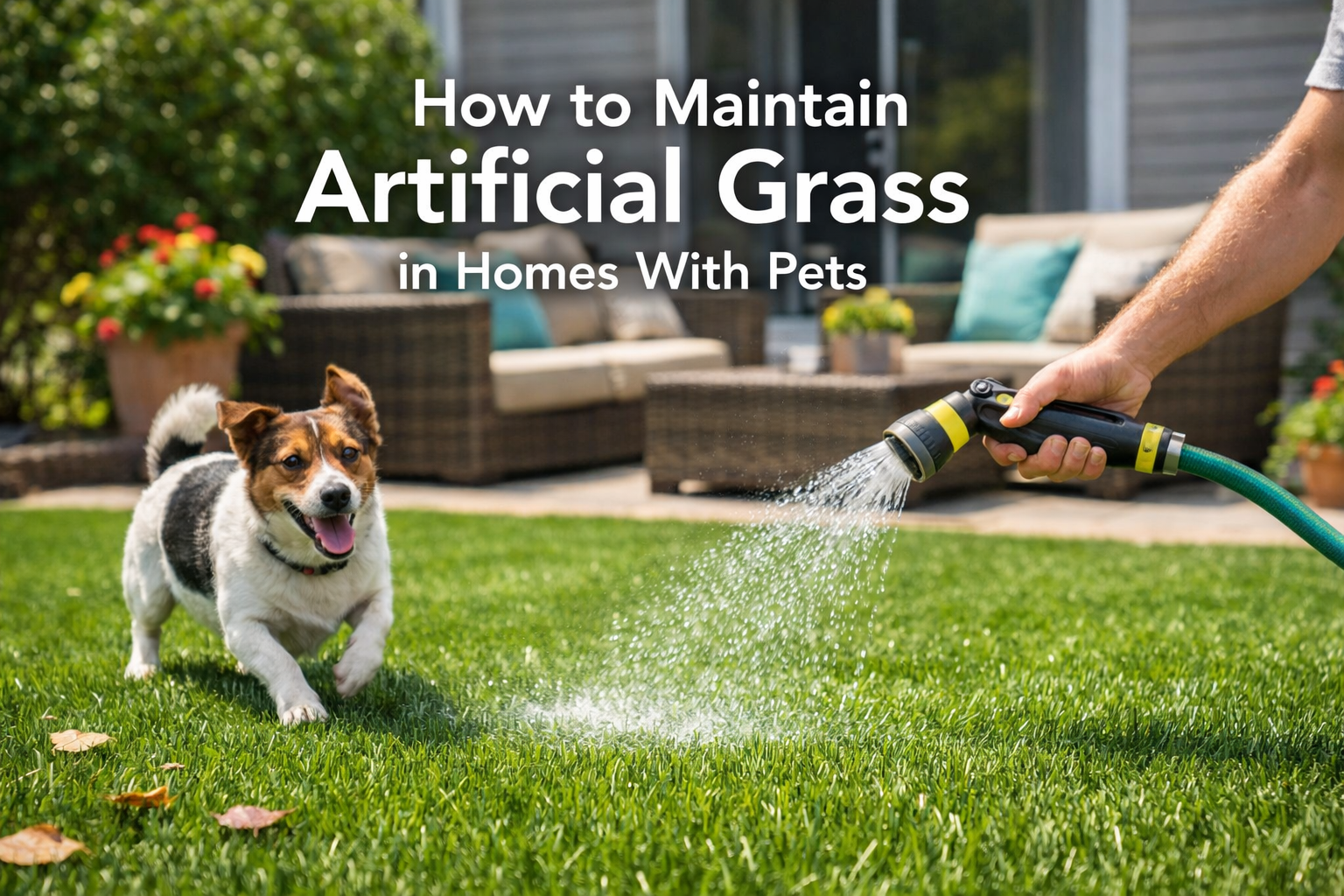
Artificial grass has become a preferred landscaping option for homeowners with pets. It stays green throughout the year, eliminates muddy paws, and creates a clean play area for dogs and other animals. While synthetic turf is designed to be durable and easy to manage, it still requires routine care to remain hygienic and odor free. Proper Artificial Grass maintenance and synthetic turf maintenance help protect your investment and ensure your pets enjoy a safe and comfortable outdoor space.
Pet activity introduces unique challenges such as waste buildup, odor concerns, and heavy foot traffic. The good news is that maintaining artificial grass in pet friendly homes is simple when you follow the right routine. This guide explains practical maintenance steps that help keep your turf clean, fresh, and long lasting.
Why Artificial Grass Is Ideal for Homes With Pets
Durability and Pet Friendly Design
Artificial grass is built to handle active pets. Unlike natural lawns that develop patches or mud, synthetic turf remains consistent even with daily use. High quality turf resists digging, running, and rough play, making it a reliable surface for energetic pets.
Routine Artificial Grass maintenance keeps turf fibers upright and helps maintain its natural look. Regular grooming and cleaning also prevent wear caused by repeated pet movement.
Hygiene and Easy Cleaning Benefits
Synthetic turf prevents mud formation, which helps reduce dirt tracking into your home. It also provides a surface that is easier to sanitize compared to natural grass. Consistent synthetic turf maintenance helps remove bacteria, allergens, and organic debris that may accumulate from pet use.
Check out this article, How Do You Maintain Artificial Grass When You Have Dogs?
Daily Artificial Grass Maintenance Tips for Pet Owners
Immediate Removal of Solid Pet Waste
Prompt waste removal is one of the most important maintenance habits. Solid waste left on turf can introduce bacteria and cause unpleasant odors. Using a plastic bag or scoop makes cleanup quick and effective. After removing waste, lightly rinse the area to maintain cleanliness.
Rinsing Turf After Pet Use
Pet urine can seep into the turf infill, which may lead to odor buildup if not addressed. Rinsing the turf with water helps dilute urine and remove residue before it settles deeper into the base. This simple step supports effective synthetic turf maintenance and helps keep your lawn smelling fresh.
Inspecting High Traffic Pet Areas
Pets often use the same spots repeatedly. These areas are more likely to develop odor or flattened fibers. Regularly inspecting these zones helps homeowners identify early signs of wear and maintain consistent turf quality.
Weekly Synthetic Turf Maintenance Practices
Brushing Artificial Grass Fibers
Brushing turf helps lift compressed fibers caused by running and playing. Using a turf brush or stiff broom restores the natural appearance and prevents matting. Brushing in multiple directions improves airflow and supports long term Artificial Grass maintenance.
Removing Leaves and Organic Debris
Leaves, dirt, and organic matter can trap moisture within turf layers. Moisture buildup may encourage bacteria or mold growth. Removing debris weekly helps maintain drainage and keeps the turf hygienic.
Using Pet Safe Turf Cleaning Solutions
Occasional use of turf safe cleaning solutions helps neutralize bacteria and odor. These products are designed for synthetic turf maintenance and protect turf fibers while improving cleanliness. Always choose pet friendly solutions to maintain safety.
Preventing and Managing Pet Odors in Artificial Grass
Understanding How Pet Urine Affects Turf
Pet urine contains uric acid crystals that can accumulate within turf infill. Over time, these crystals cause strong odors and attract bacteria. Without proper cleaning, odor issues may worsen during hot weather.
Home Solutions for Odor Prevention
Regular rinsing is the most effective method for preventing urine odor. Homeowners can also use enzyme based turf cleaners that break down uric acid and remove odor sources. Maintaining consistent cleaning routines helps prevent long term problems.
When Professional Artificial Grass Maintenance Is Required
Persistent odor may indicate deep contamination within the turf base. Professional Artificial Grass maintenance uses specialized equipment and cleaning techniques to remove bacteria and restore freshness. Professional services are often recommended for heavily used pet areas.
Seasonal Synthetic Turf Maintenance for Pet Owners
Summer Turf Care for Pet Comfort
High temperatures can cause turf surfaces to become warmer. Rinsing turf during hot days helps cool the surface and maintain cleanliness. Increased pet activity during summer also requires more frequent cleaning to prevent odor buildup.
Fall and Winter Maintenance Considerations
Falling leaves during autumn can block drainage if not removed regularly. Winter rain and moisture may also increase debris accumulation. Routine cleaning during colder months supports effective synthetic turf maintenance and prevents drainage problems.
Spring Cleaning for Artificial Grass
Spring is the perfect time for a deeper cleaning routine. Removing winter debris, brushing fibers, and inspecting infill levels prepares turf for increased outdoor activity. Seasonal maintenance helps restore turf appearance and performance.
Common Artificial Grass Maintenance Mistakes Pet Owners Should Avoid
Using Harsh Cleaning Chemicals
Strong chemicals can damage turf fibers and reduce durability. Homeowners should use cleaning products designed specifically for artificial grass. Safe products help maintain turf structure and protect pets.
Ignoring Drainage and Infill Maintenance
Infill supports turf blades and allows water to drain properly. Uneven infill may cause turf to flatten or hold water. Monitoring infill levels is a key part of Artificial Grass maintenance.
Waiting Too Long Between Cleaning Sessions
Irregular cleaning allows bacteria and odors to build up. Establishing a consistent maintenance schedule keeps turf hygienic and visually appealing.
Signs Your Artificial Grass Needs Professional Synthetic Turf Maintenance
Persistent Odors Despite Cleaning
Odors that remain after routine cleaning often indicate bacteria trapped beneath the surface. Professional treatment can remove deep contaminants.
Flattened or Damaged Turf Areas
High activity zones may develop flattened fibers or small damaged sections. Professional grooming restores turf structure and appearance.
Reduced Drainage Performance
Water pooling or slow drainage may indicate infill compaction or debris buildup. Professional synthetic turf maintenance can restore proper drainage and prevent turf damage.
Benefits of Proper Artificial Grass Maintenance for Pet Owners
Cleaner and Healthier Outdoor Environment
Routine maintenance reduces bacteria, allergens, and organic waste. A clean surface supports pet health and overall hygiene.
Extended Turf Lifespan
Consistent care protects turf fibers and backing materials. Well maintained turf can last significantly longer than neglected surfaces.
Improved Comfort and Safety for Pets
Soft, clean turf creates a comfortable play area for pets. Proper maintenance helps maintain surface quality and prevents irritation or bacterial exposure.
Frequently Asked Questions
1. How often should artificial grass be cleaned in homes with pets?
Artificial grass should be rinsed several times per week in pet areas. A deeper cleaning routine is recommended monthly, depending on pet activity levels.
2. Can pet urine damage artificial grass?
Pet urine does not usually damage turf fibers, but it can create odor and bacteria buildup if not cleaned regularly. Proper Artificial Grass maintenance prevents these issues.
3. What is the best way to remove pet odor from synthetic turf?
Regular rinsing combined with enzyme based turf cleaners helps remove odor sources. Professional cleaning may be needed for severe odor problems.
4. Is artificial grass safe for dogs and other pets?
Yes, artificial grass is generally safe when maintained properly. Regular cleaning and synthetic turf maintenance help ensure a hygienic environment.
5. When should homeowners schedule professional turf cleaning?
Professional cleaning is recommended when odors persist, drainage slows, or turf fibers become heavily compacted. Many pet owners schedule professional service once or twice a year.
check out this article, Merino Wool Socks.














Leave a Reply