

Early childhood is a phase defined by endless curiosity. Every sound, every color, and every moving creature is an invitation for a child to explore the world around them. As parents and educators, our biggest challenge is finding ways to channel this natural curiosity into meaningful learning experiences. While digital screens and animated videos offer quick entertainment, nothing matches the foundational impact of a well-crafted physical book.
Among the various themes that captivate young minds, animals and zoos hold a special place. When you combine the magic of the animal kingdom with targeted foundational learning, you get a powerful educational tool that can shape a child’s cognitive future.
Why Animals Are the Perfect Teachers for Young Minds
Have you ever wondered why children are naturally drawn to animals? From the rhythmic purr of a house cat to the majestic stomp of an elephant, animals possess a sensory appeal that triggers instant fascination. For a toddler, an animal isn’t just a creature; it’s a character with a distinct voice, a unique look, and an exciting behavior. This organic connection makes animal-themed literature one of the most effective ways to introduce complex early learning concepts. When children read about a zoo, they aren’t just memorizing names.
They are categorizing the world. They learn that some animals are big, some are small, some have feathers, and others have scales. This cognitive sorting is the basis of early scientific thinking. By turning abstract concepts like the alphabet or counting into a vibrant journey through a zoo, we lower the barrier to learning, making it feel like a game rather than a chore.
The Concept of Active Learning in Early Literature
Not all children’s books are created equal. Some are designed simply to entertain, while others are built to educate through active engagement. The real magic happens when a book manages to do both simultaneously. This is where an educational zoo book for children becomes an indispensable asset in a home library or classroom. It bridges the gap between passive listening and active participation. Active learning happens when a child doesn’t just sit and look at pictures but interacts with the content.
When a book asks a child to mimic the sound of a monkey, spot a hidden lizard, or trace a letter that matches an alligator’s snout, multiple areas of the brain are activated at once. Visual, auditory, and kinesthetic learning styles merge into a singular, memorable experience.
Building a Foundation: Literacy and the Alphabet
The journey toward fluent reading begins much earlier than school. It starts with phonemic awareness and alphabet recognition. However, presenting a child with a plain grid of letters from A to Z can often feel intimidating or uninspiring. Children need a narrative hook, a reason to turn the next page. By wrapping alphabet lessons inside an adventurous zoo story, the letters transform into living, breathing entities. ‘A’ is no longer just lines on a page; it is the starting point of an alligator’s grand adventure. ‘Z’ is the cozy stripes of a sleeping zebra.
This contextual learning helps children understand that letters represent real things in their world, accelerating their reading readiness and vocabulary building.
Introducing: My Friends in the Alphabet Zoo
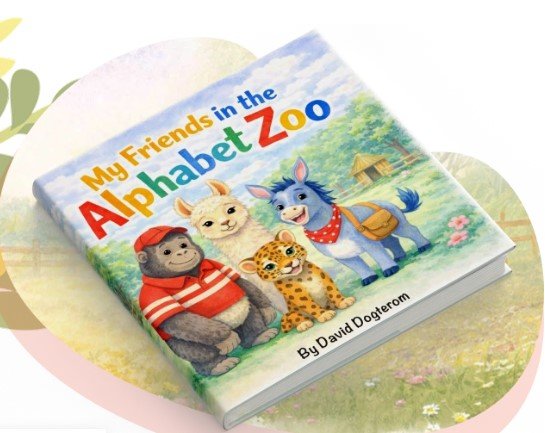
If you are looking for a perfect real-world example of this balance between storytelling and foundational skill-building, look no further than My Friends in the Alphabet Zoo. This delightful book is beautifully structured to take young readers on an unforgettable journey through a whimsical zoo, where every animal is waiting to introduce a new letter and a fun story. The book stands out because it doesn’t just list words; it builds a world. Children get to meet memorable animal characters that guide them through the basics of language. The illustrations are vibrant, the rhythm is engaging, and the educational value is seamlessly integrated into every single page.
It is a brilliant example of how a modern educational zoo book for children should be written, focusing on joy first, which naturally opens the door to effortless learning. Behind this thoughtful creation is David Dogterom Author, whose deep understanding of early childhood engagement shines through in the storytelling. Relatable characters and playful phonics, he has crafted a piece of literature that parents can trust, and children will want to read over and over again.
Beyond the ABCs: Social and Emotional Growth
While academic readiness is crucial, early childhood literature also plays a massive role in a child’s emotional development. Animal stories are incredibly effective tools for teaching empathy, kindness, and social skills. When children read about animals facing small challenges like a shy turtle trying to make friends or a little bear learning to share, they see their own lives reflected in a safe, imaginative space.
A beautifully illustrated educational zoo book for children can spark deep conversations between parents and toddlers. These prompts encourage children to recognize emotions, think from another perspective, and build a strong vocabulary for their own feelings
Tips for Parents: How to Maximize Reading Time
To get the most out of an educational book, the way you read it matters just as much as the text itself. Here are a few simple strategies to turn everyday storytime into a high-impact learning session:
- Make the Sounds: Don’t be afraid to sound silly. Roar like a lion, hiss like a snake, and squeak like a mouse. Children love vocal variety, and it keeps them deeply engaged.
- Point and Track: Run your finger under the words as you read them. This helps children build a connection between spoken words and written text.
- Ask Open-Ended Questions: Instead of just reading through, stop on a page and ask your child what they think will happen next or what colors they see.
- Relate it to Real Life: If you read about a giraffe, remind them of a tall tree they saw at the park. Connect the book to their actual surroundings.
Conclusion:
At the end of the day, our goal as parents and mentors is to make learning feel like a grand adventure. By bringing stories like My Friends in the Alphabet Zoo into our homes, we provide children with more than just a reading lesson; we provide them with a window into a creative world where letters dance, and animals speak. The careful craftsmanship of David Dogterom Author reminds us that children’s literature is an art form that requires balance, warmth, and purpose. As you plan your next story time, remember that every page you turn with your child is a brick laid in the foundation of their future.

















Leave a Reply