

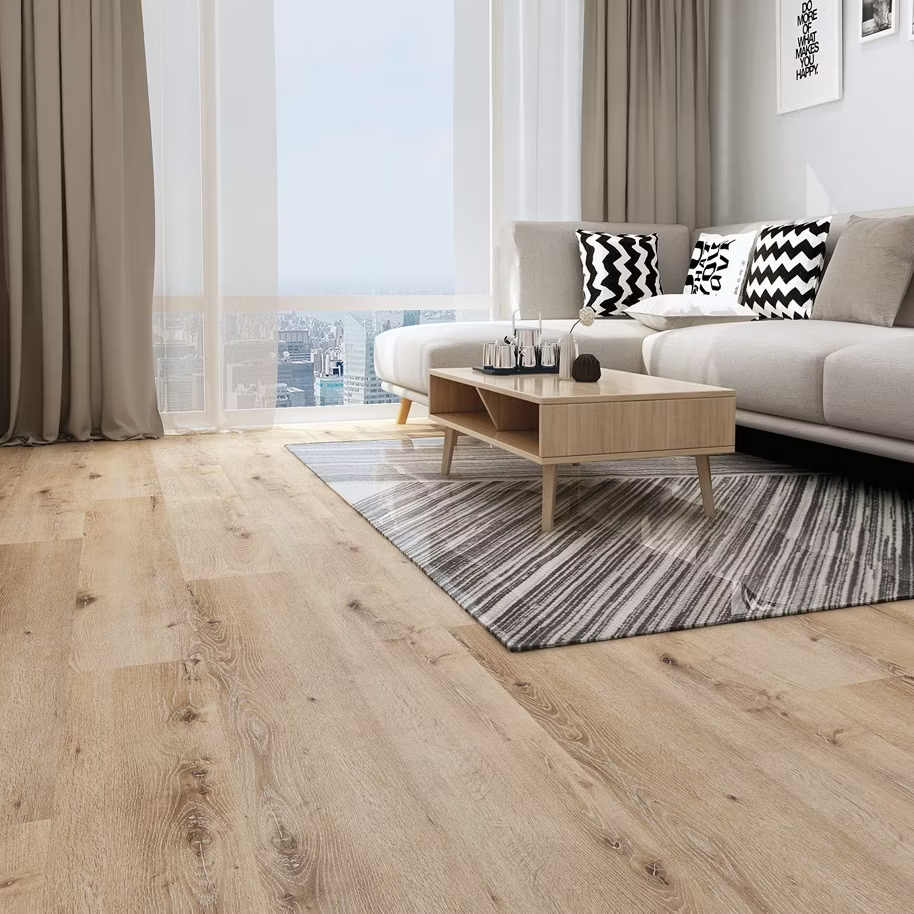
You know that feeling when you walk into a house and something just… clicks? Before you even clock the countertops or notice the lighting, your eyes drop to the floor. It happens every single time. Flooring does something to a space that is hard to put into words — it sets the whole mood.
Get it right, and the room feels expensive, warm, and inviting. Get it wrong, and no amount of staging or fresh paint will save you. What most homeowners do not realize, though, is that flooring does not just affect how a home looks — it directly impacts what it sells for.
Now here is where it gets interesting. Two flooring options are dominating renovation conversations right now: traditional hardwood and the fast-rising Vinyl Plank Flooring. Both are gorgeous. Both are widely available. But they are not equal when it comes to adding real dollar value to your home.
This guide cuts through the noise. We are going to talk money, durability, buyer psychology, and what people who actually sell homes for a living have to say. No fluff, no filler — just the honest breakdown you need before spending a single dollar on new floors.
A Quick Primer: Know What You Are Comparing
What Is Hardwood Flooring?
Real wood. That is the short answer. Hardwood floors are milled from actual trees oak, hickory, walnut, maple and installed plank by plank across your subfloor. There are two camps here: solid hardwood, which is exactly what it sounds like, and engineered hardwood, which layers real wood over a plywood base.
Either way, you are getting the genuine article. Hardwood has anchored home design for well over a century, and it shows no signs of fading. Expect to pay somewhere between $6 and $12 per square foot just for materials — and that is before your installer shows up.
What Is Luxury Vinyl Plank (LVP)?
Forget everything you think you know about vinyl floors. The stuff your grandparents had in their kitchen — peeling, dull, clearly fake — that is ancient history. Today’s LVP is an entirely different product, built in layers, designed to mimic hardwood so convincingly that guests genuinely cannot tell the difference.
It is waterproof, scratch-resistant, and surprisingly comfortable underfoot. Prices typically land between $2 and $7 per square foot, which makes it an appealing option for homeowners who want a high-end look without the high-end invoice.
How Flooring Actually Affects Home Value
Here is something worth wrapping your head around. Home value is not purely logical — it is emotional, too. There are really two forces shaping what your floors are worth: what the appraiser writes on paper, and what the buyer feels the moment they step inside.
Appraisers are methodical. They weigh material quality, expected lifespan, and how the floor compares to similar homes in your market. Buyers, though? They react in seconds. A beautiful floor triggers something instinctive — it signals care, quality, and pride of ownership. That reaction translates directly into offers.
The National Association of Realtors has consistently ranked hardwood flooring among the highest-return interior upgrades a homeowner can make. Some estimates put the cost recovery as high as 70 to 80 percent at resale. LVP is making serious inroads, especially where buyers skew younger and more practical in their preferences.
The Real Cost: Upfront vs. Long-Term
Nobody loves talking about money, but let us do it anyway because this is where a lot of homeowners make a costly mistake. They see a lower price tag and stop thinking right there. The smarter question is: what does this floor actually cost me over 20, 30, or 50 years?
Hardwood runs $10 to $25 per square foot installed, and yes, that stings upfront. But here is the thing — when it gets dinged, scratched, or just looks tired after years of use, you do not replace it. You refinish it. A professional refinish costs a fraction of replacement and brings the floor back to looking brand new.
LVP is kinder to your wallet at installation, typically $4 to $12 per square foot all-in. The catch? When it wears out, it is gone. There is no sanding it down, no refinishing, no second life. Over a half-century of homeownership, you may replace LVP twice while your neighbor’s hardwood floor gets one refinish and keeps going strong.
Hardwood Flooring
Why Hardwood Boosts Home Value
There is a reason real estate listings shout about hardwood floors in the very first line of the description. It is shorthand for quality. Buyers hear “hardwood throughout” and they lean in before they have seen a single photo. That kind of built-in appeal is genuinely hard to manufacture with any other material.
Agents will tell you — homes with hardwood tend to move faster. They attract more serious buyers. In competitive markets, a home with beautiful wood floors often draws multiple offers while a comparable home with carpet sits waiting. Hardwood does not chase trends. It just quietly sits there and holds its value, decade after decade.
Where Hardwood Falls Short
Water is hardwood’s worst enemy, full stop. Put it in a bathroom and you are gambling. Install it in a basement and you are almost certainly asking for trouble. Even a kitchen with a leaky dishwasher can send a hardwood floor warping within weeks.
Cost is the other obvious obstacle. Not every renovation budget has room for premium hardwood throughout an entire home. And here is a point buyers often miss — neglected hardwood is worse than no hardwood. A scratched, stained, tired-looking wood floor can actually drag down perceived value rather than lift it.
Luxury Vinyl Plank
Why LVP Is Gaining Ground on Value
Step into any well-stocked flooring store these days and you will immediately see where the industry is heading. LVP commands enormous shelf space, and manufacturers are investing heavily in making it look more realistic every single year. The market has spoken, and buyers are listening.
Waterproofing is the headline feature, and it genuinely changes the game for certain rooms. Kitchens, bathrooms, mudrooms, basements — these are spaces where hardwood is a liability and LVP is an asset. Active families with dogs, toddlers, and general household mayhem? LVP barely flinches.
There is also a perception shift happening among buyers under 40. For this group, practical durability often outweighs the prestige of real wood. A spotless, well-installed LVP floor reads as modern and well-maintained which absolutely registers as value at resale time.
Where LVP Still Lags Behind
Honest truth: appraisers have not fully caught up to LVP’s rise. In established neighborhoods, luxury zip codes, and older homes with original architectural character, buyers still want real wood. Showing up with LVP in those contexts can feel like substituting a cubic zirconia for a diamond visually similar, but not quite the same to the people who care.
The no-refinish limitation is a real long-term concern, too. Once that wear layer is done, the whole floor is done. Toss in the fact that LVP quality varies wildly across brands, and a budget-grade product can cheapen the entire feel of an otherwise well-presented home.
What Real Estate Experts Actually Say
Talk to enough realtors and a clear pattern emerges nobody recommends one flooring across the board anymore. The answer is almost always contextual, market-specific, and tied to what kind of buyer you are trying to attract.
In high-value markets, the message from agents is consistent: hardwood wins on appraised value, buyer desire, and perceived prestige. Appraisers in these areas formally recognize the difference between engineered hardwood and LVP, and that recognition shows up in the final numbers.
Shift to mid-range suburban markets, though, and the gap narrows considerably. Buyers in these neighborhoods increasingly care more about condition and practicality than material. A flawlessly installed LVP floor can genuinely compete with hardwood when the overall home presentation is strong.
Interior designers bring their own take current trends heavily favor wide-plank, lighter-toned wood aesthetics, and LVP delivers that look affordably and consistently. In new construction and modern renovation projects, high-quality LVP is often the first material pulled off the shelf.
Side-by-Side Comparison
| Factor | Hardwood | LVP |
| Upfront Cost | $$$ | $$ |
| Long-Term Cost | Lower (refinishable) | Higher (replace only) |
| Appraised Value Impact | Higher | Moderate |
| Buyer Appeal | Premium & broad | Growing fast |
| Moisture Resistance | Poor | Excellent |
| Lifespan | 50–100 years | 20–30 years |
| Best Rooms | Living, dining, bedrooms | Kitchen, basement, bath |
| DIY-Friendly | Difficult | Yes |
The Right Choice for Your Situation
No one-size-fits-all answer exists here, and anyone telling you otherwise is oversimplifying. Your neighborhood, your timeline, your budget, and your buyer pool all feed into this decision. Here is a practical framework to help you think it through.
- Selling within five years in a mid-to-high-end market? Prioritize hardwood in your main living spaces. That investment will talk loudly when offers come in.
- Working with a tighter budget but still want the place to look polished? Quality LVP is genuinely impressive especially in rooms where moisture is a daily reality.
- In a newer suburban neighborhood where buyers care more about condition than materials? LVP can absolutely pull equal weight at a lower upfront cost.
- Planning to stay for a decade or more? Run the full lifecycle numbers. Hardwood’s ability to be refinished gives it a quiet financial advantage that compounds over time.
The Smart Play: Using Both
The most experienced agents in the business rarely recommend going all-in on one material. What they actually suggest is a hybrid strategy and it is smarter than most homeowners realize. Use hardwood where eyes linger: the entry, the living room, the dining room, the master bedroom. Then deploy LVP in the rooms that take a beating: kitchens, bathrooms, laundry rooms, basements.
You get the prestige of real wood in every space a buyer emotionally connects with. You get the practical toughness of LVP precisely where it is needed most. And you do all of this while stretching your renovation budget further than a hardwood-only approach would ever allow.
Think of it like building an outfit around a statement piece. The blazer gets the attention but the rest of the ensemble still has to hold up. Same logic applies here. Lead with hardwood where it counts, and let LVP quietly handle the rest.
Conclusion
Here is the bottom line, said plainly: hardwood still holds the crown when it comes to formal appraisal value and premium buyer appeal. That is not changing anytime soon, particularly in established markets where buyers know what they want and what they are willing to pay for it.
But LVP is not the consolation prize it once was. In the right market, the right rooms, and with the right installation, it delivers genuine value without the anxiety of water damage, sky-high installation bills, or obsessive maintenance routines. The gap between these two materials has never been smaller.

















Leave a Reply