Encapset Technology: Taste-Masking and Stability Basics
How Encapset technology uses microencapsulation for taste-masking, stability and controlled release, and when it beats or loses to liposomal delivery.
Encapset Technology Explained
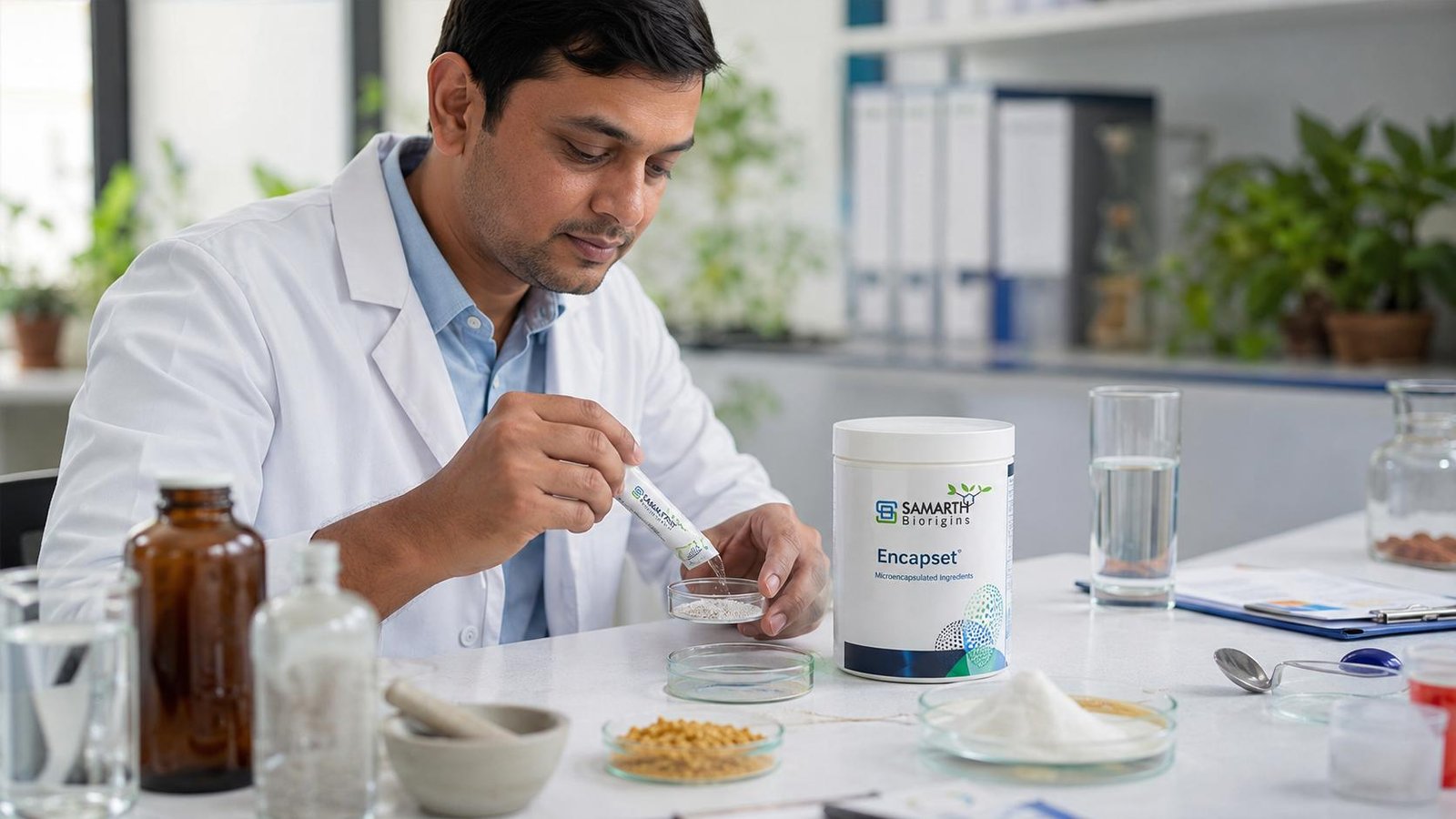
Not every formulation problem is about absorption. Sometimes a nutrient absorbs perfectly well. Yet it tastes like a handful of coins, stains everything it touches, or quietly degrades on the shelf. Encapset technology targets that second class of problem. It is a microencapsulation approach that coats an active. The coat masks taste, shields the active from oxygen and moisture, and controls when it releases. It sits beside liposomal and micelle delivery as a different tool for a different job. Confusing the three is one of the more common formulation missteps.
Microencapsulation versus the liposomal reflex
Microencapsulation wraps particles of an active in a protective coating or matrix. It works at a larger scale than the nanometre-sized liposomes and micelles that mainly boost absorption. The goal is different. Here the priority is protection and taste-masking, not pushing more of the molecule across the gut wall. Reaching for a liposome when your real problem is a bitter, oxidising powder solves the wrong equation. Diagnose the problem first. Then pick the encapsulation type that answers it.
Taste-masking the ingredients nobody wants to taste
Iron is the classic offender, with its sharp metallic bite. Lactoferrin and many botanicals are not far behind. A coating keeps the active from touching the taste receptors on the tongue. In paediatric and consumer formats, that is the whole battle. A children’s iron syrup that a toddler spits back out is a failed product. Its absorption data can look flattering, and it still fails. I have watched a technically excellent formula die in consumer testing purely on flavour. So I take this problem more seriously than the spec sheet usually implies.
Shelf life: protecting reactive nutrients from air and light
Oxygen, moisture and light are patient enemies. Reactive nutrients such as certain vitamins, probiotics and omega compounds lose potency fast. Exposed in a blend, they fade long before their printed expiry. A microencapsulated coating slows that decay. It puts a physical barrier between the active and its environment. The payoff shows up in month eighteen. The product still delivers its label claim then, not only on the day it left the line.
Controlled release and powder formats
Coating also lets you shape when an active releases. That matters when you want a nutrient to survive the stomach and dissolve further along. Encapset technology suits sachets, granules and dry blends especially well. These are exactly the powder formats where a liquid liposomal system is impractical. Is your product a stick pack or an effervescent? A coated active often travels better through manufacturing and storage than a delicate liquid vesicle.
The coating materials that do the work
A microencapsulation coat is not one thing. Depending on the goal, it might be a lipid or a polysaccharide such as maltodextrin or modified starch. It might also be a protein matrix or a fat-based spray-dried shell. Each behaves differently in water, heat and acid. So the choice of wall material is really the choice of what the product can survive. Judge Encapset technology on how well its coating matches your specific active and format. Do not judge it on the label word microencapsulation alone. A coat that is perfect for a dry sachet may dissolve too early in an effervescent. The same active can need two different treatments for two different products.
Iron: the problem child of formulation
Iron is the case I come back to, because it fails in so many ways at once. Bare in a syrup, it tastes metallic and discolours the liquid. It can also react with other ingredients in the blend, sometimes degrading a vitamin right beside it. A good coat addresses all three problems in one move. It keeps the iron chemically to itself until you swallow it. I have watched a reformulated, coated iron pass a taste panel that the bare version failed. That is the clearest demonstration I know of why this quiet technology keeps products alive on the shelf.
Controlled release is a promise you must test
Controlled or delayed release sounds precise on a datasheet. But the body is not a laboratory. Transit time, stomach contents and individual variation all shift where a coated active actually opens. So a release profile from a dissolution bath is a guide, not a guarantee. I would not build a strong clinical-sounding claim on a release curve alone. What a coating reliably delivers is protection and taste-masking. Graded release is a reasonable secondary benefit to design for, and a risky one to promise in absolute terms.
Where Encapset is the wrong choice
I will argue against my own tool for a moment. Microencapsulation adds bulk and can dilute the payload per gram. For a highly water-soluble, stable, tasteless active, that is needless cost and needless volume. It is also not primarily an absorption enhancer, and pitching it as one oversells it. The exact payload you can achieve varies by active and coating, so treat any universal number with suspicion. Weigh it against the other platforms from Samarth Biorigins. Choose Encapset for taste, stability and release. Choose a liposome or micelle when raw absorption is the real bottleneck.
Publisher: violet-mosquito-697609.hostingersite.com
About The Author