

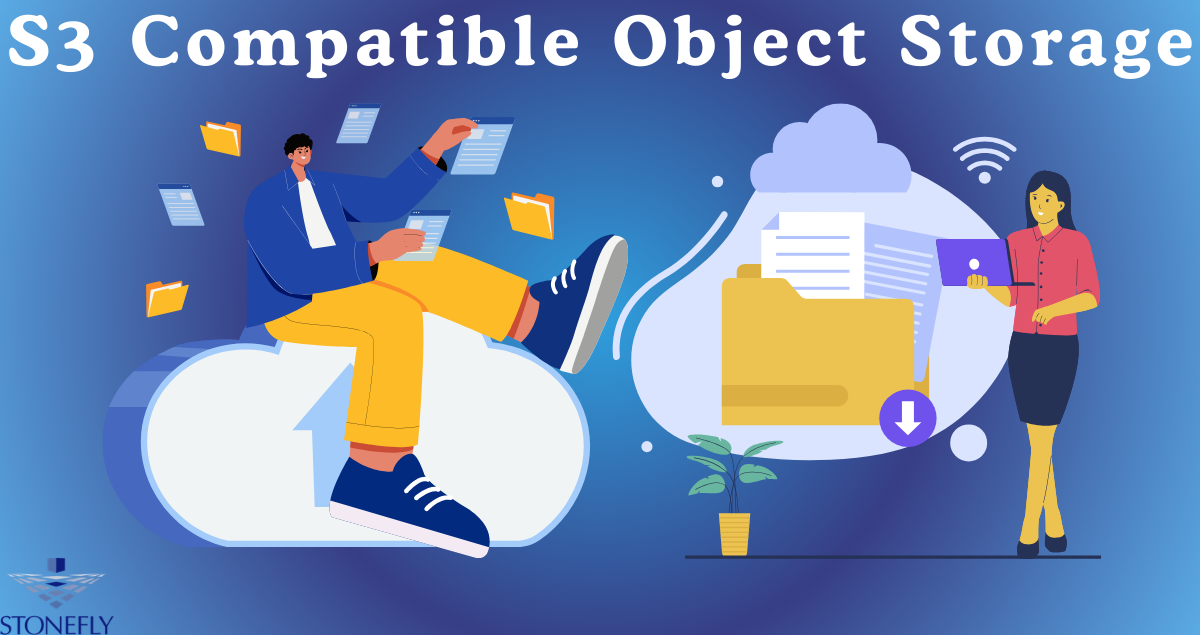
Organizations today rely on digital information to power every aspect of their operations. Customer records, application data, financial reports, analytics, and collaboration tools all contribute to business growth. As data volumes continue to expand, businesses require storage infrastructure that can scale efficiently while remaining secure and easy to manage. Many organizations address these challenges by adopting S3 Compatible Object Storage as part of their long-term storage strategy. By combining scalability, reliability, and centralized management, businesses can create a storage environment that supports both current operations and future innovation.
Why Modern Businesses Need Smarter Storage Planning
Business data is growing at an unprecedented rate. Every new application, connected device, and digital service contributes additional information that must be stored, protected, and managed efficiently.
Without proper planning, organizations may encounter:
- Capacity limitations
- Performance bottlenecks
- Increased operational costs
- Security vulnerabilities
- Complex infrastructure management
- Recovery challenges
Developing a scalable storage strategy early helps prevent these issues while supporting future business expansion.
Understanding Object-Based Storage
Unlike traditional storage methods that organize information into files or blocks, object-based storage manages data as individual objects containing both the information itself and descriptive metadata.
This architecture offers several advantages:
- Simplified data management
- Efficient scalability
- Improved search capabilities
- Better support for large datasets
- Flexible storage organization
These characteristics make object-based storage well suited for organizations managing rapidly growing digital assets.
Key Features of a Reliable Storage Platform
Selecting the right storage infrastructure requires evaluating several important capabilities.
Scalability
Business requirements rarely remain static.
Storage systems should expand smoothly as data volumes increase without requiring complete infrastructure replacement.
Reliability
Business-critical information must remain available despite Hardware failures or unexpected disruptions.
Reliable infrastructure minimizes downtime and protects operational continuity.
Performance
Employees and business applications depend on fast, consistent access to information.
Stable performance supports productivity and enhances user experience.
Strengthening Data Security
Protecting valuable information requires multiple layers of defense.
Access Control
Organizations should implement role-based permissions that limit access to authorized personnel only.
Reducing unnecessary permissions lowers overall security risk.
Encryption
Sensitive information should remain encrypted while stored and during transmission.
Encryption provides additional protection even if unauthorized access attempts occur.
Continuous Monitoring
Monitoring systems help identify unusual behavior before it develops into a significant security incident.
Early detection improves response times and limits potential damage.
Supporting Business Continuity
Storage infrastructure plays a major role in business continuity planning.
Organizations should prepare for unexpected events by implementing:
Regular Backups
Maintaining multiple backup copies helps protect against accidental deletion, hardware failures, and cyber incidents.
Recovery Procedures
Clear recovery documentation enables teams to restore services quickly during emergencies.
Recovery Testing
Routine testing verifies that backup data remains usable and recovery plans function as expected.
Testing also builds confidence among technical teams.
Simplifying Infrastructure Management
Managing expanding storage environments manually can become increasingly time-consuming.
Automation helps simplify routine activities, including:
- Capacity monitoring
- Backup scheduling
- Health reporting
- Performance analysis
- Alert notifications
Reducing repetitive administrative work allows IT teams to focus on strategic improvements.
Planning for Future Business Growth
Technology continues evolving, and storage infrastructure should evolve alongside it.
Future-ready environments should support:
Increasing Data Volumes
Growing businesses naturally require additional storage capacity.
Flexible infrastructure allows expansion without significant operational disruption.
New Applications
Emerging technologies continue generating larger and more diverse datasets.
Storage systems should accommodate changing workloads efficiently.
Long-Term Data Retention
Many industries require organizations to preserve information for extended periods.
Storage architecture should make retention policies easy to manage while maintaining accessibility.
Improving Operational Efficiency
Efficient storage environments contribute to better overall business performance.
Organizations benefit from:
- Faster data access
- Simplified administration
- Reduced manual processes
- Better resource utilization
- Improved infrastructure visibility
Operational efficiency helps reduce costs while supporting long-term business objectives.
Supporting Compliance and Governance
Organizations often need to demonstrate responsible information management.
Important governance practices include:
- Maintaining audit logs
- Documenting recovery procedures
- Reviewing security policies
- Monitoring user activity
- Enforcing retention requirements
Strong governance improves accountability while supporting regulatory compliance.
Building a Future-Ready Storage Strategy
Storage decisions made today should continue supporting business objectives for many years.
Many organizations implement S3 Compatible Object Storage because it offers flexible scalability, centralized management, and dependable support for growing workloads. When integrated with comprehensive backup strategies, proactive monitoring, and layered security controls, S3 Compatible Object Storage becomes an important part of a resilient infrastructure capable of adapting to future business demands.
Conclusion
Modern businesses require storage solutions that balance scalability, security, performance, and operational simplicity. By investing in flexible architecture, strong governance, regular recovery testing, and proactive infrastructure management, organizations can protect valuable information while supporting continuous growth. A carefully planned storage strategy provides the foundation needed to meet both today’s requirements and tomorrow’s opportunities.
Frequently Asked Questions
1. Why is scalability important in modern storage infrastructure?
Scalability allows organizations to expand storage capacity as data grows without replacing existing systems or disrupting operations.
2. How does metadata improve data management?
Metadata helps organize, identify, and locate stored information more efficiently, making management and retrieval easier.
3. Why should organizations automate storage management?
Automation reduces manual effort, improves consistency, and helps identify issues before they affect business operations.
4. How often should recovery procedures be tested?
Recovery procedures should be tested regularly to ensure backup data remains usable and restoration processes continue working effectively.
5. What should businesses consider when selecting long-term storage infrastructure?
Organizations should evaluate scalability, reliability, security, performance, operational simplicity, compliance support, and future adaptability before making storage decisions.


















Leave a Reply