

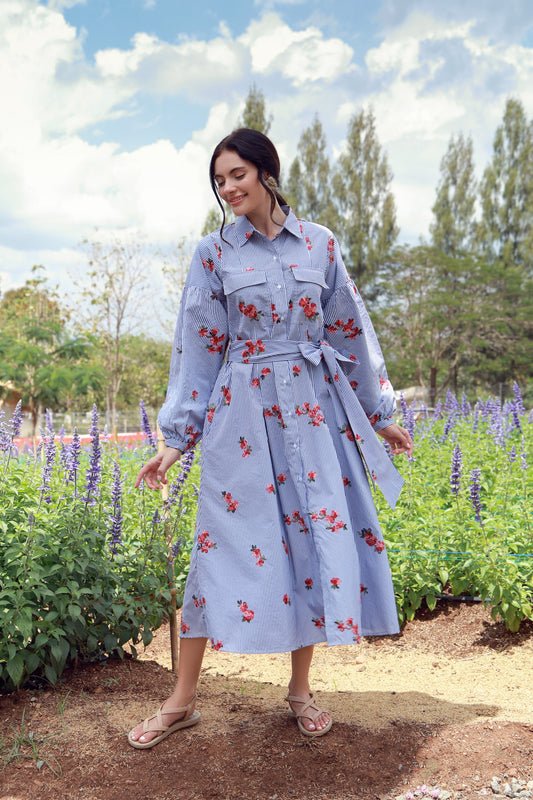
Summer dressing often gets framed as a trade-off. Either you stay cool and show more skin, or you stay covered and sweat through the afternoon. That framing is outdated, and it ignores decades of tailoring knowledge that solves both problems at once through fabric choice, cut, and layering.
Why the Trade-Off Myth Persists
The idea that modest clothing must run hot comes from a specific type of garment, usually heavy synthetic fabric layered without any airflow built in. That combination will overheat anyone, modest or not.
The real issue is rarely coverage itself. It is almost always fabric weight and construction. A poorly chosen polyester blend traps heat regardless of how much skin it covers, while a well-chosen natural fiber stays breathable even in full coverage.
Fabric Choice Matters More Than Coverage Amount
Cotton, linen, and lightweight silk blends allow air to pass through the weave, which is what actually creates the cooling effect. Synthetic fabrics, by contrast, trap moisture and heat close to the skin no matter how loosely they are cut.
Among women summer outfits, the pieces that perform best in high heat almost always share the same trait: a natural or semi-natural fiber base with a looser weave. This applies whether the piece is a long dress, a co-ord set, or tailored pants.
Building a Modest Summer Wardrobe That Actually Breathes
A few practical choices make the biggest difference when building outfits for hot months:
- Choose fabrics with visible texture in the weave, since tighter weaves trap more heat
- Pick looser silhouettes over fitted ones, allowing air to circulate close to the body
- Favor lighter colors, which reflect heat instead of absorbing it
- Layer only with breathable pieces, avoiding heavy outerwear during peak heat hours
The Role of Silhouette in Staying Cool
Silhouette works alongside fabric, not against it. A wide-leg pant made from a breathable material allows constant airflow around the legs, while a fitted pant in the same fabric traps heat closer to the skin.
The same logic applies to tops and dresses. A relaxed A-line dress moves air with every step, while a fitted sheath dress in the same fabric holds heat against the body. This is why loose, structured cuts remain a staple across most warm-climate wardrobes, regardless of how much coverage they provide.
Shirts Deserve Special Attention in Hot Weather
Shirts sit closest to the body and get worn for the longest stretch of the day, so their fabric choice carries extra weight. Cotton summer shirts hold up particularly well here, since the fiber pulls moisture away from the skin instead of trapping it.
A well-made cotton shirt with a slightly looser cut through the torso allows enough airflow to stay comfortable through long afternoons. Pairing it with lightweight trousers or a breathable skirt keeps the full outfit functional rather than just visually put together.
Color and Print Choices for Heat Management
Dark, dense colors absorb more heat from sunlight, which becomes noticeable during long outdoor stretches. Lighter tones such as cream, pastel blue, or soft blush reflect more of that heat away from the body.
Prints can help too, particularly small, scattered patterns that break up direct sunlight absorption compared to solid dark blocks. This does not mean dark colors should be avoided entirely, just balanced with lighter pieces during the hottest parts of the day.
Layering Without Overheating
Layering during summer sounds counterintuitive, but a single lightweight layer can actually help regulate temperature by creating airflow between the body and the outer fabric. The key is choosing layers that are sheer, loose, or open-weave rather than dense and structured.
A few layering choices that work well in heat:
- A lightweight open cardigan over a fitted top
- A loose outer shirt left unbuttoned over a tank or camisole
- A sheer overlay dress worn above a slip for added modesty without extra heat
- A soft scarf used loosely rather than wrapped tightly
Practical Fit Adjustments for Hot Days
Fit changes how a fabric performs almost as much as the fabric itself. A shirt that sits slightly away from the shoulders and torso allows air to move underneath it, which cools the skin naturally. The same top cut too closely will trap heat even in a breathable fabric.
Waistbands matter too. A tighter waistband restricts circulation and tends to feel hotter over long hours, while a relaxed or elastic waist allows more comfortable movement through a full day outdoors.
Putting It All Together
Staying modest and staying cool are not opposing goals once fabric, silhouette, and fit are treated as a system rather than separate decisions. The most functional warm-weather wardrobes lean on breathable natural fibers, looser cuts, lighter colors, and thoughtful layering rather than reduced coverage.
This approach also happens to align closely with pieces already common in modest wardrobes, including cotton shirting, wide-leg trousers, and lightweight dresses. The goal was never to choose between comfort and coverage. It was to choose fabric and cut with more intention.
FAQs
Is silk too warm to wear during summer?
Lightweight silk blends actually perform well in heat since silk is a natural fiber that allows airflow, though heavier silk weaves are better suited to cooler months.
Do darker colors always feel hotter than lighter ones?
Generally yes, since darker shades absorb more heat from sunlight, though the effect is less noticeable indoors or during shaded activities.
Can loose clothing still look polished for outdoor summer events?
Yes, especially with structured tailoring. A well-cut loose silhouette in a quality fabric reads as intentional rather than sloppy, particularly in solid or muted tones.









Leave a Reply