

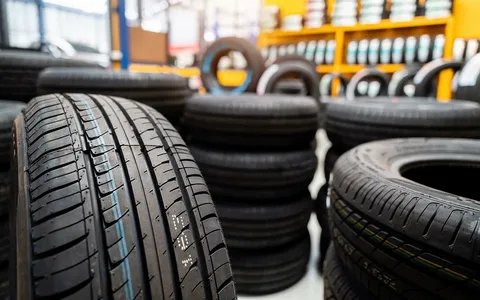
If you have lived through even a single January in Alberta, you know that our roads are less like pavement and more like an ever-shifting science experiment. One day you are navigating deep, heavy slush; the next, you are gliding over a microscopic layer of “black ice” created by a sudden Chinook. As someone who has spent a decade analyzing automotive performance and safety trends, I’ve seen the tire industry evolve significantly to meet these challenges.
The question I hear most frequently during the autumn rush is: “Do I really need dedicated winter tires, or can I get away with All-Weather tires?” To answer that, we have to look past the marketing jargon and understand the chemistry and physics of how rubber meets the road specifically our frozen, salty, and unpredictable Calgary roads.
The Rubber Chemistry: Why Temperature is Everything
The most critical factor in tire performance isn’t actually the tread pattern; it’s the rubber compound. Think of a hockey puck versus a rubber eraser. At room temperature, both are pliable. But at -20°C, that hockey puck becomes a projectile that slides across the ice with zero friction.
Traditional “All-Season” tires are like that hockey puck. Once the temperature drops below +7°C, the rubber hardens. It loses its “grip” on the road surface, leading to longer braking distances and skidding. Both Winter and All-Weather tires are designed to solve this by using specialized silica-based compounds that remain soft and flexible in the deep freeze.
Winter Tires: The Specialists
Dedicated winter tires (often marked with the “Three-Peak Mountain Snowflake” symbol) are the heavy hitters of the tire world. They are engineered for one specific environment: the worst possible conditions.
- Sipes and Biting Edges: Winter tires feature thousands of tiny slits in the tread blocks called sipes. As the tire rotates, these sipes open up to “bite” into the ice and snow.
- Snow-on-Snow Traction: The deep grooves are designed to actually trap snow. It sounds counterintuitive, but snow sticks to snow better than rubber sticks to snow. By holding onto a layer of the white stuff, the tire creates more friction against the road.
- Maximum Softness: These tires stay pliable down to -40°C. However, the trade-off is that if you drive them in the summer, that soft rubber will wear out incredibly fast, like a pencil eraser on hot asphalt.
All-Weather Tires: The Year-Round Contender
Don’t confuse “All-Weather” with “All-Season.” All-Weather tires are a relatively new hybrid category. They also carry the Three-Peak Mountain Snowflake symbol, meaning they meet the minimum legal requirements for severe snow service.
For the driver who wants to avoid the semi-annual “tire swap” at their favorite shop for auto repair Calgary locals trust, All-Weather tires are a tempting proposition. They use a middle-ground compound that stays soft enough for winter but is durable enough to survive a Calgary summer.
The Trade-Offs
While All-Weather tires are excellent for mild winter days and slush, they generally cannot match the pure ice-braking performance of a dedicated winter tire. In a panic stop on black ice at a red light on Macleod Trail, a dedicated winter tire will almost always stop several meters shorter than an All-Weather tire.
Making the Choice: Which One Fits Your Life?
At Heritage AutoPro and Tire, we see the real-world results of these choices every day. Deciding between the two depends entirely on your specific driving habits and risk tolerance.
Choose Dedicated Winter Tires if:
- You commute on high-speed highways: If you are on the Deerfoot or Stoney Trail daily, you need the maximum possible grip for high-speed stability.
- You travel to the mountains: If you are a regular at Banff or Canmore, the deep snow and unplowed side roads demand the aggressive tread of a true winter tire.
- You have the storage space: If you have a garage or use a tire storage service, the superior safety of two dedicated sets is the gold standard.
Choose All-Weather Tires if:
- You are an urban “city-only” driver: If your driving is limited to plowed city streets and low speeds, All-Weather tires provide sufficient safety.
- You drive lower annual kilometers: If you don’t drive enough to justify wearing out two sets of tires before the rubber ages out (usually 6 years), a single year-round set makes financial sense.
- You want to avoid the “Seasonal Rush”: You won’t have to fight for an appointment every October and April when the first snowflakes fly.
The Hidden Danger of “All-Season” Tires
I cannot stress this enough: in Alberta, an “All-Season” tire is actually a “Three-Season” tire. Despite the name, they are not designed for our winters. The rubber becomes a hard plastic at -10°C, and the tread is designed to channel water, not grip ice. If you are still running All-Seasons in December, you are essentially driving on four slippery pucks.
Final Thoughts: The Safety Dividend
When you choose a tire, you aren’t just buying rubber; you are buying a safety margin. In our province, that margin can be the difference between a controlled stop and an expensive trip to the body shop.
If your budget and storage allow for it, dedicated winter tires remain the undisputed kings of Alberta’s ice and snow. However, the rise of high-quality All-Weather tires has provided a viable, safe alternative for city drivers who want to simplify their maintenance. Whatever you choose, ensure that the “Mountain Snowflake” symbol is on the sidewall, it is your only guarantee that the tire is actually ready for the challenge of an Alberta winter.






















Leave a Reply