

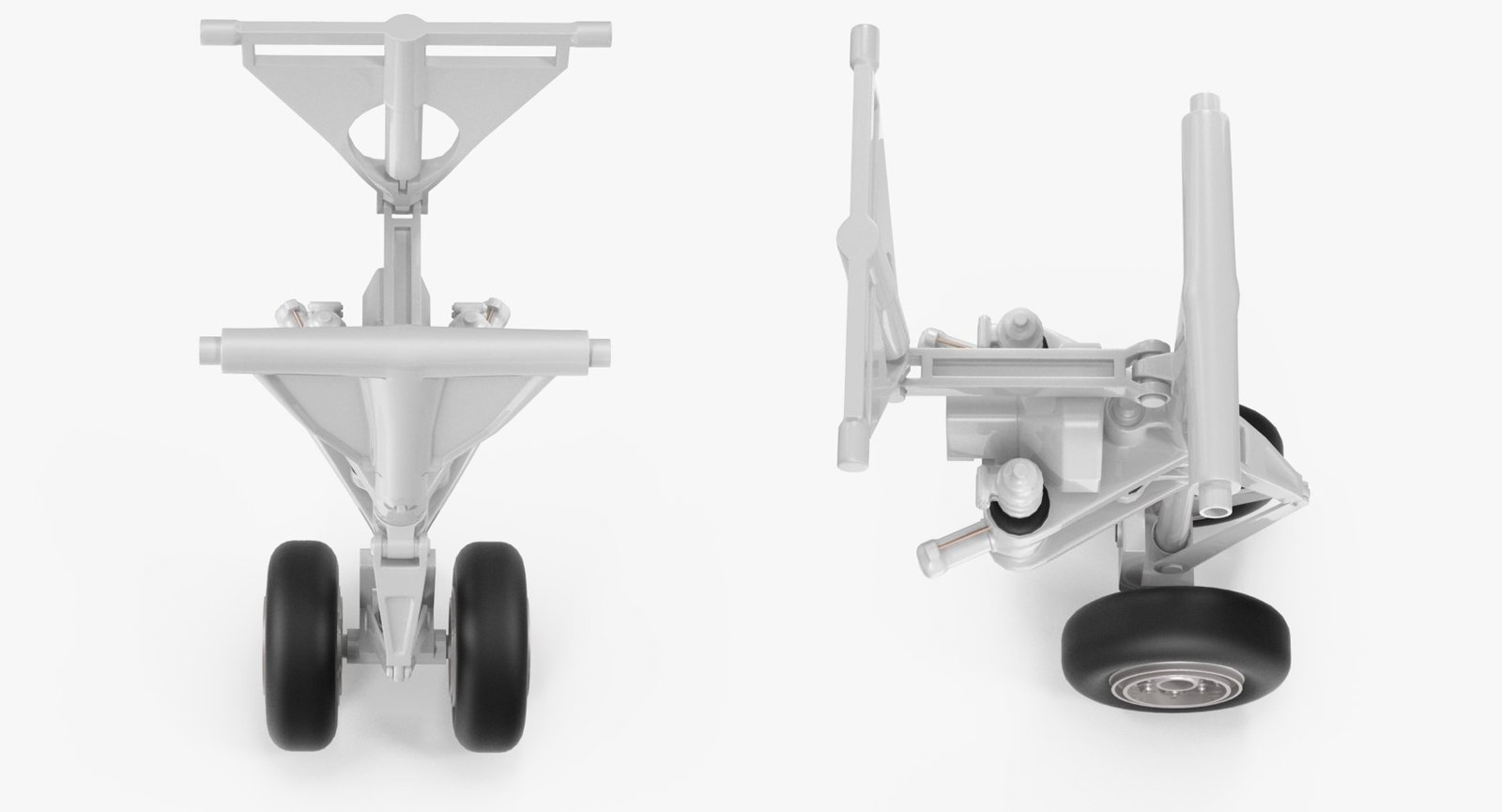
I still remember the first time I picked up a finished aircraft model and noticed something slightly off. The fuselage looked perfect, the paint had that gentle satin glow decals sat smoothly across the wings. But the landing gear? Thin. A little bent. Almost nervous under the weight of the model. That moment quietly introduced me to the world of aftermarket landing gear for model planes, a small upgrade that somehow changes everything. Most plastic aircraft kits arrive with perfectly decent parts.
They look right in the box. But once the model is assembled, weight and time begin telling their own story. Plastic landing gear can flex; sometimes it occasionally warps just enough to bother the eye. Not catastrophic, just noticeable. That is where metal replacements begin to make sense.
Why Modelers Replace Landing Gear:
Many experienced builders eventually look for stronger alternatives. Not because the original kit parts are terrible, but because aircraft models naturally concentrate weight on a few tiny points: the landing gear legs. White metal replacements solve this quietly, almost elegantly. That last detail matters. Builders rarely want to modify a fuselage just to improve strength. A typical aftermarket landing gear for model planes set includes carefully cast metal parts designed to replace the kit’s original plastic pieces while keeping the same mounting points.
Since around 1990, specialized companies have been producing white metal components for scale aircraft ranging from 1/18 all the way down to tiny 1/144 models. Each set is designed with a very specific philosophy in mind:
- Improve structural strength
- Correct small inaccuracies in kit parts
- Maintain identical attachment points
- Avoid duplicating plastic parts that are already accurate
White Metal Landing Gear Actually Improves:
At first glance metal landing gear looks almost identical to plastic. But once installed, the difference becomes quietly obvious. The advantages usually appear in several subtle ways. It’s a thoughtful balance between engineering and respect for the original kit.
Manufacturers have understood this for decades. These corrections are usually subtle, but once you see them, you can’t quite unsee them. Modelers appreciate those details.
Strength That Lasts:
Plastic slowly flexes over time. A model displayed for months (or years) may develop slightly bowed landing gear. White metal parts resist this. They carry weight confidently, they remain straight, and they hold alignment even in larger models where gravity constantly applies pressure.
For heavy aircraft bombers, large jets, or fully detailed builds, aftermarket landing gear for model planes becomes less of a luxury and more of a practical upgrade.
Corrected Shapes:
Many replacements set also fix small inaccuracies found in the original kit tooling.
Sometimes the angle of a strut is slightly off.
Sometimes a brace is missing.
Sometimes a wheel fork feels simplified.
Compatibility With Original Kits:
One thing that surprises newcomers is how carefully these sets are engineered. Most manufacturers intentionally keep the mounting points identical to the original plastic gear. That means:
- No major modifications
- No drilling new structural holes
- No complex alignment procedures
The metal parts simply replace the originals, almost like swapping puzzle pieces. It feels oddly satisfying.
Comes In A Typical Landing Gear Set:
Aircraft require the same configuration, so landing gear sets vary depending on the subject. Some include only the main gear. Others provide a more complete package. That design choice keeps the set practical rather than excessive. Manufacturers usually avoid duplicating parts that do not carry weight.
Common components often include:
- Main landing gear struts
- Nose gear or tail gear
- Reinforcement braces
- Small connecting supports
If a kit’s plastic torque links or hydraulic details already look accurate, they remain untouched. In other words, metal where strength matters, plastic where detail is already good.
Scale Range And Aircraft Coverage:
One fascinating aspect of this niche hobby is how wide the scale range has become. Manufacturers produce metal landing gear for aircraft models as large as 1/18 scale, huge display pieces, and as small as 1/144, where the parts are barely longer than a fingernail. Across those scales, aftermarket landing gear for model planes has quietly expanded to support many aircraft categories:
- WWII fighters
- Cold War jets
- Modern military aircraft
- Large bombers
- Civilian airliners
Modeler Should Consider The Upgrade:
Not every build requires metal gear. Sometimes plastic is perfectly adequate. Still, there are situations where the upgrade becomes worth considering. Over time, the decision becomes almost instinctive.
Many modelers install aftermarket landing gear for model planes when:
- The aircraft is large or heavy
- Resin upgrades increase model weight
- The original plastic gear looks fragile
- The builder plans long term display
You pick up a kit box, you examine the landing gear sprue you imagine the finished aircraft sitting on the shelf. And quietly you ask yourself:
The Craft Behind White Metal Parts:
There’s also something charming about how these parts are produced. White metal casting is an older manufacturing method, slower than injection molding, slightly imperfect in a way that feels almost handmade. The parts often carry tiny mold lines. Occasionally, a surface needs light polishing. A small adjustment here, a gentle filing there. For many builders, that process becomes part of the pleasure. You are not simply assembling a kit anymore.
You are refining it, strengthening it, giving it a quiet sense of permanence. It reminds me of restoring an old mechanical watch: careful adjustments, patience, respect for the original design.
A Small Upgrade That Changes The Whole Model:
At the end of a long build, most people focus on the paint scheme or the weathering. Those are the dramatic elements, the parts that catch the eye first. Landing gear rarely receives that kind of attention. Yet the aircraft rests on it. And when the stance is right, when the struts sit straight, wheels aligned, weight balanced, the whole model suddenly feels believable.
That is the quiet charm of aftermarket landing gear for model planes. Not flashy. Not dramatic. Just a simple improvement that keeps a carefully built aircraft standing tall on the shelf year after year… exactly the way the builder imagined it.














Leave a Reply