

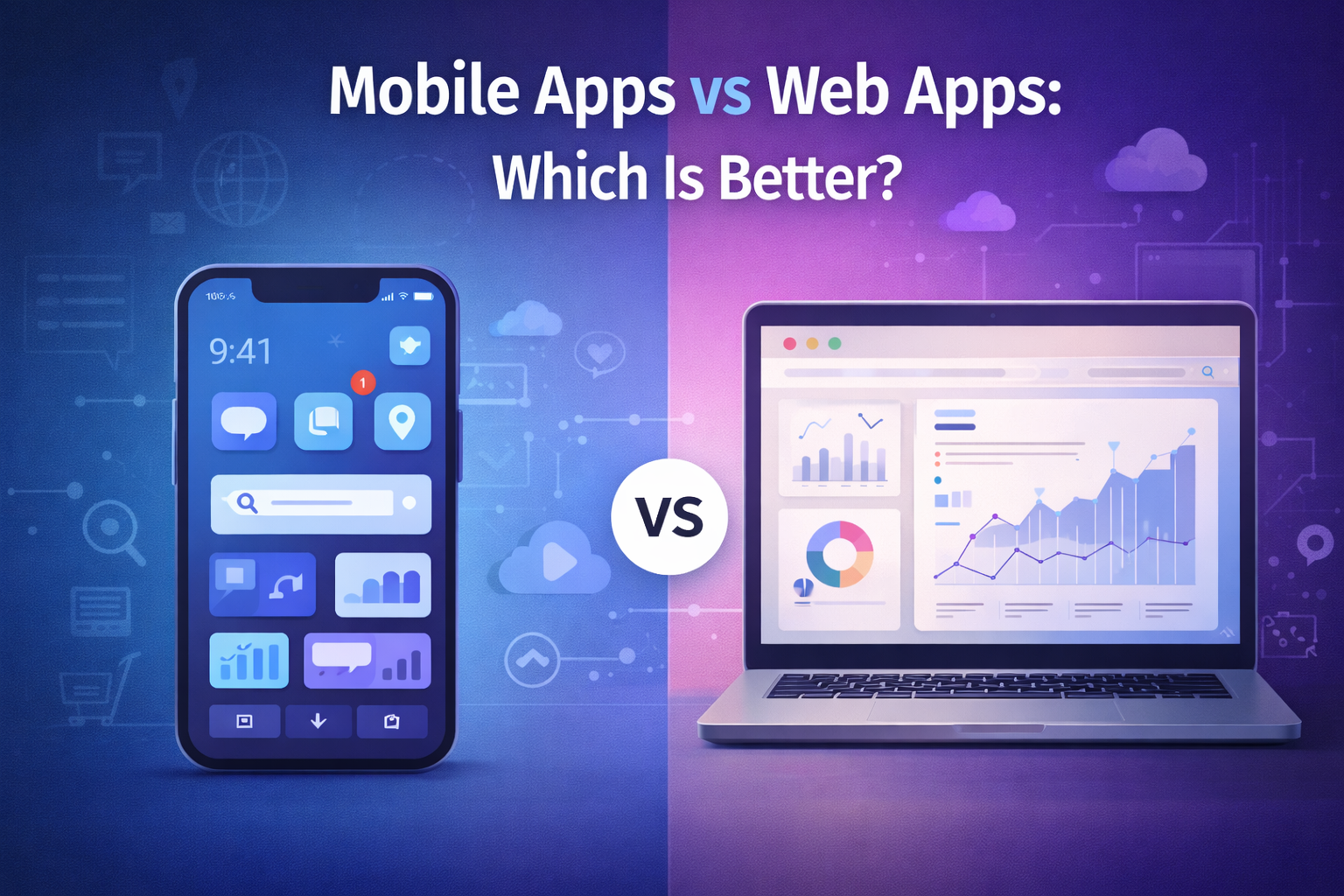
The choice between mobile apps or web apps has become a critical technology decision faced by many businesses in the modern digital first economy. Each of these two options can drive customer engagement, streamline operations, and aid growth, however, they are used differently and by different audiences. The platform selected is based on your business objectives, budget, time, and the expectations of the user.
This guide explains the difference between web app and mobile app, explores use cases for each, and helps you decide which solution is better for your business in 2026 and beyond.
What Is a Web App?
A web application is a web browser based application. The user does not have to download anything, they just have to enter a URL to use the service. They are online dashboards, online booking, portal, and SaaS.
Web application development focuses on building responsive, browser-based experiences that work across devices such as desktops, tablets, and smartphones.
Key Advantages of Web Apps
- Available on any browser enabled device.
- No installation required
- More economical and quick development.
- Reduced updates and maintenance.
- Centralized deployment
Web applications suit well in business ventures that require extensive exposure and rapid growth without a large number of application stores to manage.
What Is a Mobile App?
A mobile application is created to run directly on smartphones and tablets and is downloaded to app stores, e.g., Google Play or App Store by Apple. The development of mobile applications is concentrated on performance on a specific platform, platform feature, and user experience optimization.
Strategic Benefits of Mobile Apps.
- More successful and efficient UI.
- Offline functionality
- Permissions to device features (independent features, camera, GPS, notifications)
- Greater user involvement with push notifications.
- Improved personalization choice.
Mobile applications suit the purpose of the brand that is interested in gaining long-term involvement and regular contact with users.
Mobile Apps and Web Apps: Major Differences.
Understanding the difference between web app and mobile app becomes easier when comparing them side by side:
| Feature | Web Apps | Mobile Apps |
| Installation | No | Yes |
| Platform Dependency | Cross-platform | Platform-specific |
| Development Cost | Lower | Higher |
| Performance | Browser-dependent | High, native performance |
| Offline Access | Limited | Strong |
| Updates | Automatic | App store approvals |
This analogy underscores the point that there is no mobile apps vs web apps debate on which is superior in general- but on the use case.
When a Web App Is the Better Alternative.
Web applications can be the correct way out when:
- You need a shorter time-to-market.
- One of the key considerations is budget.
- Users utilize your service every now and then.
- Your audience consists of various types of devices.
- You require an internal scalable system or B2B tool.
For many startups and service-based businesses, web application development provides the most efficient path to launching a digital product.
When a Mobile App Makes More Sense
Mobile apps are better when:
- The priorities include user engagement and retention.
- Push notifications are value-added.
- Offline access is required
- The application is mostly dependent on the hardware of the devices.
- You would like a high quality, branded user experience.
Mobile application development is more valuable to the businesses, which operate in the retail, health care, logistics, and fitness sectors.
Can You Use Both?
A mixture of both platforms is used strategically by many successful companies:
- Onboarding, administrative or desktop web application.
- A mobile application of every-day interaction, and loyalty.
This mixed strategy will mean a wide reach with maximum mobile interaction- it will however need planning and increased investment.
The Process of Selecting the Right Solution to Your Business
Prior to making a decision on mobile apps vs web apps, inquire:
- Who is my primary user?
- Frequency of use of the app by them?
- Does it require offline access or device functionality?
- How much money and time do I have?
- What is the importance of scalability and maintenance?
The answers will guide whether web application development, mobile application development, or a combined strategy is best.
Why Work with NJ SOFTLAB
The selection of the correct platform is equally important as the construction of the same. NJ SOFTLAB helps businesses evaluate the difference between web app and mobile app by:
- Business objectives and user adopted behavior.
- Proposing the most affordable solution
- Production of scaled web and mobile applications.
- Securing performance, security and future development.
NJ SOFTLAB has end-to-end development, that is either a strong web platform or high performance mobile application, depending on the needs of your business.
Final Thoughts
The mobile apps vs Web apps debate does not have a universal winner. The most appropriate option will be identified by the way your users will deal with your product, as well as the purpose of your business.
With an appropriate approach- and one that provides value in the present and is capable of growing with confidence into the future, you can develop a solution that can deliver value today and grow with confidence in the future.
check out this article, SEO vs Paid Advertising: Which Is Better for Growth?




















Leave a Reply