5 Physical Branding Assets Every New Retail Storefront Needs
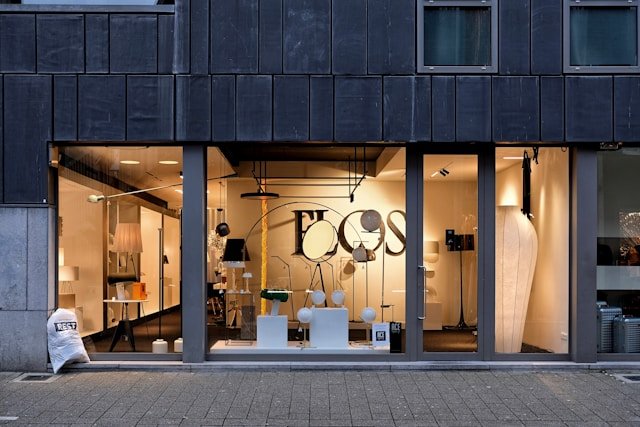
Opening day is a retail business’s single biggest opportunity to make a lasting first impression. Long before a customer browses the aisles or speaks to a sales associate, the building itself is doing the talking. While many retail owners put the majority of their efforts on digital marketing campaigns, inventory systems, and operational logistics prior to the grand opening, it is crucial to understand that building visuals, signages, lighting, and displays all contribute to a brand’s communication of its professionalism, trust, and quality within seconds.
Unfortunately, for some businesses, physical storefront branding is often overlooked and delayed until the final stages of preparation, and so some open with signage still incomplete, street visibility weak, and generic displays that barely attract any attention.
To maximize grand opening foot traffic and convert passing strangers into paying customers, a new retail storefront must strategically deploy five essential physical branding assets. From strong permanent storefront signs to dynamic displays and directional signage, choosing the right branding assets will help create visibility, improve navigation, and reinforce the store’s identity from the sidewalk to the checkout counter.
The 5 Physical Assets That Turn Initial Curiosity Into Eventual Foot Traffic
The Primary Storefront Sign: The Architectural Anchor
It is a no-brainer that a storefront sign is the architectural anchor of any retail business. It is what establishes the identity of a company within the community and creates immediate visual recognition for customers passing by the area, and so, choosing the right signs like channel letters, monument signs, and dimensional lettering is crucial to driving traffic. This, however, requires adherence to landlord guidelines and municipality permits that can take several weeks to acquire. That said, businesses that delay the process risk opening without a strong visible brand presence.
In addition, high-visibility exterior branding is proven to promote consumer trust and immediate brand recognition. Clear, thoughtfully designed signage helps shoppers easily identify what the business is all about before they enter the store. Sign placement, contrast, lighting, and readability, on the other hand, contribute to daytime and nighttime visibility.
High-Brightness Dynamic Displays: The Foot-Traffic Driver
In the modern retail landscape, businesses compete for attention in commercial spaces that are packed and crowded. While static signs are still important, dynamic displays introduce movement and flexibility to an otherwise boring storefront. Gimmicks like interactive digital screens, rotating promotions, and scheduled messaging not only allow businesses to adapt content throughout the day depending on foot traffic or promotional priorities, but they also simply capture the attention of modern consumers by breaking through clutter and environmental noise.
Several studies on retail signage shows that digital displays are drivers of engagement, customer satisfaction, and impulse purchases. Digital display signages also enable businesses to react quickly to changing campaigns without the need to re-print materials, allowing managers to highlight morning specials, evening promotions, limited-time launches, and event announcements in real time.
Because dynamic displays support experiential retail design, they naturally attract pedestrians and drivers’ attention, even in busy traffic. In noisy and cluttered retail environments, motion often becomes a factor that separates an ignored display from one that successfully pulls customers inside.
Striking Window and Vestibule Graphics: The Storefront Storytellers
An empty storefront window represents a valuable opportunity for advertising prior to a launch. Unused glass can basically be transformed into a promotional surface that effectively communicates grand opening dates, teaser messages, enticing product imagery, and hiring announcements before the grand opening. Instead of merely exposing unfinished construction of interiors, companies can take advantage of vinyl graphics to build anticipation and branding while the business is not yet running.
Aside from this, well-designed window graphics also double as storytelling tools through the use of minimalist layouts, bold typography, and thoughtfully curated visuals that aid customers in understanding the store’s identity right from the sidewalk. Current billboard design trends reveal that ultra-minimalist messaging and neon gradient color palettes work best for capturing attention at high speeds. That said, these principles translate well to storefront window displays where customers make purchasing decisions in the blink of an eye.
Grand Opening Banners and Flags: The Event Broadcasters
During the final weeks prior to the launch, temporary promotional materials like grand opening banners and flags are used to create urgency and excitement among the community. These include vinyl banners, mesh barriers, and teardrop flags that communicate that something new is happening, inviting passersby to pause and look.
While permanent signs are still being installed, grand opening banners are especially useful in helping visibility, in addition to reinforcing the store’s branding during the launch period. Because motion naturally stands out in static retail environments, feather flags and any moving outdoor elements are used to attract peripheral attention.
In order to ensure that these massive outdoor installations don’t look blurry or cheap up close, businesses must also understand the technical requirements behind large format printing. Resolution affects how banners and signages appear at full scale, and so industry printing guides recommend utilizing vector files and proper output dimensions at approximately 150 to 300 PPI, depending on viewing distance.
Point-of-Purchase (POP) & In-Store Directional Signage: The Conversions Maximizers
Branding should not just stop on the outside. It should continue once customers walk through the front door. To further guide visitors throughout the store, point-of-purchase displays and directional signage are used. Beyond information and decoration, these tools also support cross-selling, navigation, and customer comfort. Aisle markers, promotional counter cards, tabletop displays, and wayfinding signs effectively help shoppers move through the space efficiently. As a result, consumer confusion is reduced and overall customer experience is improved.
Furthermore, these directional signages, whether printed or painted, must also align with ADA standards for accessibility. For a wider range of customers, high-contrast text, readable fonts, proper placement, and non-glare materials help improve visibility. Alongside compliance to accessibility standards, consistent branding across all interior signage reinforces brand recognition while maintaining a cohesive brand aesthetic from entrance to checkout.
Building a Storefront Customers Remember
A successful retail launch relies on more than just inventory and digital marketing—it also depends on physical branding assets that shape customers’ perception of the business long before they even interact with the products and staff. Permanent storefront signs establish brand identity, digital displays increase foot traffic and engagement, window graphics build excitement and anticipation, banners create urgency, and interior signage improves navigation.
Together, these assets create a cohesive and well-connected branding system that not only strengthens visibility, but also encourages foot traffic and customer retention. While a strong digital presence is critical, retail success is ultimately anchored in real-world foot traffic. Thus, businesses that take time to work on these five physical branding assets before the ribbon cutting ceremony, are sure to successfully lay the groundwork for long-term brick-and-mortar profitability and visibility within their communities.
About The Author