Why Modern Retail Success Depends on Smart Logistics
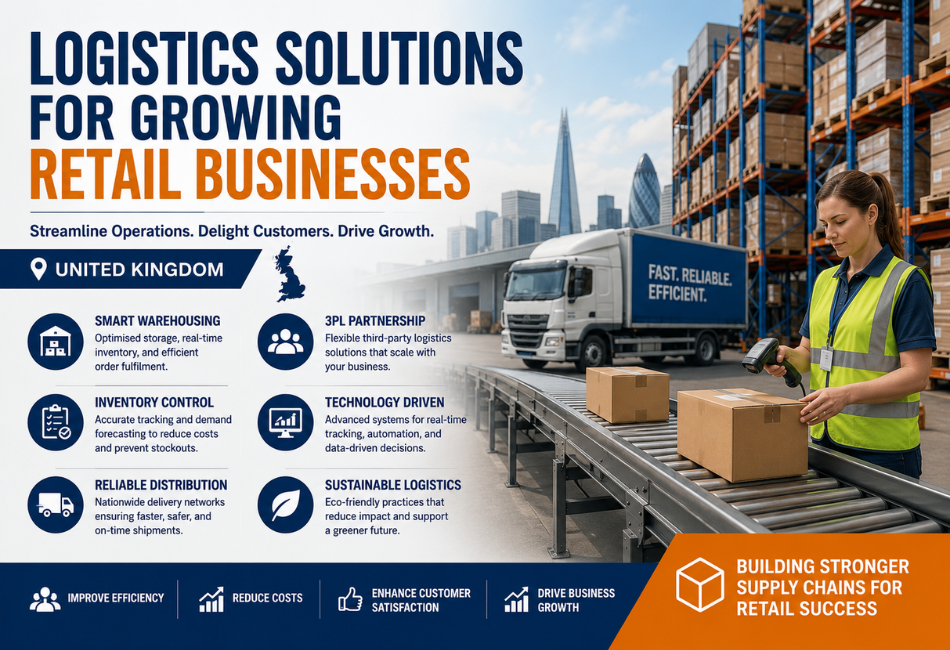
The retail industry in the United Kingdom has undergone significant transformation over the past decade. Consumer expectations have evolved, online shopping continues to expand, and competition has intensified across virtually every retail sector. While product quality and customer service remain critical, one factor increasingly determines whether a retail business thrives or struggles: logistics.
For growing retail businesses, logistics is no longer simply about moving goods from one location to another. It has become a strategic function that influences customer satisfaction, operational efficiency, profitability, and long-term growth. Whether operating a physical shop, an eCommerce store, or a multichannel retail business, having the right logistics solutions in place can make the difference between sustainable expansion and costly setbacks.
The Growing Challenges Facing UK Retail Businesses
As retail businesses expand, logistical complexities increase rapidly. What works for a small operation handling a few orders per day often becomes inadequate when sales volumes rise.
Common challenges include:
- Managing larger inventory volumes
- Meeting faster delivery expectations
- Reducing shipping costs
- Handling returns efficiently
- Maintaining stock accuracy
- Serving customers across multiple regions
- Scaling operations during seasonal peaks
Without a robust logistics strategy, these challenges can create bottlenecks that impact customer experience and profitability.
Warehouse Management: The Foundation of Retail Growth
Efficient warehousing forms the backbone of successful retail logistics. As product ranges expand and order volumes increase, businesses need organised systems that allow inventory to move quickly and accurately.
Modern warehouse solutions help retailers:
- Track stock levels in real time
- Reduce picking and packing errors
- Improve inventory visibility
- Minimise stock shortages
- Optimise storage space
Retailers that invest in effective warehouse management often experience faster order fulfilment and lower operational costs, both of which contribute directly to improved customer satisfaction.
Inventory Control: Preventing Lost Sales and Excess Stock
Inventory management remains one of the most important aspects of retail logistics.
Holding too much inventory ties up valuable capital and increases storage costs. Holding too little can result in stockouts, missed sales opportunities, and disappointed customers.
Advanced inventory control systems enable retailers to:
- Forecast demand accurately
- Monitor stock movement
- Identify fast-selling products
- Reduce overstock situations
- Improve purchasing decisions
For growing UK retailers, maintaining the right balance between supply and demand is essential for protecting profit margins and supporting business expansion.
Fast and Reliable Distribution Networks
Today’s consumers expect quick deliveries regardless of where they live. Next-day and even same-day delivery options have become increasingly common across the UK retail market.
To meet these expectations, retailers require efficient distribution networks that can handle growing order volumes without compromising reliability.
Effective distribution solutions provide:
- Faster delivery times
- Improved route planning
- Reduced transportation costs
- Greater shipment visibility
- Enhanced customer satisfaction
A well-structured distribution network ensures products reach customers efficiently while maintaining service standards that encourage repeat business.
Third-Party Logistics (3PL): Supporting Retail Expansion
Many growing retailers reach a point where managing logistics internally becomes time-consuming and expensive. This is where third-party logistics providers can offer substantial value.
A 3PL partner can manage key logistics functions such as:
- Warehousing
- Inventory management
- Order fulfilment
- Distribution
- Returns processing
By outsourcing logistics operations, retailers can focus on core business activities including marketing, product development, and customer engagement.
For businesses looking to scale quickly across the United Kingdom, partnering with an experienced logistics provider often delivers greater flexibility and operational efficiency.
Technology-Driven Logistics Solutions
Technology is reshaping retail logistics across every stage of the supply chain.
Modern logistics systems allow retailers to gain better visibility into operations while improving efficiency and accuracy.
Key technologies include:
Real-Time Tracking
Customers increasingly expect visibility into the status of their orders. Real-time tracking improves transparency and reduces customer service enquiries.
Automated Order Processing
Automation reduces manual tasks and accelerates order fulfilment, allowing businesses to process larger volumes with fewer errors.
Data Analytics
Retailers can use logistics data to identify trends, improve forecasting, and optimise operational performance.
Integrated Management Systems
Integrated platforms connect inventory, warehouse operations, transportation, and sales channels, creating a streamlined logistics ecosystem.
These technologies help growing retailers make informed decisions while supporting scalable growth.
Managing Seasonal Demand Effectively
Retail demand often fluctuates throughout the year. Events such as Black Friday, Christmas, Easter, and summer promotions can significantly increase order volumes.
Businesses that fail to prepare for these peaks may experience:
- Delayed deliveries
- Inventory shortages
- Customer complaints
- Increased operational costs
Flexible logistics solutions enable retailers to scale operations during busy periods without disrupting service quality.
Successful peak-season planning includes:
- Forecasting demand early
- Increasing inventory where necessary
- Expanding warehousing capacity
- Coordinating transportation resources
- Implementing contingency plans
Preparation is essential for turning seasonal demand into profitable growth opportunities.
Returns Management: A Critical Part of Customer Experience
Product returns are an unavoidable aspect of modern retail, particularly within eCommerce.
An inefficient returns process can frustrate customers and increase operational costs. Conversely, a smooth returns experience can strengthen customer trust and encourage repeat purchases.
Effective returns management should include:
- Clear return policies
- Fast processing times
- Accurate product inspections
- Efficient restocking procedures
- Customer communication throughout the process
Retailers that prioritise returns logistics often enjoy higher customer retention rates and stronger brand loyalty.
Sustainable Logistics for Modern Retailers
Sustainability has become an important consideration for UK consumers. Many shoppers now prefer businesses that demonstrate environmental responsibility.
Retailers can improve sustainability through logistics initiatives such as:
- Route optimisation to reduce fuel consumption
- Consolidated deliveries
- Eco-friendly packaging
- Energy-efficient warehousing
- Reduced waste across the supply chain
Sustainable logistics practices not only support environmental goals but can also reduce operating costs and enhance brand reputation.
Choosing the Right Logistics Strategy
Every retail business has unique requirements based on its size, product range, customer base, and growth objectives.
When evaluating logistics solutions, retailers should consider:
- Current order volumes
- Future growth projections
- Geographic coverage requirements
- Technology integration capabilities
- Cost efficiency
- Service reliability
- Scalability
The most effective logistics strategy is one that supports both present operations and future expansion.
Conclusion
For growing retail businesses in the United Kingdom, logistics is far more than a back-office function. It directly influences customer satisfaction, operational efficiency, profitability, and competitive advantage.
From inventory management and warehousing to distribution and technology integration, the right logistics solutions create the foundation for sustainable growth. As customer expectations continue to evolve, retailers that invest in efficient, scalable logistics systems will be better positioned to expand their market presence, improve customer loyalty, and achieve long-term success.
Businesses that view logistics as a strategic growth driver rather than simply an operational necessity will gain a significant advantage in today’s increasingly competitive retail landscape.
Frequently Asked Questions (FAQs)
1. Why are logistics solutions important for growing retail businesses?
Logistics solutions help retailers manage inventory, fulfil orders efficiently, reduce costs, improve customer satisfaction, and support business growth.
2. What is a 3PL provider in retail logistics?
A third-party logistics (3PL) provider manages logistics functions such as warehousing, inventory storage, order fulfilment, transportation, and returns on behalf of retailers.
3. How can logistics improve customer satisfaction?
Fast deliveries, accurate order fulfilment, real-time tracking, and efficient returns processes all contribute to a better customer experience.
4. What role does technology play in retail logistics?
Technology improves visibility, automates processes, enhances inventory management, supports forecasting, and increases overall operational efficiency.
5. How can retailers prepare for seasonal demand increases?
Retailers can prepare by forecasting demand, increasing inventory levels, expanding logistics capacity, and coordinating with logistics partners well before peak periods.
6. What are the benefits of sustainable logistics?
Sustainable logistics can reduce operational costs, lower environmental impact, improve brand reputation, and appeal to environmentally conscious consumers.
7. How does inventory management affect retail profitability?
Effective inventory management reduces storage costs, prevents stock shortages, minimises waste, and ensures products are available when customers need them.
8. When should a retail business outsource logistics?
Retailers often consider outsourcing logistics when order volumes increase, operational complexity grows, or they want to focus more on sales and business development.
About The Author