

For utility companies and urban planners around the globe, one of the most fiercely debated, high-stakes infrastructure decisions is a deceptively simple question: do we hang the power lines in the air, or do we bury them in the dirt? The debate between underground vs. overhead cabling is not just an engineering puzzle; it is a complex calculation involving massive capital expenditure, long-term environmental resilience, urban aesthetics, and public safety. As governments push for greener infrastructure, integrating Sustainable Solar Power Solutions into residential grids, the need for a reliable and robust delivery system has never been more urgent. Making the right strategic choice between burying or hanging cables will dictate the stability of a region’s power supply for the next 50 years.
The Case for Overhead Cabling: Cost and Accessibility
For over a century, stringing uninsulated aluminum and copper wires between tall wooden or steel poles has been the undisputed standard for global electrification. The reasons for its dominance are primarily economic and practical.
The Unbeatable Economics of Air
The single biggest advantage of overhead cabling is the initial capital expenditure (CAPEX). Building an overhead power line is overwhelmingly cheaper than burying one. The process involves erecting poles and stringing wires—tasks that require relatively simple machinery and labor. Furthermore, air is an excellent, free electrical insulator.
Ease of Maintenance and Upgrades
Overhead lines offer unparalleled visibility. When a violent storm snaps a line or a transformer blows a fuse, utility crews can visually locate the fault from the road in minutes. Furthermore, if a utility needs to upgrade the grid’s capacity to handle new housing developments, stringing a thicker wire on existing poles is a fast and simple operation.
The Case for Underground Cabling: Ultimate Resilience
Despite the low cost of overhead lines, their exposure to the elements makes them highly vulnerable. In response to increasing extreme weather events, public outcry over prolonged blackouts, and aesthetic demands in high-value urban areas, the strategic shift toward underground cabling is accelerating rapidly.
Fortifying the Grid Against Disaster
Overhead lines are sitting ducks for natural disasters. High-velocity winds from hurricanes or typhoons snap utility poles like toothpicks. Heavy ice accumulation causes wires to sag and break under the immense weight. Furthermore, exposed lines running through forested areas are a primary trigger for catastrophic wildfires when high winds blow adjacent trees into the live wires.
Underground cables, safely encased in thick conduits and buried meters beneath the earth, are virtually immune to these atmospheric threats. Moving power lines underground is the most effective “grid hardening” strategy available, ensuring that the power stays on during severe storms, safeguarding hospitals, emergency services, and vulnerable populations.
Urban Aesthetics and Space Maximization
In densely populated megacities, space is a premium commodity. Overhead power lines create unsightly visual clutter, lowering property values and limiting the vertical growth of the city skyline. Undergrounding removes this “visual pollution.” Furthermore, by moving the power infrastructure into subterranean utility corridors, cities free up valuable above-ground real estate for wider sidewalks, new transit lanes, or green spaces.
The Engineering Challenges of Going Underground
If undergrounding is so resilient, why isn’t every wire buried? The answer lies in the severe technical and financial hurdles.
The Heat Dissipation Dilemma
As high-voltage electricity flows through a cable, it generates intense heat due to electrical resistance. If the heat cannot escape into the surrounding soil, the cable will literally melt itself from the inside out. Utilities must perform complex thermal resistivity calculations on the local soil and often import specialized, heat-conducting “thermal backfill” sand to surround the buried cables to prevent catastrophic failure.
Complex Fault Finding and Excavation Costs
While underground cables fail much less frequently than overhead lines, when they do fail, it is a nightmare to fix. Utilities must dispatch specialized vans with highly sensitive acoustic and electrical radar equipment to “listen” for the underground spark to pinpoint the fault location. Once found, crews must bring in heavy excavators to tear up roads, sidewalks, and concrete to reach the damaged cable—a process that turns a two-hour overhead repair into a multi-day, highly expensive, traffic-disrupting ordeal.
Making the Strategic Choice
Ultimately, the decision is rarely an “all or nothing” proposition. Modern utilities employ a hybrid strategy based on risk assessment and geography. They maintain cost-effective overhead lines for long-distance rural transmission where the risk of human interaction is low. However, for critical city centers, disaster-prone coastal regions, and highly congested industrial parks, they invest the heavy capital required to bury the lines.
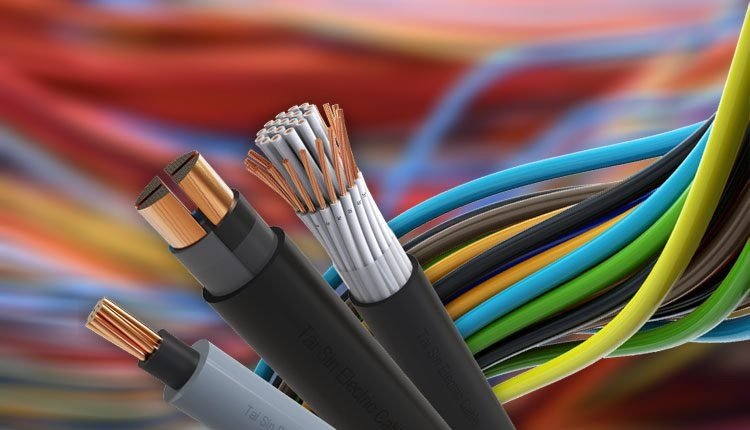
Executing an underground strategy safely requires partnering with a trusted Cable Manufacturer & Supplier in the UAE capable of producing heavy-duty, water-blocked, and thickly insulated underground cables guaranteed to survive burial for half a century without degrading.
Conclusion: Balancing the Budget with Reliability
The debate between underground and overhead cabling is a delicate balancing act between the immediate demands of the budget and the long-term demands of reliability. Overhead lines offer cheap, accessible power for rapid expansion. Underground systems offer the ultimate defense against an increasingly hostile climate and the aesthetic demands of modern cities.
Your Underground vs. Overhead Cabling Questions Answered (FAQs)
- How much more expensive is it to put power lines underground compared to overhead?
It is significantly more expensive. Depending on the terrain (dirt vs. solid rock) and the urban density (open fields vs. crowded city streets), burying power lines can cost anywhere from 5 to 10 times more per mile than stringing traditional overhead lines. The high cost is driven by heavy excavation labor, specialized conduit piping, and the expensive, thickly insulated cables required. - Do underground power lines ever lose power during a storm?
While they are incredibly resilient to wind, ice, and falling trees, they are not completely invincible. Severe flooding can sometimes infiltrate underground vaults and cause short circuits if the equipment isn’t perfectly sealed. Additionally, earthquakes can cause the ground to shift violently, physically shearing or stretching the buried cables until they snap. - Why do underground cables need to be insulated but overhead cables don’t?
Overhead cables are suspended high in the air, physically separated from people, trees, and the ground. The vast amount of ambient air acts as a natural, free electrical insulator. - If a tree falls and breaks an underground cable, is it harder to fix?
A falling tree will almost never break an underground cable because the cable is buried safely out of reach. However, if an underground cable fails for another reason (like an accidental dig-in by a construction crew), it is vastly harder to fix. Crews must use specialized sonar equipment to find the exact location of the invisible break, tear up the concrete or asphalt road, dig a massive hole, splice the thick cable in a dirty environment, and then repair the road surface—a very slow and expensive process. - Is it true that burying cables makes the internet and power slower?
No, burying cables does not make the electricity or the internet data travel any slower. The speed of the transmission is unaffected.













Leave a Reply