

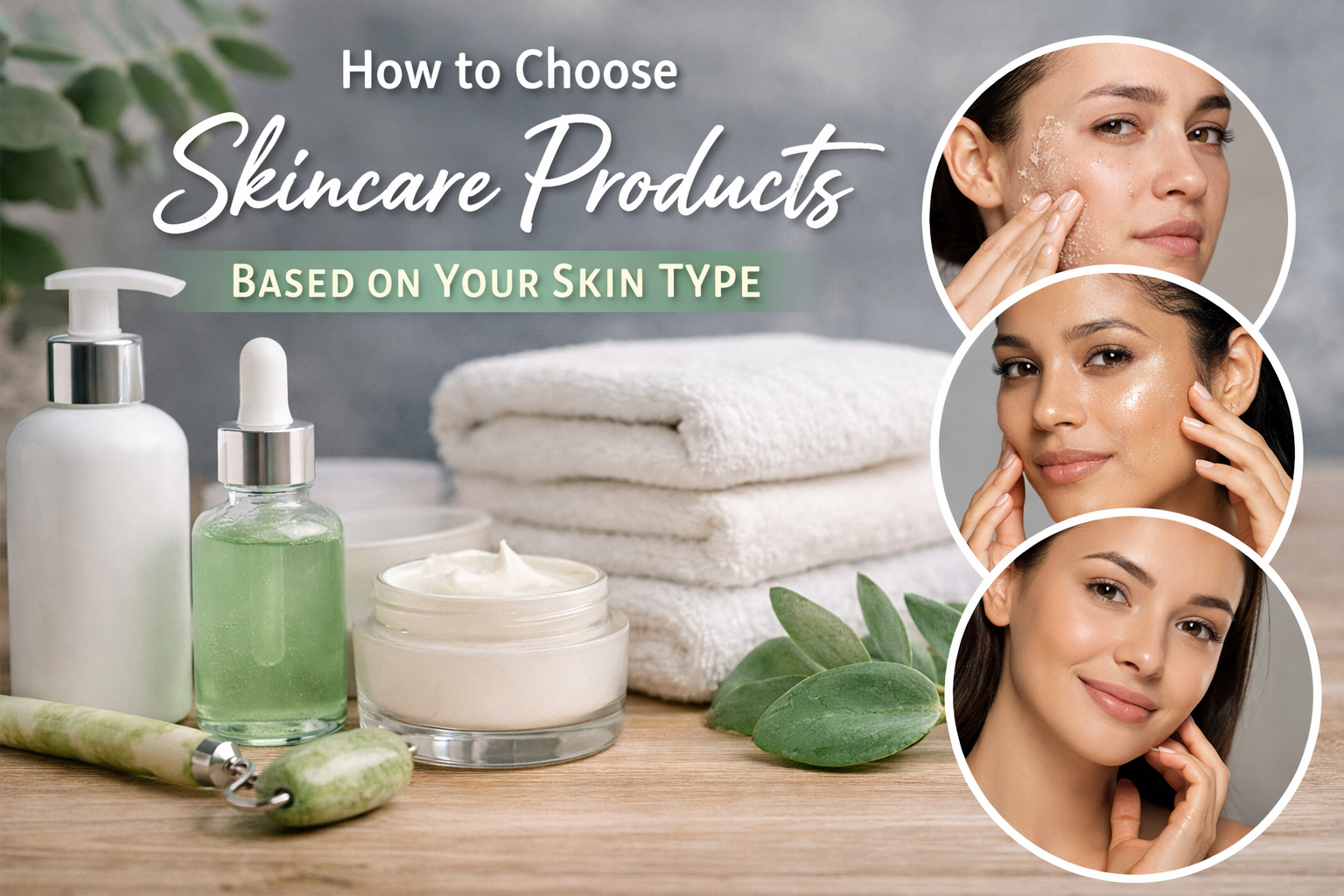
Choosing the right skincare products can feel overwhelming. Shelves and online stores are packed with cleansers, serums, moisturizers, and treatments that promise glowing skin. The truth is, even the most expensive skincare products will not work if they are not suited to your skin type. Understanding your skin and selecting products that support its natural balance is the key to healthy, long lasting results.
This guide explains how to identify your skin type and choose skincare products that work with your skin instead of against it.
Why Skin Type Matters When Choosing Skincare Products
Your skin type determines how your skin reacts to ingredients, textures, and formulas. Using skincare products designed for a different skin type can lead to irritation, breakouts, dryness, or excess oil production. For example, heavy creams can clog pores on oily skin, while foaming cleansers can strip moisture from dry skin.
Skin type is different from skin concerns. Skin type is usually consistent, while concerns like acne, pigmentation, or fine lines can change over time. When you choose skincare products based on your skin type first, it becomes much easier to address specific concerns safely and effectively.
How to Identify Your Skin Type
Before buying any skincare products, it is important to understand your skin type. Here are the most common categories and how to recognize them.
Normal Skin
Normal skin feels comfortable most of the time. It is not overly oily or dry and rarely reacts to new skincare products. Pores are usually small and the skin has a balanced, healthy appearance.
Dry Skin
Dry skin often feels tight, rough, or flaky, especially after cleansing. It may appear dull and can be more prone to irritation. Dry skin needs skincare products that focus on hydration and barrier repair rather than oil control.
Oily Skin
Oily skin produces excess sebum, which can cause shine, enlarged pores, and breakouts. Many people with oily skin make the mistake of over cleansing, which can actually increase oil production. The right skincare products help balance oil without stripping the skin.
Combination Skin
Combination skin has both oily and dry areas. The forehead, nose, and chin are often oily, while the cheeks may feel dry or normal. Choosing skincare products for combination skin means finding balance or using different products for different areas.
Sensitive Skin
Sensitive skin reacts easily to fragrance, harsh ingredients, or environmental factors. Redness, burning, or itching are common signs. Gentle skincare products with minimal ingredients work best for sensitive skin.
Essential Skincare Products Every Routine Needs
No matter your skin type, every routine should include a few core skincare products.
Cleansers
Cleansers remove dirt, oil, and impurities. Dry and sensitive skin benefits from creamy or hydrating cleansers, while oily skin usually responds well to gentle gel or foam cleansers. The goal is clean skin without tightness.
Toners
Toners help rebalance the skin after cleansing and prepare it for other skincare products. Alcohol free toners are best for most skin types, especially sensitive and dry skin.
Serums
Serums deliver targeted ingredients like hydration boosters, antioxidants, or skin renewing compounds. Choosing serums based on your skin type ensures better absorption and fewer reactions.
Moisturizers
Moisturizers are essential skincare products for all skin types. Even oily skin needs moisture. Lightweight gels work well for oily skin, while richer creams support dry skin.
Sunscreen
Sunscreen protects the skin from premature aging and damage. It is one of the most important skincare products in any routine. Choose a texture that feels comfortable so you can use it daily.
How to Read Skincare Product Labels
Understanding labels helps you choose skincare products with confidence.
Ingredient Lists
Ingredients are listed in order of concentration. The first few ingredients make up most of the product. If an ingredient you want is listed near the end, it may not be present in a meaningful amount.
Active and Inactive Ingredients
Active ingredients provide specific benefits, such as hydration or brightening. Inactive ingredients support texture and preservation. Both matter when evaluating skincare products.
Marketing Claims Versus Reality
Terms like natural, clean, or dermatologist tested are often marketing phrases. They do not guarantee effectiveness or safety. Always check the ingredient list rather than relying on claims alone.
Choosing Skincare Products for Your Skin Type
Best Skincare Products for Dry Skin
Dry skin benefits from skincare products with hydrating and barrier supporting ingredients. Look for rich moisturizers and gentle cleansers. Avoid products with strong alcohols or harsh exfoliants.
Best Skincare Products for Oily Skin
Lightweight, non pore clogging skincare products work best for oily skin. Ingredients that help balance oil production can reduce shine without over drying the skin.
Best Skincare Products for Sensitive Skin
Sensitive skin needs simple formulas. Choose fragrance free skincare products and always patch test new items before full use.
Best Skincare Products for Combination Skin
Combination skin often responds well to mixing products. Lightweight formulas can be used on oily areas, while richer products support dry zones.
Common Mistakes to Avoid When Buying Skincare Products
One of the biggest mistakes is following trends instead of listening to your skin. Another common issue is using too many skincare products at once, which can overwhelm the skin. Skipping patch tests also increases the risk of irritation.
Consistency matters more than variety. A few well chosen skincare products used regularly will always outperform a crowded routine.
Tips for Building a Simple and Effective Skincare Routine
Start with the basics. A cleanser, moisturizer, and sunscreen form the foundation of healthy skin. Once your skin feels balanced, you can slowly introduce additional skincare products to target specific concerns.
Introduce new products one at a time. This makes it easier to see how your skin reacts and prevents unnecessary irritation.
When to Seek Professional Advice
If your skin continues to react or worsen despite using appropriate skincare products, it may be time to seek professional guidance. A skincare professional or dermatologist can help identify underlying issues and recommend suitable solutions.
Conclusion
Choosing skincare products based on your skin type is one of the most important steps in building a healthy routine. When you understand your skin and select products that support its natural needs, you reduce irritation and improve results. Instead of chasing trends, focus on consistency and thoughtful choices. The right skincare products can make a lasting difference in how your skin looks and feels.
Check out this article, What to Know About Merino Wool Socks.




















Leave a Reply