

If you’ve ever looked at a competitor’s website and wondered how they rank for everything in your niche, it probably isn’t luck. It’s also not just because they have a bigger budget. Most likely, they’ve stopped chasing random keywords and started building a moat of authority around their topics. It’s a common frustration to write a brilliant piece of content only to see it buried by a generic site that simply has more “coverage” than you. To win in 2026, you need a smart Internal Linking Strategy that proves to Google you aren’t just a guest in the industry, but the person who owns the building.
Topical authority is the measure of how much a search engine trusts your site as a go-to source for a specific subject. You don’t get this by writing one great article. You get it by answering every possible question a user might have about that subject. We’re going to walk through how to build content clusters that organize your knowledge in a way that search engines find impossible to ignore.
What Exactly is Topical Authority?
In the early days of the web, you could rank by simply having the most backlinks. Today, Google is much smarter. It uses advanced AI to see if a website has “depth.” If you only have one page about “Digital Marketing,” Google might not trust you. But if you have fifty pages covering everything from email automation to local search, you become an authority.
Think of it like a library. If you’re looking for a book on gardening, would you go to a shop that has one shelf of plant books, or a dedicated library with ten aisles of them? Google wants to send its users to the library.
The Shift from Keywords to Entities
Search engines no longer just look for matching strings of text. they look for “entities.” These are concepts, people, or things. When you build a cluster, you’re essentially telling Google, “I understand every entity related to this topic.” This builds a level of trust that a single keyword-optimized page can never achieve.
The Blueprint of a Content Cluster
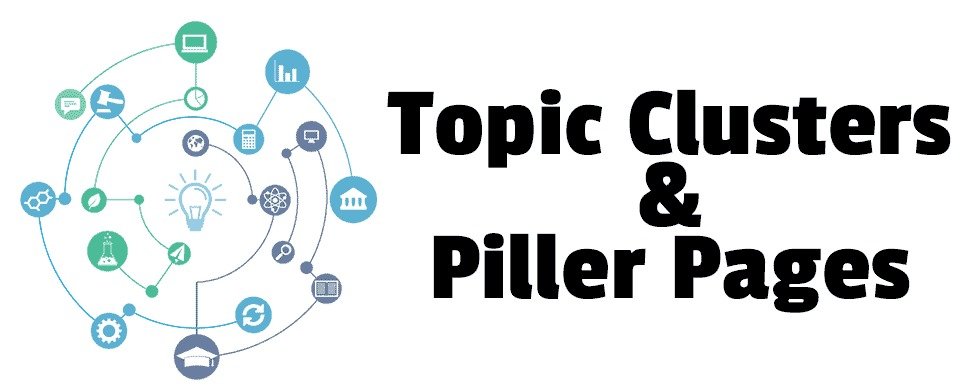
A content cluster is a group of pages that live together under one umbrella. It’s the most effective way to organize your site for both people and bots. It consists of three main parts.
The Pillar Page
This is your foundation. It’s a broad, comprehensive guide that covers a high-level topic in depth. It shouldn’t get too into the weeds on any one sub-topic. Instead, it should give a solid overview of everything.
Cluster Content
These are your “deep dive” articles. Each one focuses on a specific, long-tail keyword related to the pillar. If your pillar is “The Ultimate Guide to SEO,” a cluster page might be “How to Fix 404 Errors” or “A Guide to Schema Markup.”
The Connective Tissue
This is the most important part. You must link every cluster page back to the pillar, and the pillar should link out to every cluster page. This creates a circular flow of authority.
Why Google Loves Clusters
Google’s job is to provide the best possible user experience. If a user clicks on your site and finds the answer to their first question, that’s good. If they find the answers to their next five questions without ever leaving your site, that’s amazing.
When you use a logical SEO Link Structure, you make it easy for Google’s crawlers to understand the context of your site. It helps the bot see that Page A is related to Page B. This “semantic relationship” is a massive ranking signal. It tells the algorithm that your site is a cohesive resource, not just a collection of random blog posts.
Boosting the “Underdogs”
One of the best things about clusters is that your high-performing pages can help your low-performing ones. If your pillar page has lots of backlinks and high traffic, that power flows down through your internal links to your smaller, newer cluster pages. It’s a “rising tide lifts all boats” scenario.
How to Choose Your Topics
You can’t build authority in everything at once. You have to pick your battles. Start by looking at your business goals. What is the one thing you want to be known for?
Find the “Knowledge Gaps”
Look at what your competitors are writing. Are they missing something? Maybe they have a guide on “How to Bake,” but they don’t have specific articles on “High-Altitude Baking” or “Baking with Sugar Substitutes.” Those gaps are your opportunity to provide more value than anyone else.
Use the “Rule of Three”
For every pillar page you create, try to have at least three to five cluster pages ready to go. A pillar without clusters looks like an empty shelf. A cluster without a pillar feels disorganized. You need both for the strategy to work.
The Human Side of Content Clusters
It’s easy to get caught up in the technical side of Internal Links for SEO, but don’t forget that real people are reading this. Your links should always feel helpful.
Navigation vs. Exploration
Good Website Navigation Optimization means the user never feels lost. If they are reading about a complex topic, offer them a link to a “Beginner’s Guide” version. If they are reading a basic overview, offer them a “Pro Tips” link. You’re essentially acting as a tour guide for your own expertise.
If you’re struggling to see the forest for the trees, it might be helpful to get a fresh set of eyes on your site. Many global brands work with an SEO Expert in Pakistan or a specialized strategist to map out these journeys. It’s often easier for an outsider to see where your “navigation” is confusing or where you’re missing a vital link in the chain.
Step-by-Step Guide to Building Authority
If you’re starting from scratch, don’t panic. You don’t have to write fifty articles this week. Follow this simple process.
- Identify your core pillar: Pick a broad topic that is central to your business.
- Brainstorm 10 sub-topics: What are the most common questions people ask about your pillar?
- Audit your existing content: Do you already have articles that fit into this cluster? Move them there.
- Write the missing pieces: Fill in the gaps with new, high-quality content.
- Link them up: Ensure the pillar and clusters are all talking to each other.
Practical Examples of Topical Authority
Let’s say you run a travel blog. Your pillar might be “The Complete Guide to Traveling in Japan.”
Your cluster pages would be:
- “The Best Sushi Spots in Tokyo”
- “How to Use the Japan Rail Pass”
- “A 3-Day Itinerary for Kyoto”
- “What to Pack for a Winter Trip to Hokkaido”
By the time you finish this cluster, you’ve covered the “what,” “where,” “how,” and “when” of Japan travel. Google now sees you as a reliable source for that specific destination. If someone searches for anything related to Japan travel, you have a much higher chance of showing up than a site that only has one random post about a trip to Osaka.
Common Mistakes to Avoid
Building topical authority takes time, and there are a few traps you can fall into along the way.
Topic Overlap (Keyword Cannibalization)
Don’t write the same article twice. If you have two pages that both try to answer the question “How to boil an egg,” Google won’t know which one to rank. They’ll end up competing with each other, and both will lose. Keep your cluster topics distinct and unique.
Orphan Pages
An orphan page is a page with no internal links pointing to it. It’s essentially a dead end. Even if the content is great, it’s much harder for Google to find and trust it. Always make sure every page you write is “plugged in” to the rest of your site.
Poor Quality in the Clusters
Some people think the pillar page needs to be great, but the cluster pages can be short and “thin.” This is a mistake. Every page in your cluster needs to stand on its own as a valuable resource. If your cluster pages are low quality, they will drag down the authority of your pillar.
Measuring Your Success
How do you know if your cluster strategy is working? You’ll start to see a few specific signals in your data.
- Higher Rankings for Broad Terms: As you build authority with specific clusters, your broad pillar page will start to climb.
- Increased “Pages per Session”: Users will stay on your site longer because they’re clicking through your helpful links.
- Faster Indexing: Google will crawl your site more often because it sees a healthy, active link structure.
- Organic Growth in Related Keywords: You’ll start ranking for keywords you didn’t even target because Google understands your topical breadth.
If you’re seeing these signs, you’re on the right track. If things are still stagnant, you might need a deeper dive into your technical setup. Many agencies offering seo services in karachi specialize in auditing these structures to ensure the “authority” is actually flowing where it needs to go.
Expert “Rule of Thumb”
If you can’t explain why a link exists, it shouldn’t be there. Every internal link should serve a purpose for the reader. If you’re just adding links because an SEO tool told you to, you’re doing it wrong. Focus on the user’s journey, and the rankings will follow.
Frequently Asked Questions
How many pages do I need for a cluster? There is no “magic” number, but I usually recommend at least five cluster pages for every pillar. This is usually enough to show Google that you have a solid grasp of the topic. For very competitive niches, you might need twenty or thirty.
Can a page belong to more than one cluster? Yes, but be careful. You don’t want to create a “spaghetti” structure where everything is linked to everything. It should still feel like a logical hierarchy. If a page naturally fits in two places, go ahead and link it, but keep the primary relationship clear.
Should I use “Nofollow” links for internal linking? Almost never. Internal links should always be “Dofollow.” You want Google to follow them and pass authority between your pages. The only time you’d use nofollow is for things like login pages or privacy policies that don’t need to rank.
How long does it take to build topical authority? It’s a marathon, not a sprint. You might see some movement in a few months, but true authority usually takes six months to a year of consistent content creation and linking. The good news is that once you have it, it’s very hard for competitors to take it away from you.
















Leave a Reply