

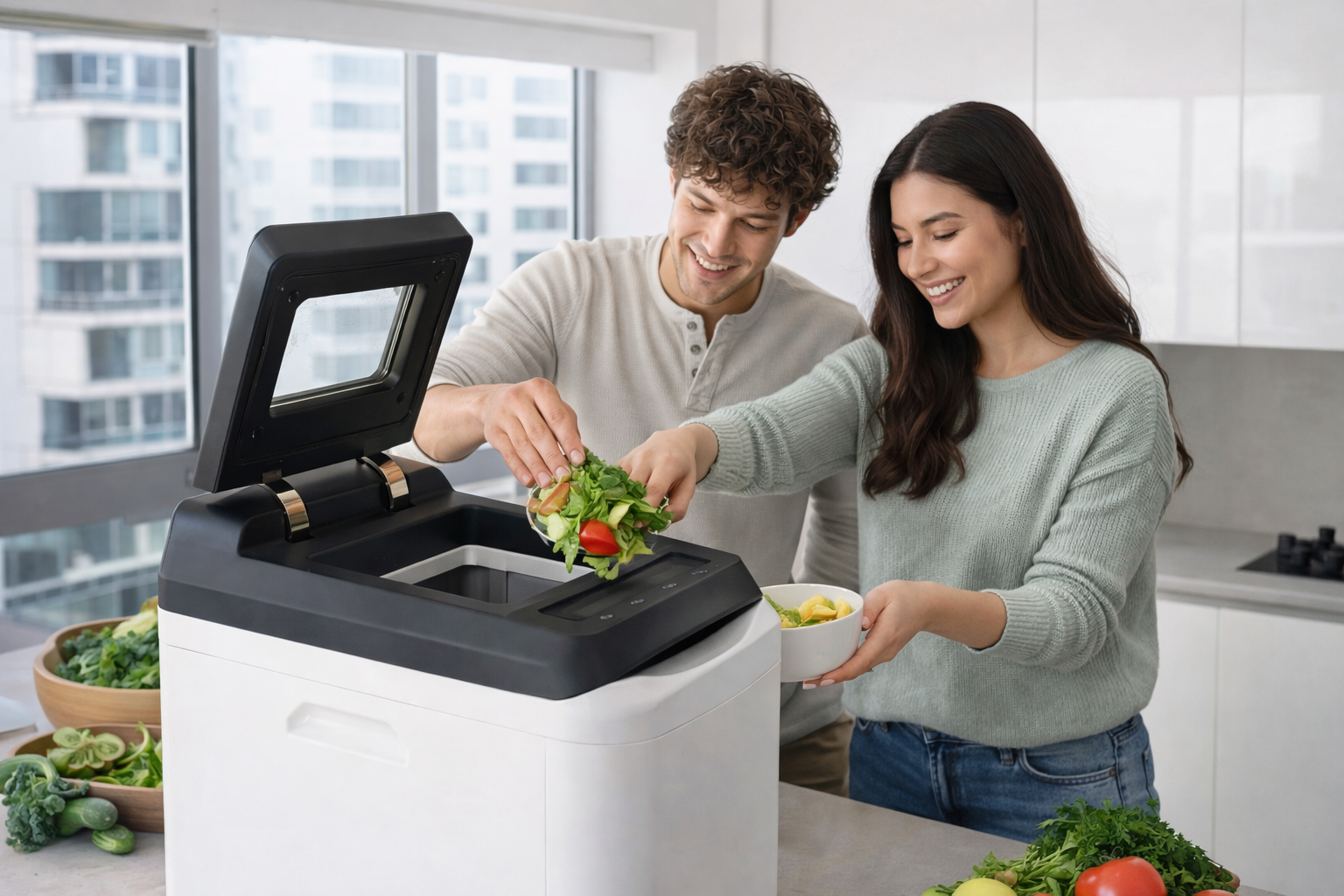
Most kitchens already run on connected devices. Smart displays pull up recipes. Grocery lists sync between phones. Wi-Fi-enabled ovens preheat from the couch. But there’s one part of the kitchen routine that’s stayed stubbornly analog: what happens to the food you don’t eat. The scraps, the spoiled produce, the leftovers that sat one day too long, all of it disappears into the trash without a second thought.
A smart composter changes that by connecting your food waste to the same ecosystem of data and tracking that manages everything else in your kitchen. Here’s where it fits in, and why the data it produces might be more useful than you’d expect.
What Makes a Composter “Smart” in the First Place
Not every electric composter qualifies. A smart unit connects to an app via Wi-Fi or Bluetooth and tracks data automatically. Some core features that separate smart from standard:
- A built-in scale that logs the weight of every batch
- Real-time cycle monitoring from your phone
- Automatic processing adjustments based on load size
- Historical tracking of how much waste you’ve diverted over weeks and months
- Push notifications when a cycle finishes or a filter needs replacing
Without app connectivity and data logging, you’ve got an electric composter with a digital display. The “smart” part lives in the data, not the machine.
The Gap in Your Kitchen Tech Stack
Walk through a typical connected kitchen workflow. You plan meals on an app. You order groceries through a delivery service. You follow a recipe on a screen. You store leftovers in labeled containers. But what happens to the scraps, the spoiled produce, the plate scrapings?
That’s the blind spot. You can track what you buy and what you cook, but until recently, there was no easy way to track what you waste.
A smart kitchen composter fills that gap. It logs what leaves your kitchen unused, and how much. When you have that data alongside your grocery spending and meal planning, you start seeing the complete picture: what came in, what got eaten, and what didn’t. That visibility changes how you shop without requiring a spreadsheet.
What the Data Actually Tells You
After a few weeks, patterns emerge. Weekly weight logs reveal seasonal shifts — more waste after holidays, less during weeks you meal-prepped. Category trends start showing up: maybe you consistently over-buy leafy greens or let fruit sit too long on the counter.
This isn’t about guilt. It’s the same logic as tracking energy usage on a smart thermostat or monitoring water consumption through a utility app. You can’t reduce what you don’t measure. Some composters also track carbon offset equivalents, giving you a tangible number for the environmental impact of diverting food from the landfill. The USDA estimates the average American family of four wastes over $1,500 in food annually. Even seeing that number trend downward by 20 or 30 percent feels like progress you can point to.
Practical Setup: Where It Fits and How It Connects
The logistics are simple. The composter sits on your countertop. It connects to your home Wi-Fi (2.4 GHz is standard across most models). You download the companion app on iOS or Android and pair the device — a process that takes about ten minutes and isn’t meaningfully different from setting up any other connected appliance.
The composter doesn’t need to stay connected to run. It processes independently. But the app is where the value of “smart” lives. Without it, you’re just composting. With it, you’re tracking, measuring, and spotting the habits that cost you money and fill your trash can.
Is “Smart” Worth It?
If you just want to reduce trash volume and don’t care about data, a basic electric composter does the job well. But if you’re someone who already tracks grocery budgets, monitors household energy use, or follows a meal plan, a smart composter adds a data point you didn’t have before — and it’s the one most directly tied to how you spend at the store.
The machine handles the composting. The app is what changes your habits. And once you start seeing the weekly numbers, you’ll find it hard to go back to throwing scraps in the trash without knowing what they cost you.
For More Articles Visit: https://techners.net/
ㅤㅤㅤㅤㅤㅤㅤㅤㅤㅤㅤㅤㅤㅤㅤㅤㅤㅤㅤㅤㅤㅤㅤㅤㅤㅤㅤㅤㅤㅤㅤㅤㅤㅤㅤㅤㅤㅤㅤㅤㅤㅤㅤㅤㅤㅤㅤㅤㅤㅤㅤㅤㅤㅤㅤㅤㅤㅤㅤㅤㅤㅤㅤㅤㅤㅤㅤㅤㅤㅤㅤㅤㅤㅤㅤㅤㅤㅤㅤㅤㅤㅤㅤㅤㅤㅤㅤㅤㅤㅤㅤㅤㅤㅤㅤㅤㅤㅤㅤㅤㅤㅤㅤㅤㅤㅤㅤㅤㅤㅤㅤㅤㅤㅤㅤㅤㅤㅤㅤㅤㅤㅤㅤㅤㅤㅤㅤㅤㅤㅤㅤㅤㅤㅤㅤㅤㅤㅤㅤㅤㅤㅤㅤㅤㅤㅤㅤㅤㅤㅤㅤㅤㅤㅤㅤㅤㅤㅤㅤㅤㅤㅤㅤㅤㅤㅤㅤㅤㅤㅤㅤㅤㅤㅤㅤㅤㅤㅤㅤㅤㅤㅤㅤㅤㅤㅤㅤㅤㅤㅤㅤㅤㅤㅤㅤㅤㅤㅤㅤㅤㅤㅤㅤㅤㅤㅤㅤㅤㅤㅤㅤㅤㅤㅤㅤㅤㅤㅤㅤㅤㅤㅤㅤㅤㅤㅤㅤㅤㅤㅤㅤㅤㅤㅤㅤㅤㅤㅤㅤㅤ

























Leave a Reply