

Introduction
In 2026, children are growing up in a digital world that is more connected than ever. From online games and social media to educational apps and messaging platforms, the internet is a constant part of their lives. While technology brings creativity and learning opportunities, it also introduces risks that children may not understand. Parents have a critical role in protecting their children while encouraging safe and responsible online behavior.
Modern cyber threats have become more sophisticated. Scams, phishing attacks, AI-generated content, and unsafe apps are common risks that can affect children. Teaching kids about these dangers is essential, but it must be done in a way that is engaging and age appropriate. This article provides practical steps parents can take to keep their children safe online in 2026.
Understanding Modern Cyber Threats Facing Kids
Common Digital Risks in 2026
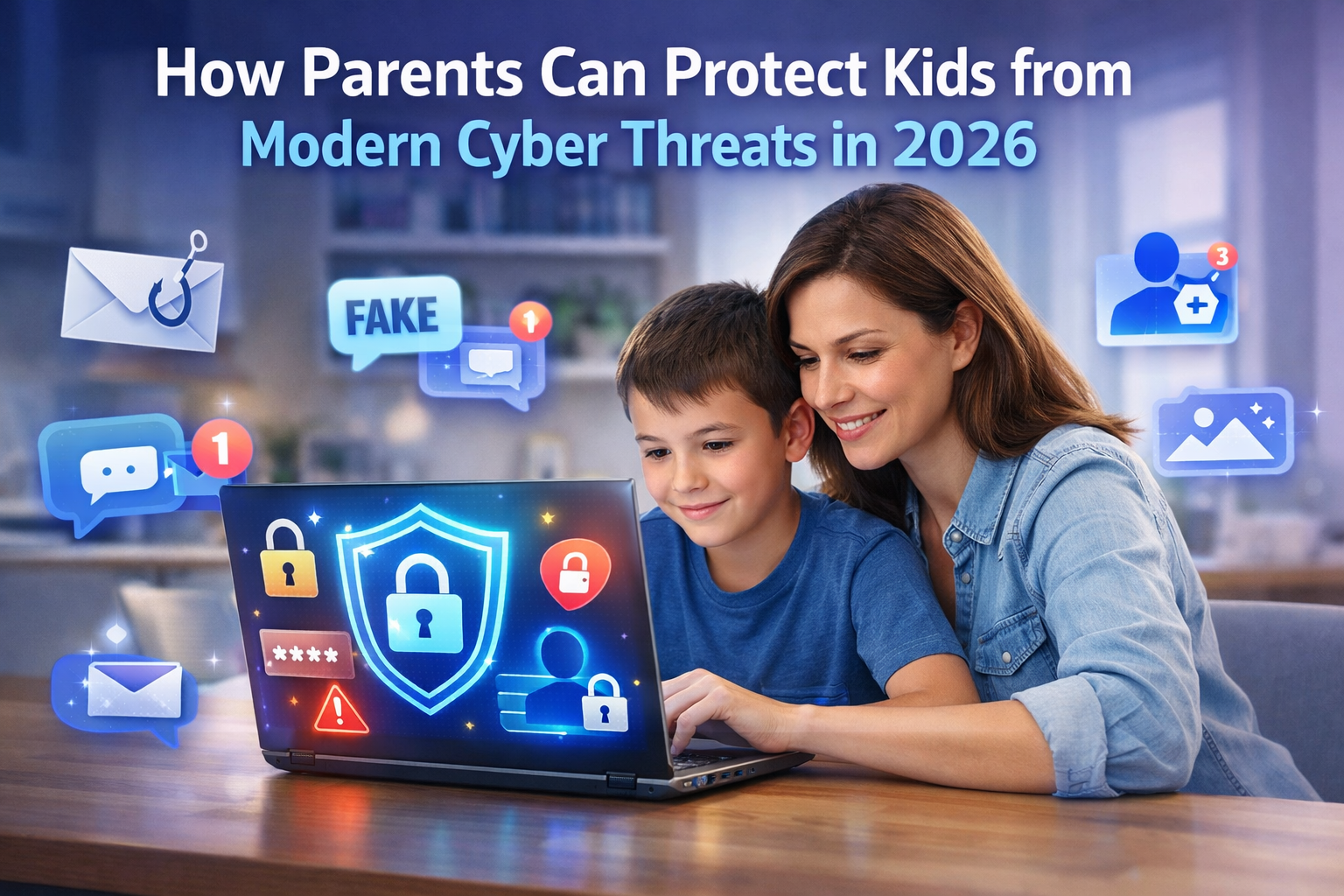
Children today face a range of digital risks. Phishing scams can appear as fake rewards in games or messages that look real but are harmful. Social media exposes children to privacy risks if they share personal information. Online predators continue to look for opportunities to communicate with young users. Understanding these risks is the first step toward protecting children.
Cyberbullying and Mental Health
Cyberbullying is another growing concern. Platforms such as social media, group chats, and online gaming communities can be places where bullying occurs. Parents should watch for signs like sudden changes in mood, reluctance to go online, or secretive behavior. Early detection helps prevent long-term emotional harm.
The Importance of Early Awareness
Children need to understand online safety from a young age. Early education builds awareness and helps children recognize risks before they encounter them. Delaying these discussions can make children more vulnerable to online threats.
Essential Steps Parents Can Take to Protect Kids
Educate Kids About Online Risks
Parents should explain online dangers in a way that children can understand. Using real-life examples or age-appropriate stories helps children relate to the lessons. Discussing why certain links, messages, or websites may be unsafe is more effective than giving rules without context.
Set Clear Rules and Boundaries
Establishing rules for screen time, app usage, and sharing personal information is essential. Children benefit from knowing what is allowed and what is not. Consistent boundaries help children navigate online spaces safely and responsibly.
Monitor Online Activity Safely
Monitoring children’s online activity can be done without invading their privacy. Parental control tools and regular check-ins allow parents to stay informed about online behavior. Open conversations about what children are doing online are more effective than spying or punishing them.
Teaching Kids Practical Cyber Hygiene
Passwords and Account Safety
Children should learn to create strong, unique passwords for their accounts. Parents can help set up two-factor authentication on apps and devices. Teaching children to protect their accounts helps prevent unauthorized access and online scams.
Recognizing Scams and Phishing
Children should understand the signs of phishing emails, messages, and fake websites. Demonstrating examples and encouraging children to ask questions before clicking or sharing information can prevent mistakes.
Responsible Social Media Use
Children should learn to adjust privacy settings, avoid sharing personal information, and think before posting content. Responsible social media use helps prevent exposure to strangers and online predators.
Encouraging Critical Thinking and Digital Responsibility
Ask Questions Instead of Just Giving Rules
Rather than only instructing children on what to do, parents should ask questions that promote critical thinking. Asking what the child would do in a given scenario helps them make safer decisions online.
Role-Playing Scenarios
Parents can create safe role-playing situations where children face online challenges. Simulating problems such as suspicious messages or friend requests allows children to practice responses without real risk.
Rewarding Smart Choices
Positive reinforcement encourages children to continue safe online behavior. Recognizing good decisions builds confidence and teaches children that smart choices are valued.
Tools and Resources for Parents in 2026
Parental Control Apps and Software
There are many parental control tools available in 2026. These apps help parents monitor activity, set screen time limits, and manage content access. Choosing the right tool depends on the child’s age and the family’s goals.
Educational Resources
Websites, videos, and books provide valuable guidance for parents and children. Cybersecurity courses designed for families can help both adults and children understand digital safety practices.
Community and Expert Support
Schools, parent forums, and professional cybersecurity experts are valuable sources of support. Parents can learn strategies, share experiences, and stay updated on the latest threats.
About the Author
Lakshmi Srinivasan is a cybersecurity expert, children’s author, and online safety advocate. She is dedicated to helping families and educators teach kids about digital safety in an engaging and practical way. Her work focuses on empowering parents and children to navigate the online world responsibly while developing strong cybersecurity habits.
Conclusion
Protecting children from modern cyber threats requires awareness, education, and consistent guidance. Parents should focus on teaching children practical skills, encouraging critical thinking, and building confidence rather than relying on fear. Open communication, safe digital habits, and the use of modern tools help children understand the risks and make responsible decisions online.
By taking these steps, parents can ensure that children are not only safe but also confident and capable digital citizens in 2026 and beyond. Teaching kids cybersecurity is a continuous process, and with the right approach, parents can guide children toward a safe and responsible online experience.
Checkout this article, Techners.




















Leave a Reply