

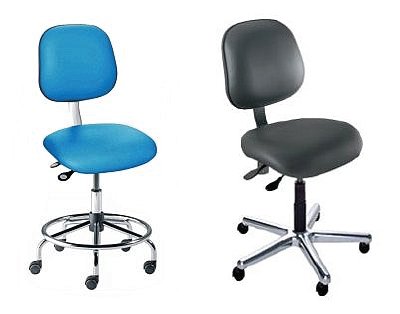
In a controlled environment, even the smallest electrostatic discharge can compromise product quality. When you work in a cleanroom, you focus on filtration systems, airflow design, and strict gowning protocols—but what about the chair you sit on every day? If your seating is not properly designed for static control, you may unknowingly introduce electrostatic contamination into a highly sensitive space.
Understanding how cleanroom chairs reduce static contamination helps you create a safer, more compliant, and more efficient controlled environment.
Why Static Contamination Is a Serious Cleanroom Risk
Electrostatic discharge (ESD) occurs when built-up electrical charge transfers between surfaces. In cleanrooms that handle semiconductors, pharmaceuticals, medical devices, or precision electronics, even a small discharge can:
- Damage sensitive components
- Attract airborne particles
- Interfere with production accuracy
- Compromise compliance standards
When you move, stand, or shift in your chair, friction between clothing and surfaces generates static electricity. If your chair is made from non-conductive materials, that charge has nowhere to dissipate. Instead, it accumulates—and eventually discharges—potentially affecting both products and equipment.
How Cleanroom Chairs Help Control Static
When you invest in high-quality ESD-safe cleanroom chairs for controlled environments, you introduce a seating solution specifically engineered to minimize electrostatic buildup and particle generation.
Here’s how they reduce static contamination:
ESD-Resistant Materials
Cleanroom chairs are constructed using static-dissipative vinyl or polyurethane. These materials are designed to:
- Prevent charge buildup
- Safely dissipate static electricity
- Maintain surface resistivity within controlled ranges
Unlike standard office chairs, which often use fabric or foam that traps charge, cleanroom chairs allow electrical charges to flow safely to ground.
Grounding Mechanisms
You reduce static contamination further when chairs include conductive casters or glides. These components help channel static electricity from the user through the chair and safely into the floor system.
If your facility uses ESD flooring, grounded seating becomes an essential part of your electrostatic protection plan. Without it, static charges can remain isolated and accumulate over time.
Smooth, Non-Shedding Surfaces
Static electricity attracts particles. In a cleanroom, airborne particles are your primary enemy. Cleanroom chairs feature:
- Seamless upholstery
- Minimal stitching
- Non-porous surfaces
These design features prevent particle entrapment and reduce friction-based particle generation. When you wipe down the chair, contaminants are easily removed, maintaining cleanliness standards.
Compliance with Industry Standards
If you operate under ISO classifications or follow ESD control programs, your furniture must align with those standards. Cleanroom chairs are engineered to meet static-dissipative requirements and cleanroom compatibility specifications.
By choosing purpose-built seating from CleaTech LLC cleanroom equipment specialists, you ensure your workspace aligns with industry compliance guidelines while maintaining operational safety.
The Direct Impact on Your Daily Operations
When you sit for extended periods in a cleanroom, micro-movements are constant. Each movement creates friction. If static is not controlled, you may experience:
- Increased particle attraction to garments
- Unexpected ESD events near sensitive instruments
- Product rejection or yield loss
- Equipment malfunctions
By integrating properly designed cleanroom chairs, you reduce these risks without altering your workflow. The protection becomes automatic—built into the furniture you already use.
Key Features to Look for in Static-Control Cleanroom Chairs
If you are evaluating seating options for your facility, focus on these essential features:
Static-Dissipative Upholstery
Choose chairs with controlled surface resistance to prevent charge buildup.
Conductive Casters or Glides
Ensure the chair safely grounds through compatible flooring systems.
Adjustable Ergonomics
Static control is critical, but comfort matters too. Adjustable height, lumbar support, and foot rings reduce operator fatigue and promote proper posture.
Chemical and Cleanroom Compatibility
Your chair must withstand frequent wipe-downs with disinfectants and cleaning agents.
Low Particle Emission Design
Look for minimal seams and easy-to-clean construction.
When these elements work together, you create a controlled seating solution that actively reduces electrostatic contamination.
Why Standard Office Chairs Are Not Enough
It may seem cost-effective to use regular office seating in a clean environment. However, standard chairs:
- Generate higher static through fabric upholstery
- Shed fibers into controlled spaces
- Lack grounding mechanisms
- Degrade under harsh cleaning chemicals
Even if you implement strict ESD wrist straps and grounding procedures, non-compliant seating can undermine your entire static control strategy.
Supporting a Complete ESD Protection Plan
Cleanroom chairs are not a standalone solution—they are part of a larger contamination control system. For best results, integrate them with:
- ESD flooring
- Grounded workstations
- Proper gowning procedures
- Environmental monitoring
- Staff training on electrostatic awareness
When you address every touchpoint—including seating—you create a holistic contamination prevention approach.
Long-Term Benefits of Static-Control Seating
By installing high-quality cleanroom chairs, you achieve:
- Reduced product defects
- Improved regulatory compliance
- Enhanced worker comfort
- Lower long-term maintenance costs
- Greater production reliability
Instead of reacting to contamination events, you proactively eliminate one of the most overlooked sources of electrostatic discharge.
Take the Next Step Toward Static-Free Operations
If your facility handles sensitive electronics, medical components, or pharmaceutical products, seating should never be an afterthought. The right cleanroom chair protects your processes, your equipment, and your bottom line.
To explore customized static-dissipative seating solutions tailored to your cleanroom classification, contact us today for expert cleanroom consultation and ensure your workspace remains compliant, efficient, and contamination-free.
Frequently Asked Questions
How do cleanroom chairs prevent static buildup?
Cleanroom chairs use static-dissipative materials and grounding components that safely channel electrical charges away from the user and into the floor system.
Are cleanroom chairs required for ISO-certified environments?
While not always legally required, they are strongly recommended to maintain contamination control and ESD compliance in ISO-classified cleanrooms.
Can regular office chairs be modified for cleanroom use?
Standard chairs typically lack static-dissipative materials and grounding features. Retrofitting them rarely achieves full compliance.
Do cleanroom chairs require special maintenance?
Yes. You should regularly inspect grounding components and clean surfaces with approved disinfectants to maintain performance and cleanliness standards.
Are cleanroom chairs suitable for electronics manufacturing?
Absolutely. Static-sensitive environments such as semiconductor and electronics facilities greatly benefit from ESD-safe seating solutions.




















Leave a Reply