How Box Cufflinks Work and Why They Matter in Men’s Fashion
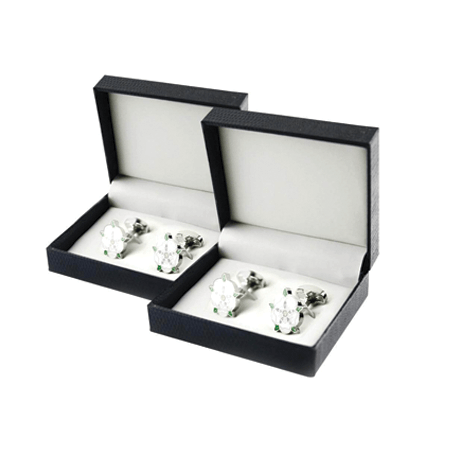
Cufflink boxes
I wore real cuff links the first time, and being a noob, I wore them the wrong way. After sitting in front of the mirror for a good two minutes wondering why the cuff wouldn’t lay flat, I realized the face was decorative and not looking at the world. No one is teaching you these things. Either you’re surrounded by men wearing French cuffs or you just have to figure it out before a big event such as a wedding.
That little learning curve is part of why cufflinks feel intimidating to a lot of guys. They seem fussy. Old-fashioned, even. But once you understand how one specific type works, the whole thing clicks, sometimes literally. I’m talking about box cufflinks, and they’re the pair I reach for when it actually matters.
So What Makes Cufflink?
This trips up almost everyone, so let’s clear it up first. The word “box” has nothing to do with the case it ships in. It refers to the closure on the back, the mechanism that holds the thing together once it’s through your cuff.
Most cufflinks you’ll see use a swivel bar, a little T-shaped flipper that rotates flat and then turns sideways. They’re fine. They’re also the ones that loosen, rotate on their own, and occasionally surrender to gravity somewhere between the parking lot and the reception hall. A box cufflink works differently. It uses a hinged, spring-loaded wedge that folds down flat to pass through the buttonhole, then snaps back upright to lock in place. That snap is the whole point.
How the Mechanism Actually Works
Picture the cufflink in three parts. Up front is the decorative face, the part people see. Running back from it is a short post. And at the very end of that post sits the closure, a small flat wedge mounted on a spring hinge.
To put it on, you pinch the wedge so it folds in line with the post, making the whole end narrow enough to slide through both layers of a French cuff. The moment it clears the fabric, you let go, the spring kicks the wedge back to its crossways position, and now it’s too wide to slip back through the hole. Done. It physically cannot fall out unless you deliberately fold it flat again.
What I love about this is how stubbornly simple it is. No magnets, no threading, no tiny screws to drop on the floor. The design is well over a hundred years old and it has barely changed, because there’s nothing to improve. It already works.
Why This Matters More Than You’d Expect
Here’s the honest case for caring about a closure mechanism: when your cufflinks stay put, you forget about them. And forgetting about them is exactly what you want.
Think about the last time something in your outfit kept demanding attention. A collar that wouldn’t lie flat, a watch strap a notch too loose, a shoe that started rubbing. You spend the whole event half-distracted, fidgeting, managing it. Cheap cufflinks do the same thing. A solid box closure removes that entire category of low-grade worry. You shake hands, you gesture, you reach across a table for the bread, and nothing shifts.
There’s a quieter benefit too. Knowing the small stuff is handled changes how you carry yourself. It’s the same reason a good haircut or properly tailored shoulders make you stand a little straighter. Confidence is mostly the absence of nagging doubt, and your sleeves are one less thing to doubt.
And then there’s longevity. Decent box cufflinks get made from materials that last, sterling silver, stainless steel, solid brass, sometimes gold. The robust closure is a big reason these things survive being worn for thirty years and then handed down. A swivel bar wears out. A box mechanism just keeps clicking.
Where They Actually Belong in Your Wardrobe
You don’t need an opera or a state dinner to justify them. Box cufflinks make sense anywhere a French-cuff shirt does, which is a wider range than most guys assume. Weddings, obviously. But also the job interviews where you want to look like you’ve got your life together, the client pitch where the details signal how you handle everything else, the anniversary dinner, the funeral where you want to show up with dignity.
The styling rule is simpler than it sounds: match your metals. Silver-toned cufflinks live happily next to a steel watch and a cool gray or charcoal suit. Gold tones warm up navy and earth tones. For work, keep the face plain and let it whisper. For a night out, that’s when you can reach for color, a monogram, something with a bit of personality.
A Word on Presentation and Storage
Good cufflinks deserve better than the bottom of a drawer, and the experience genuinely starts before you ever clip them on. This is where Custom Cufflink Boxes earn their keep, protecting the finish, keeping the pair from scratching each other, and turning a small accessory into something that feels like a real gift when you hand it over. For a brand, that presentation does quiet selling on its own; it tells the buyer the maker cared.
Past the unboxing, storage just protects your investment. Loose cufflinks in a drawer get scratched, tangled, and separated from their pairs, and there is nothing more annoying than finding one of two. A simple case keeps each set together, away from moisture, and findable when you’re already running late.
How to Buy a Pair Worth Keeping
Skip the bargain bin. Cheap cufflinks cut the corners you can’t see, weak springs that go slack, plated finishes that flake at the edges, hollow bodies that bend if you look at them wrong. If you can hold them before buying, do. A quality box cufflink has a small, satisfying heft, and the closure should snap with a clean, firm action, not stiff, not floppy.
Check the post length too, because it matters more than people realize. A thick French cuff needs a longer post; too short and the mechanism gets cramped and hard to work. Buying online, this is the one thing photos can’t tell you, so read the reviews and look specifically for anyone mentioning how the closure feels.
Keeping Them Sharp
The maintenance is virtually trivial. After the first time use, use a soft cloth to remove fingerprints and skin oil from the faces. Silver is given a periodic polish to ensure that it retains its shine. Never spray directly on them as some finishes tend to become dull after a while. They will last through many of your seasons if you keep them dry and, preferably, in their case.
The Bottom Line
Box cufflinks are a little training in the art of good style. The part that no one can see, the locking mechanism on the back, is what enables the visible part to do its job without fear. Their offering is a design that has been tested and proven over 100 years, coupled with genuine elegance, and a durability that fast fashion rarely ever considers. A good pair is a worthy purchase no matter what you’re getting for yourself or for a man who will be using it for another twenty years.
About The Author