

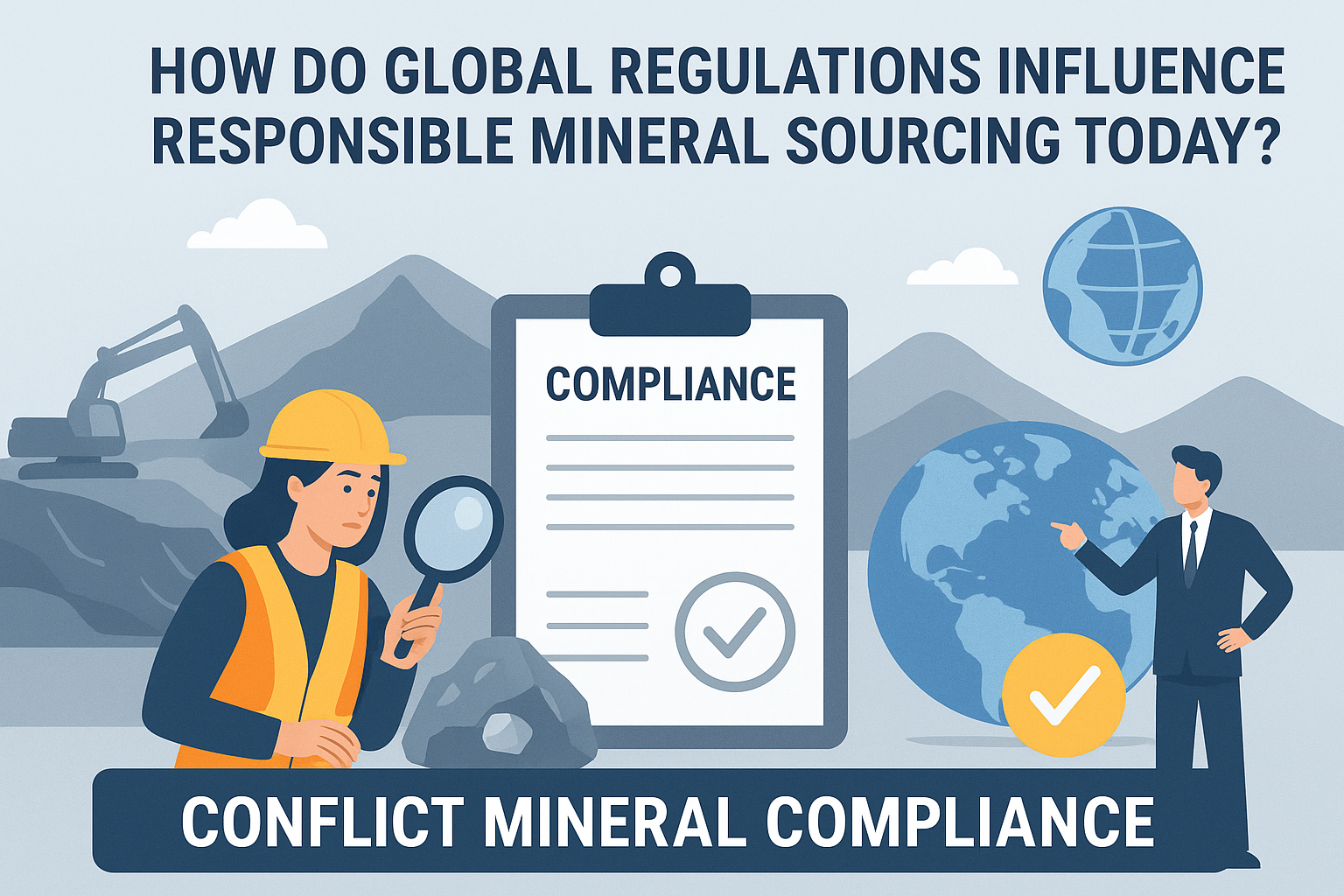
Responsible mineral sourcing has become a critical priority for businesses, governments, and consumers alike. In today’s interconnected world, supply chains are more transparent than ever, and the pressure to adhere to Conflict Mineral Compliance standards is significant. Companies sourcing raw materials such as tin, tantalum, tungsten, and gold are increasingly expected to verify the origin of these minerals to ensure ethical practices. Global regulations, therefore, play a pivotal role in shaping how minerals are mined, traded, and utilized responsibly.
The Importance of Responsible Mineral Sourcing
Minerals are the backbone of modern industries, powering electronics, automotive, aerospace, and energy sectors. However, their extraction can often have severe ethical and environmental consequences. Conflict zones, illegal mining operations, and exploitative labor practices pose substantial challenges. Governments worldwide have recognized these risks, introducing stringent regulations to enforce responsible sourcing and ensure Conflict Mineral Compliance.
Responsible sourcing is not only an ethical mandate but also a strategic business practice. Organizations adhering to global standards minimize the risk of reputational damage, reduce supply chain disruptions, and meet increasing investor and consumer expectations for sustainability. Moreover, it creates a level playing field for all market participants, ensuring fair trade and supporting long-term resource stability.
Global Regulations Shaping Mineral Practices
Several international frameworks and national regulations guide responsible mineral sourcing. Among the most notable is the Dodd-Frank Act Section 1502 in the United States, which requires public companies to report the use of conflict minerals sourced from the Democratic Republic of Congo (DRC) and adjoining countries. This legislation aims to reduce funding to armed groups involved in conflict mineral mining.
Similarly, the European Union Conflict Minerals Regulation mandates importers to exercise due diligence to avoid sourcing minerals that contribute to human rights abuses or environmental harm. Companies are required to implement risk management strategies, including auditing their supply chains and reporting transparently. These frameworks are reinforced by international guidelines such as the OECD Due Diligence Guidance for Responsible Supply Chains of Minerals, which provides a practical methodology for managing supply chain risks.
Collectively, these regulations encourage companies to establish robust traceability, conduct regular audits, and maintain transparent reporting practices. By adhering to such frameworks, businesses can demonstrate their commitment to ethical sourcing and Conflict Mineral Compliance, building trust with consumers and stakeholders alike.
Industry Trends Driving Compliance
The adoption of responsible sourcing practices is increasingly influenced by technological advancements. Blockchain, for instance, is being leveraged to enhance supply chain transparency. By recording each step of mineral movement from extraction to final product, companies can ensure authenticity and minimize the risk of conflict minerals entering legitimate supply chains. Similarly, digital traceability platforms and AI-based monitoring tools are gaining traction to streamline compliance processes, making it easier for businesses to adhere to global regulations.
Another growing trend is industry collaboration. Multinational corporations, NGOs, and regulatory bodies are working together to create shared standards and certification programs. Initiatives like the Responsible Minerals Initiative (RMI) provide companies with resources, templates, and guidance to meet compliance requirements. Collaborative efforts not only simplify regulatory adherence but also strengthen the collective impact of responsible mineral sourcing initiatives globally.
Environmental and Social Considerations
Global regulations increasingly emphasize not only the ethical but also the environmental aspects of mineral extraction. Mining activities can have devastating effects on ecosystems, water sources, and biodiversity. As a result, responsible sourcing frameworks now include environmental due diligence alongside social compliance. Businesses are encouraged to assess and mitigate environmental impacts, ensuring that their supply chains align with sustainable development goals (SDGs).
In addition to environmental responsibility, labor practices are under scrutiny. Child labor, unsafe working conditions, and unfair wages remain significant issues in many mining regions. Global regulations push companies to actively monitor their supply chains, engage with suppliers, and implement corrective measures to uphold ethical labor standards. Maintaining Conflict Mineral Compliance now entails a holistic approach that integrates environmental, social, and governance (ESG) criteria.
Integrating Compliance into Business Strategy
Incorporating global regulations into business strategy requires a systematic approach. Companies must map their supply chains to identify high-risk areas, establish internal controls, and provide training to relevant personnel. Developing supplier engagement programs is crucial for ensuring adherence to ethical standards. By promoting transparency, businesses can reduce operational risks while reinforcing their commitment to corporate social responsibility.
An essential aspect of this approach is the use of reporting and documentation. Accurate records enable companies to demonstrate compliance with international frameworks, including audits and third-party assessments. Transparency in reporting builds credibility, fosters trust, and can differentiate organizations in competitive markets where consumers increasingly favor ethically sourced products.
For businesses looking to deepen their understanding of global regulations and responsible sourcing, comprehensive resources are invaluable. Midway through the journey of implementing ethical practices, referencing authoritative content can provide guidance on practical steps, challenges, and regulatory updates. For instance, exploring insights from How Global Regulations Drive Responsible Mineral Practices offers detailed perspectives on current compliance trends, risk management strategies, and evolving international standards.
By integrating such knowledge into corporate policies, organizations can ensure that their compliance initiatives are both up-to-date and effective. Interlinking credible content also enhances learning and supports ongoing adaptation to regulatory changes.
Future of Responsible Mineral Sourcing
The future of mineral sourcing is likely to be shaped by a combination of stricter regulations, technological innovation, and growing consumer awareness. Governments are expected to continue strengthening reporting requirements and due diligence obligations. Meanwhile, innovations in supply chain monitoring, predictive analytics, and digital verification will further facilitate Mineral Compliance.
Sustainable practices will increasingly become a core differentiator for businesses. Companies that proactively adopt responsible sourcing protocols and engage stakeholders transparently will be better positioned to mitigate risks, enhance brand reputation, and secure long-term supply chain stability.
Conclusion
Global regulations are critical drivers of responsible mineral sourcing in today’s interconnected economy. By enforcing ethical, social, and environmental standards, these regulations help businesses navigate complex supply chains while promoting transparency and accountability. Adherence to Conflict Mineral is not just a legal obligation but a strategic initiative that aligns business objectives with ethical values.
Businesses that embrace regulatory requirements, leverage technology for traceability, and collaborate with industry peers are better equipped to meet emerging challenges. Resources like How Global Regulations Drive Responsible Mineral Practices provide valuable guidance for navigating this evolving landscape. Ultimately, responsible mineral sourcing benefits everyone—from companies and consumers to communities and ecosystems—ensuring a sustainable and ethical future for global industries.



















Leave a Reply