

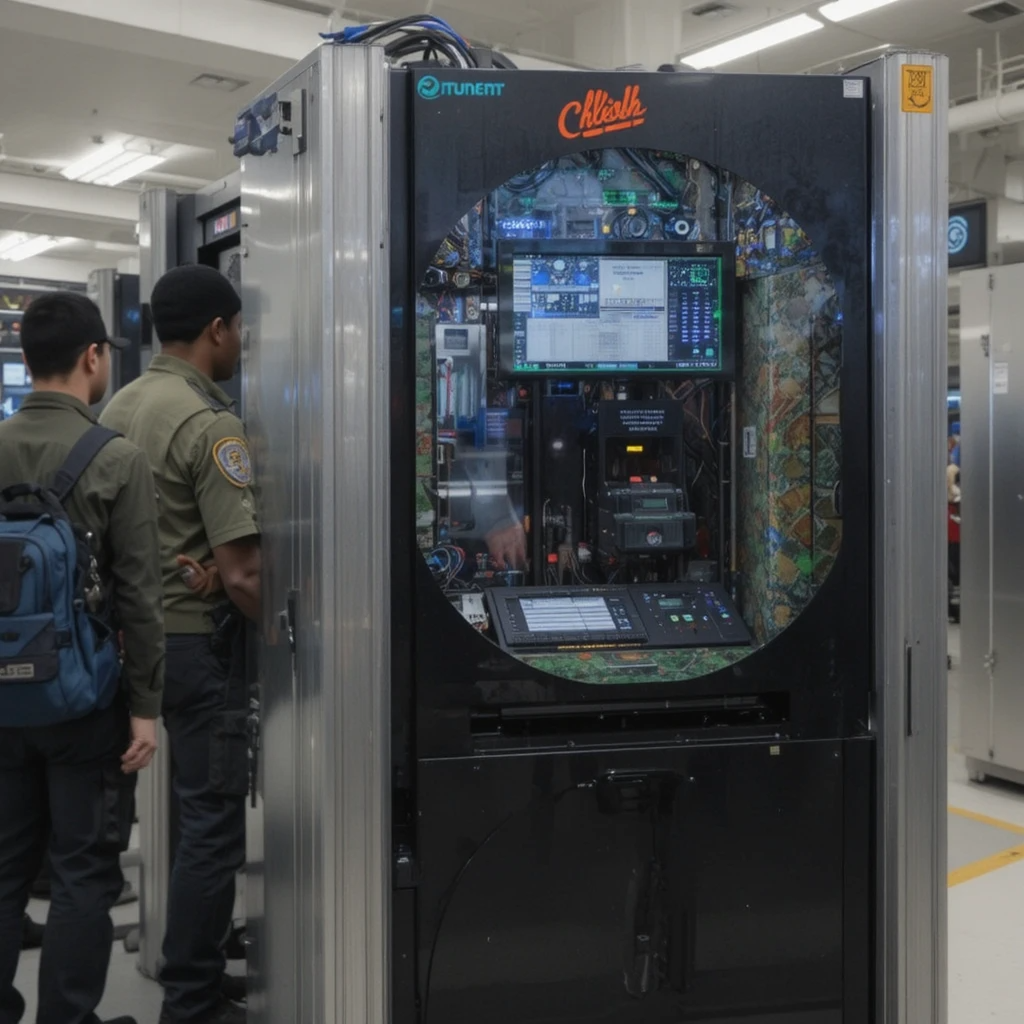
Security challenges in today’s world demand technologies that can identify threats quickly, accurately, and without disrupting public movement. One of the most powerful innovations supporting modern security operations is the explosives trace detection system, a sophisticated tool designed to identify even the smallest particles of explosive materials in real time. As public places, transportation hubs, and high-security facilities continue to face growing risks, this mid-point shift toward adopting explosives trace detection systems has become a crucial step in enhancing national and public safety.
Understanding the Explosives Trace Detection System
An explosives trace detection system (ETDS) is a high-precision security technology used to detect minute amounts of explosive substances on surfaces, luggage, vehicles, or individuals. It functions by analyzing chemical particles collected from swabs, air samples, or surfaces. Once particles are detected, the system identifies their chemical composition and alerts security personnel.
ETDS works on advanced chemical analysis methods such as Ion Mobility Spectrometry (IMS), Mass Spectrometry (MS), or Vapor Detection Systems. These technologies enable security teams to react quickly, even in fast-moving environments like airports, borders, or public events.
Why Explosives Trace Detection Is Essential Today
1. Rising Threats in Public Spaces
Modern threats have become more unpredictable and sophisticated. Manual checks alone cannot detect microscopic particles left behind by explosives. ETDS fills this critical gap through automated, highly sensitive screening.
2. Increased Mobility and Tourism
Airports, metros, and railway stations experience massive daily footfall. A non-intrusive, fast, and reliable detection system is essential to secure these environments without causing delays.
3. Strengthening National Defense
Defense forces depend on precise detection tools to secure borders, ammunition depots, and military installations. ETDS helps identify potential threats in advance and prevents large-scale damage.
How the System Works: Step-by-Step
1. Sample Collection
Security staff collect samples through swabs, air sniffers, or handheld devices.
2. Sample Ionization
Particles are ionized so the system can analyze their chemical properties.
3. Chemical Separation
The ionized sample is separated and categorized using IMS or MS scanners.
4. Identification and Alert
Explosive chemicals are matched against a database, and real-time alerts are triggered if there is a match.
5. Quick Response Protocol
Security teams follow predetermined procedures to isolate, investigate, and handle the threat.
Key Applications Across Industries
1. Airports and Aviation Security
ETDS screens passengers, luggage, cargo, and airline equipment. It is a mandatory component of global aviation safety frameworks.
2. Border Security and Defense
Tracking suspicious vehicles, detecting smuggled explosives, and protecting sensitive facilities are major applications in military zones.
3. Public Events and Stadiums
As large gatherings become common, ETDS ensures safe entry and rapid crowd clearance without long queues.
4. Industrial and Chemical Facilities
Factories dealing with sensitive chemicals depend on ETDS to prevent misuse and ensure regulatory compliance.
5. Corporate Offices and Smart Buildings
High-level offices and data centers deploy ETDS as part of their enhanced security infrastructure.
Benefits of Implementing ETDS
1. Ultra-Sensitive Detection
Even the smallest explosive residue can be detected, allowing high accuracy and faster decision-making.
2. Speed and Efficiency
ETDS offers real-time results, reducing waiting time during security checks.
3. Non-Intrusive Process
The system does not require manual unpacking or physical inspection of items, improving user comfort.
4. Alerts with High Reliability
With advanced sensors and AI-backed algorithms, false alarms are reduced while accuracy is improved.
5. Scalable and Compatible
ETDS integrates smoothly with existing metal detectors, surveillance systems, and access control technologies.
Challenges and Considerations
1. Environmental Limitations
Dust, humidity, or extreme temperature fluctuations can reduce system accuracy.
2. Regular Calibration Needs
Sensors must be recalibrated periodically to maintain performance efficiency.
3. Training Requirements
Security staff must be trained to interpret results and manage emergency protocols properly.
4. Integration Costs
Initial setup and maintenance can be expensive for smaller organizations.
Role of ETDS in the Future of Security Technology
Explosives trace detection systems are evolving rapidly with advancements in AI, machine learning, and IoT. The next generation of ETDS systems will offer:
- Predictive threat modeling
- Automated decision support
- Wireless data transmission
- Integration with national surveillance networks
These upgrades will significantly enhance real-time threat assessment capabilities in both public and private sectors.
Best Practices for Effective Deployment
- Use advanced ETDS systems with multi-layered detection algorithms
- Install equipment at high-traffic checkpoints for maximum coverage
- Follow strict maintenance and calibration schedules
- Train staff periodically for updated emergency procedures
- Integrate ETDS with CCTV, access control, and emergency response systems
Such practices strengthen overall defense strategy and ensure maximum safety.
Conclusion
The explosives trace detection system has become a vital part of modern security operations, offering unmatched sensitivity, speed, and reliability in threat detection. As the need for stronger and more proactive security measures grows, ETDS helps organizations stay prepared, responsive, and resilient. With the ability to detect microscopic explosive particles and provide instant alerts, it plays a transformative role in safeguarding transportation hubs, public spaces, government facilities, and private infrastructure.
This direction aligns strongly with How AI is being used for crowd density analysis, real-time alerts, and predictive policing to prevent security incidents, showing how advanced detection systems and AI-driven surveillance together form a robust, future-ready security ecosystem capable of preventing threats before they escalate.























Leave a Reply