

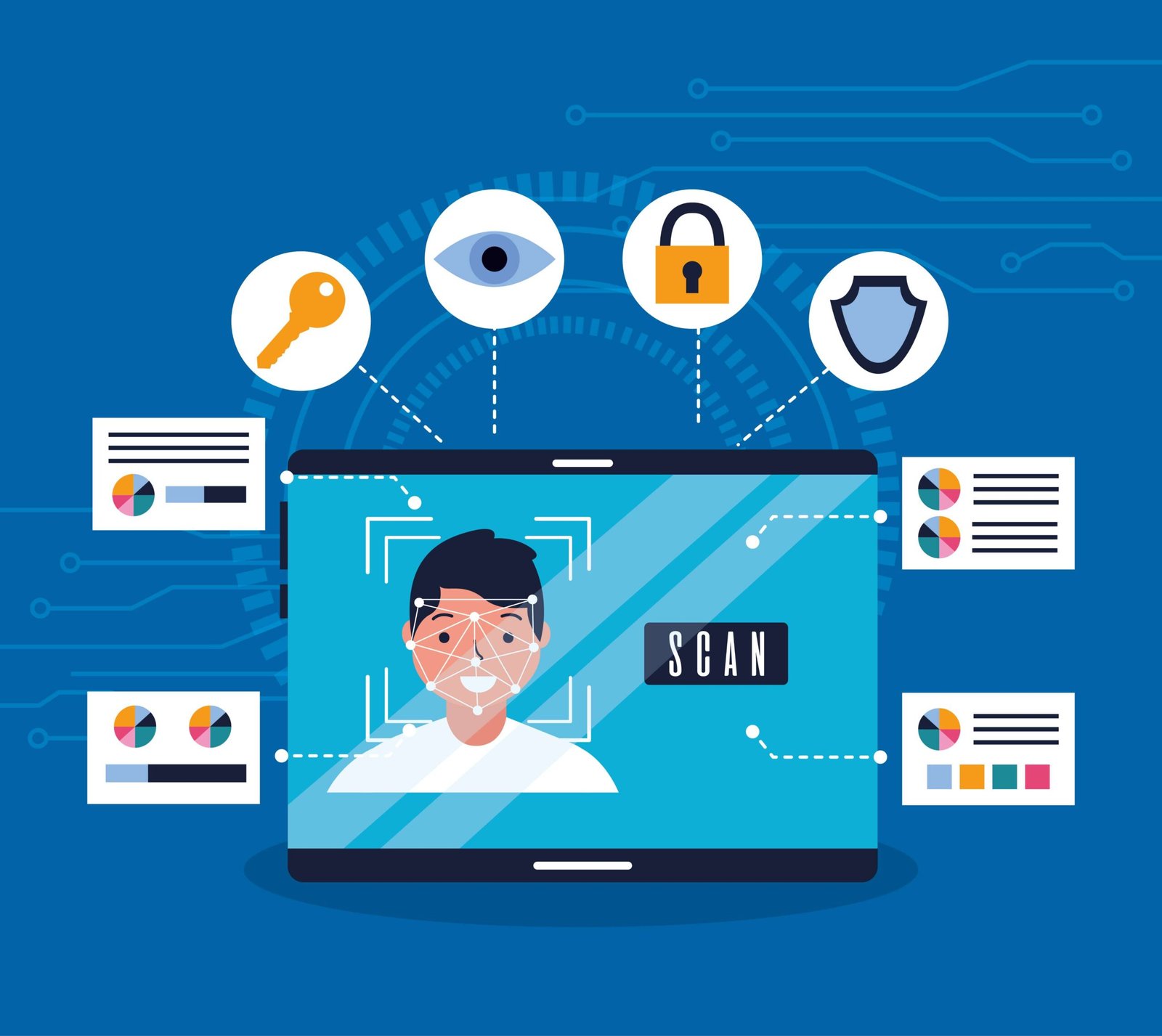
The complexity of implementing computer vision technology extends far beyond developing accurate detection algorithms. Organizations seeking to harness the power of visual AI require comprehensive solutions that address every stage of the lifecycle—from initial problem definition through data collection, model development, deployment, and ongoing maintenance. Custom computer vision software development provides this holistic approach, delivering integrated systems that solve real business problems rather than standalone models that require extensive additional work to become operational.
The Value of Comprehensive Solutions
Fragmented approaches to computer vision implementation often fail despite having technically sound models. A detection algorithm that performs excellently in laboratory conditions may struggle in production due to inadequate data pipelines, insufficient hardware resources, or poor integration with existing business systems. Organizations frequently underestimate the engineering required to transform research prototypes into production-ready applications.
Custom computer vision software development addresses these challenges through comprehensive planning and execution. Solutions encompass data infrastructure, preprocessing pipelines, model training and optimization, deployment architecture, monitoring systems, and integration with enterprise software. This end-to-end approach ensures all components work together seamlessly, reducing time-to-value and minimizing implementation risks.
Understanding Business Requirements and Constraints
Effective custom computer vision software development begins with deep understanding of business objectives and operational constraints. Generic solutions rarely address specific industry requirements, edge cases, or integration needs that characterize real-world deployments. Development teams must invest time understanding workflows, pain points, performance requirements, and success metrics before writing code.
This discovery phase identifies critical requirements that shape technical decisions. Latency requirements determine whether edge or cloud deployment is appropriate. Privacy regulations influence data handling and storage strategies. Existing infrastructure affects integration approaches. Accuracy thresholds establish acceptable performance baselines. Budget constraints guide hardware selection and development timelines.
Organizations benefit when development teams include domain experts who understand industry-specific challenges. Healthcare applications require different expertise than autonomous vehicles or retail analytics. Custom computer vision software development teams that combine technical proficiency with domain knowledge deliver solutions better aligned with operational realities.
Data Strategy and Infrastructure
Data quality fundamentally determines computer vision system performance. Custom computer vision software development includes comprehensive data strategies covering collection, storage, annotation, versioning, and governance. These strategies must address both initial training requirements and ongoing operational needs as systems learn from production data.
Data collection methodologies vary significantly across applications. Some projects leverage existing image archives while others require capturing new data under specific conditions. Synthetic data generation increasingly supplements real-world data, particularly for rare events or dangerous scenarios that are difficult to capture naturally. Development teams design data collection strategies that balance cost, diversity, and representativeness.
Annotation workflows transform raw images into training-ready datasets. Quality annotations require clear guidelines, trained annotators, validation processes, and quality control measures. Custom computer vision software development includes establishing annotation pipelines that can scale with project needs while maintaining consistency and accuracy.
Model Development and Optimization
Selecting appropriate model architectures requires balancing multiple competing objectives. Accuracy, speed, memory footprint, and power consumption all influence architectural decisions. Custom computer vision software development teams evaluate various approaches, often implementing multiple models for different components of a solution rather than relying on a single monolithic architecture.
Transfer learning accelerates development by leveraging pre-trained models as starting points. Rather than training from scratch, teams fine-tune existing models on specific datasets and use cases. This approach reduces training time, data requirements, and computational costs while often achieving superior results compared to training models from random initializations.
Optimization transforms trained models into production-ready systems. Techniques like quantization reduce model size and computational requirements by using lower-precision arithmetic. Pruning removes unnecessary parameters without significantly impacting accuracy. Knowledge distillation transfers knowledge from large, accurate models to smaller, faster ones suitable for deployment on resource-constrained devices.
Deployment Architecture and Infrastructure
Production deployment architectures must address scalability, reliability, security, and maintainability. Custom computer vision software development creates infrastructure that handles varying loads, recovers gracefully from failures, protects sensitive data, and supports ongoing evolution without disrupting operations.
Cloud deployments offer virtually unlimited scalability and access to specialized hardware like GPUs and AI accelerators. However, they introduce latency from network communication and raise concerns about data privacy and ongoing operational costs. Edge deployments process data locally, reducing latency and bandwidth requirements while improving privacy, but require managing distributed hardware and potentially sacrificing some computational capability.
Hybrid architectures combine cloud and edge advantages. Initial processing occurs locally on edge devices, with selective data sent to the cloud for deeper analysis, model training, or long-term storage. Custom computer vision software development teams design deployment strategies aligned with application requirements, balancing technical capabilities with operational constraints and business objectives.
Integration with Enterprise Systems
Computer vision capabilities generate maximum value when integrated with broader business systems. Detected events trigger workflows, update databases, generate reports, and inform decision-making processes. Custom computer vision software development includes designing integration points that enable seamless information flow between vision systems and enterprise applications.
APIs provide standardized interfaces for system communication. RESTful APIs enable synchronous queries for real-time processing, while message queues support asynchronous processing of high-volume streams. Webhooks push detected events to subscribing systems, enabling immediate response to important occurrences. Development teams design integration architectures that balance responsiveness, reliability, and maintainability.
Security and access control protect sensitive capabilities and data. Authentication mechanisms verify system identity, while authorization policies control what operations different users and systems can perform. Encryption protects data in transit and at rest. Custom computer vision software development implements security best practices appropriate for deployment environments and regulatory requirements.
Partnering with Technoyuga for Complete Solutions
Organizations seeking comprehensive computer vision capabilities benefit from partnering with experienced providers. Technoyuga delivers custom computer vision software development services that address every aspect of implementation. Their expertise encompasses business analysis, data strategy, model development, infrastructure design, integration, and ongoing support, ensuring solutions deliver measurable business value.
Monitoring and Continuous Improvement
Production systems require continuous monitoring to maintain performance and reliability. Monitoring systems track accuracy metrics, processing latency, error rates, and resource utilization. Dashboards provide visibility into system health, while automated alerts notify teams of anomalies requiring attention.
Model performance often degrades over time as data distributions shift. Products change, environments evolve, and new scenarios emerge that weren’t represented in training data. Custom computer vision software development includes establishing feedback loops that collect production data, identify performance drift, and trigger model retraining when necessary.
A/B testing enables data-driven improvement. New model versions are deployed to subsets of production traffic, with performance compared against existing models. This approach validates improvements before full deployment and provides quantitative evidence of enhancement magnitude. Development teams implement experimentation frameworks that support rapid iteration while maintaining production stability.
Scalability Planning and Evolution
Business growth and evolving requirements demand systems that scale gracefully. Initial implementations may process dozens of camera feeds while future requirements could involve thousands. Custom computer vision software development anticipates growth through architectural decisions that support horizontal scaling, efficient resource utilization, and modular expansion.
Technology evolution presents both opportunities and challenges. New model architectures, hardware accelerators, and optimization techniques continuously emerge. Development teams must balance stability of production systems with incorporating advances that offer significant benefits. Well-architected solutions support incremental evolution without requiring complete rebuilds.
Ensuring Long-term Success
Sustainable computer vision implementations require more than technical excellence. Success depends on organizational factors including stakeholder buy-in, user training, change management, and ongoing investment in maintenance and improvement. Custom computer vision software development teams that understand these dynamics deliver solutions with higher adoption rates and longer productive lifespans.
Documentation and knowledge transfer ensure organizations can maintain and evolve systems over time. Comprehensive documentation covers architectural decisions, operational procedures, troubleshooting guides, and model characteristics. Training programs build internal capabilities that reduce dependence on external support while enabling teams to maximize value from deployed systems.
Conclusion
End-to-end computer vision software solutions transform business operations by providing comprehensive capabilities that extend far beyond isolated algorithms. Custom computer vision software development delivers integrated systems addressing every aspect of implementation—from data infrastructure through model development, deployment, integration, and ongoing optimization. This holistic approach reduces risks, accelerates time-to-value, and ensures solutions deliver sustainable business benefits.
As computer vision technology continues advancing, organizations that successfully implement comprehensive solutions gain significant competitive advantages through automation, enhanced decision-making, and new capabilities. Success requires more than technical expertise—it demands understanding business context, addressing operational realities, and building systems that evolve with changing requirements. Partnerships with experienced providers offering complete custom computer vision software development services enable organizations to harness the full potential of visual AI while avoiding common pitfalls that plague fragmented implementation approaches.
























Leave a Reply