

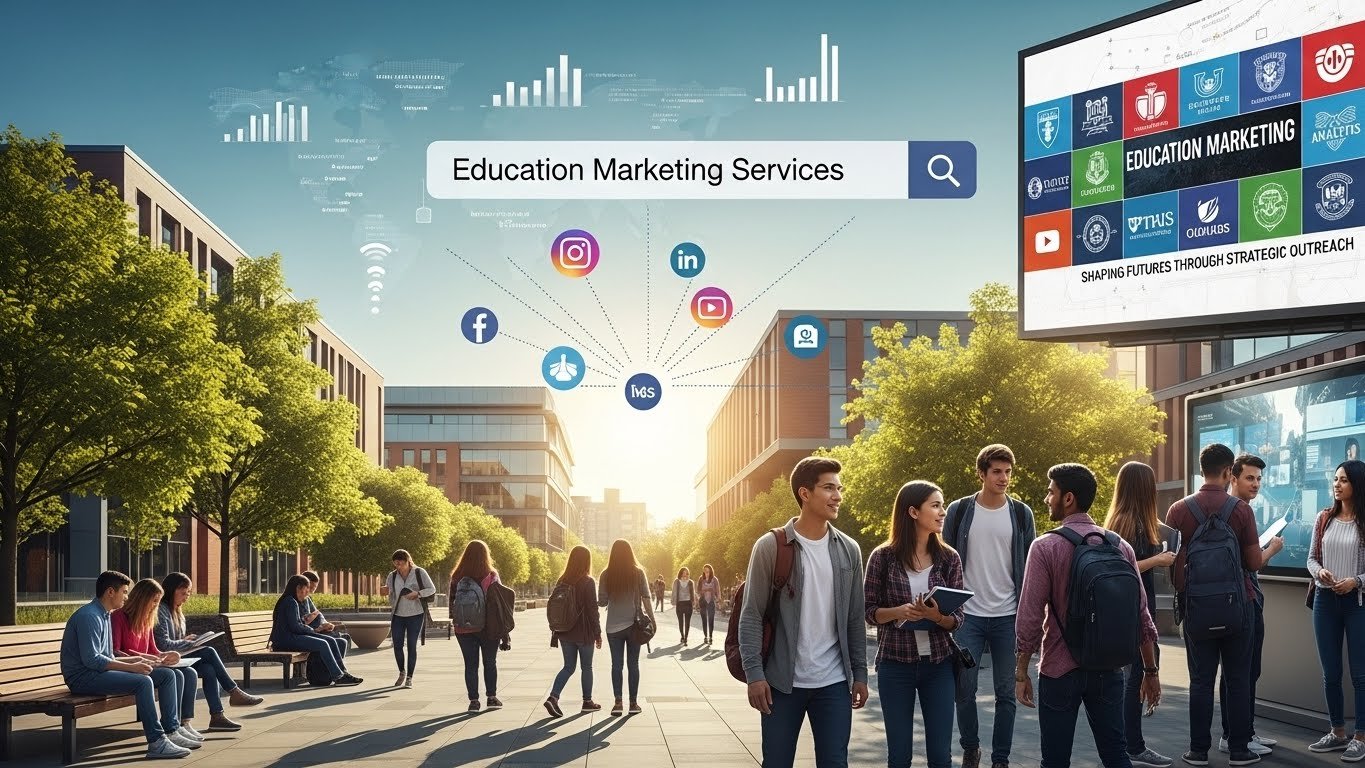
In today’s highly competitive academic environment, educational institutions can no longer rely on traditional advertising or word-of-mouth alone. Students and parents now research extensively online, compare options, read reviews, and evaluate digital presence before making decisions. For schools, colleges, universities, and EdTech platforms, the real challenge is not just visibility—it is conversion.
Attracting visitors to a website is only the first step. Converting those visitors into inquiries, applications, and enrollments requires a strategic approach. This is where specialized marketing frameworks designed for the education sector become essential. By aligning digital channels with student intent, institutions can create meaningful engagement and measurable growth.
This comprehensive guide explains how Education marketing Services can help academic brands improve conversions by combining data, psychology, technology, and ethical promotion—while building long-term trust.
Understanding Conversions in Education Marketing
What Does “Conversion” Mean in Education?
In education, a conversion is any action that moves a prospective student closer to enrollment. This can include:
- Filling out an inquiry or application form
- Downloading a brochure or syllabus
- Booking a counseling session
- Registering for webinars or campus tours
- Requesting a call-back from admissions
Unlike e-commerce, where a purchase is immediate, education conversions are part of a longer decision-making journey. This requires nurturing rather than hard selling.
Why Conversions Matter More Than Traffic
Many institutions invest heavily in website traffic but overlook what happens afterward. High visitor numbers mean little if they do not convert into meaningful leads. Conversion-focused marketing ensures that every campaign, landing page, and message is aligned with user intent.
Institutions that optimize for conversions:
- Reduce cost per lead
- Improve student quality and intent
- Increase enrollment predictability
- Maximize marketing ROI
The Student Decision-Making Journey
To improve conversions, it is crucial to understand how students choose an institution.
Awareness Stage
Students first realize they need a course, certification, or degree. They search for:
- Career options
- Best colleges or courses
- Eligibility criteria
Your role here is to educate and build awareness, not push enrollment.
Consideration Stage
Students compare:
- Course structures
- Faculty credentials
- Placement records
- Fees and scholarships
At this stage, content quality, testimonials, and clarity become key trust factors.
Decision Stage
Here, students are ready to act. They need:
- Simple application processes
- Clear deadlines and next steps
- Direct access to counselors
Effective marketing removes friction and reinforces credibility.
Why Generic Marketing Fails for Educational Institutions
Many institutes rely on general digital marketing approaches that may work for retail but fall short in education.
Long Sales Cycle
Students take weeks or months to decide. A single advertisement rarely converts instantly.
High Trust Requirement
Education involves long-term commitment, finances, and career outcomes. Any lack of transparency can discourage prospects.
Emotional and Rational Balance
Decisions are driven by both aspirations and practical factors such as ROI, placement records, and accreditation.
This is why specialized frameworks like Education marketing Services focus on relationship-building rather than short-term promotions.
Core Components That Improve Conversions
1. Conversion-Optimized Website Design
Your website is your primary admissions office.
Key elements:
- Clear navigation for courses and programs
- Mobile responsiveness
- Fast loading speeds
- Prominent call-to-action buttons
- Easy-to-complete inquiry forms
A well-structured layout guides students naturally from interest to action.
2. Landing Pages Built for Student Intent
Instead of sending traffic to generic pages, institutions should use dedicated landing pages for:
- Individual courses
- Entrance exams
- Scholarship programs
- Webinars or virtual open days
Each page should include:
- Course benefits and outcomes
- Faculty highlights
- Testimonials
- FAQs
- One primary conversion goal
3. Content Marketing That Builds Authority
Educational decisions are research-heavy. Students look for value before commitment.
Effective content includes:
- Career guides
- Course comparison articles
- Admission process walkthroughs
- Placement insights
- Industry trends
This type of content positions your institution as a credible knowledge source rather than just a seller.
4. Performance Marketing with Targeted Ads
Digital advertising enables precise targeting by:
- Age group
- Location
- Academic background
- Search behavior
Strategic campaigns managed by an experienced internet advertising company ensure that ads reach high-intent audiences rather than random traffic.
5. Lead Nurturing Through Automation
Not all leads are ready immediately. Marketing automation allows institutions to:
- Send personalized email sequences
- Deliver course reminders
- Share deadline alerts
- Offer counseling session links
This keeps prospects engaged throughout the decision-making process.
Data-Driven Conversion Optimization
Tracking User Behavior
Modern marketing platforms provide insights into:
- Page visits
- Drop-off points
- Form completion rates
- Click-through behavior
By analyzing this data, institutions can refine pages and campaigns continuously.
A/B Testing
Testing different versions of:
- Headlines
- CTA buttons
- Form placements
- Page layouts
This identifies what resonates best with students and improves conversion rates incrementally.
Role of Trust in Education Marketing
Social Proof and Testimonials
Student success stories, alumni experiences, and employer partnerships provide strong validation. Authentic reviews reduce hesitation and strengthen credibility.
Transparency in Communication
Clear information on:
- Fees
- Accreditation
- Placements
- Course outcomes
builds confidence and eliminates doubts that often block conversions.
Brand Authority
A consistent digital presence across platforms positions the institution as a market leader. Partnering with a reputed internet advertising company further enhances brand perception.
Integrating SEO for Sustainable Lead Generation
Search engine optimization plays a vital role in capturing students during their research phase.
Keyword-Focused Content
Optimizing blogs, program pages, and FAQs for relevant academic searches ensures long-term organic visibility.
Technical SEO
Improving:
- Page speed
- Mobile usability
- Structured data
- Internal linking
enhances user experience and search engine rankings.
Local SEO
For colleges and training centers, local optimization helps attract nearby students searching for institutes in their area.
Personalization: Turning Visitors into Applicants
Personalized experiences significantly improve engagement.
Examples:
- Showing relevant courses based on browsing behavior
- Geo-targeted scholarship information
- Customized counseling messages
When students feel that content is tailored to their needs, they are more likely to take action.
How Education Marketing Services Drive Real Results
Institutions that implement structured, conversion-focused strategies consistently outperform those relying on traditional promotions. Education marketing Services combine technology, analytics, and creative storytelling to address the unique challenges of the education sector.
Key outcomes include:
- Higher inquiry-to-application ratios
- Reduced cost per lead
- Improved student quality
- Predictable enrollment growth
Unlike generic campaigns, these strategies focus on student intent, trust-building, and long-term relationships.
Adomantra’s Approach to Conversion-Focused Education Marketing
At Adomantra, we understand that education is not a product—it is a life-changing decision. Our methodology is built around:
Strategic Planning
We analyze your institution’s goals, audience behavior, and competitive landscape before designing campaigns.
Performance Marketing
Using advanced targeting and analytics, we deliver measurable results while optimizing cost efficiency.
Conversion Optimization
From website structure to landing page design and lead nurturing workflows, every element is engineered to move students closer to enrollment.
Ethical Promotion
We prioritize transparency, compliance, and student-centric messaging to build long-term brand trust.
By combining creativity with data, Adomantra ensures that marketing investments translate into real admissions growth.
Measuring Success: Key Metrics That Matter
To evaluate campaign effectiveness, institutions should track:
- Cost per lead (CPL)
- Inquiry-to-application ratio
- Application-to-enrollment rate
- Bounce rate and session duration
- Return on marketing investment
These metrics provide a clear picture of performance and highlight areas for improvement.
Overcoming Common Conversion Barriers
Complicated Application Processes
Simplifying forms and reducing unnecessary fields increases completion rates.
Lack of Clarity
Unclear eligibility criteria, vague course descriptions, or missing placement data can deter prospects.
Delayed Responses
Slow follow-ups often result in lost leads. Automated responses and CRM integration ensure timely engagement.
Future Trends in Education Marketing
AI-Driven Personalization
Predictive analytics will help institutions identify high-intent prospects and tailor messaging in real time.
Voice Search Optimization
Students increasingly use voice queries. Optimizing for conversational search will become essential.
Video-First Engagement
Campus tours, student testimonials, and faculty introductions through video will dominate student research behavior.
Institutions that adopt these trends early will gain a competitive advantage.
Conclusion
In the evolving education landscape, visibility alone is no longer enough. Institutions must focus on building trust, delivering value, and creating seamless user experiences that guide students from interest to enrollment.
By implementing structured digital strategies, optimizing content for search, and nurturing leads through personalized engagement, institutions can dramatically improve their conversion performance. Education marketing Services provide the specialized expertise needed to navigate this complex journey, ensuring that marketing efforts are not just creative—but measurable and sustainable.
With Adomantra’s student-centric, performance-driven approach, educational brands can move beyond awareness and achieve consistent growth through meaningful conversions.
Read More: techners



















Leave a Reply