

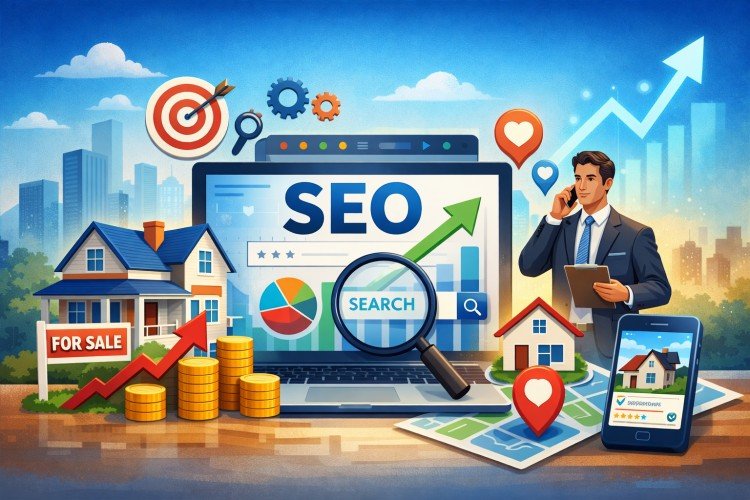
In an era when the vast majority of homebuyers and sellers begin their journey online, simply having a real estate website isn’t enough. What truly matters is being visible to the right audience at the right time — specifically when people search for real estate services in your area. This is where Local SEO becomes indispensable. Local SEO doesn’t just generate traffic; it attracts high‑quality, intent‑driven leads — prospects who are actively searching for the services you offer in your specific market.
Let’s explore how Local SEO works for real estate, why it matters more than ever, and how you can use it to consistently drive qualified leads for your business.
Why Local SEO Is Critical for Real Estate Success
Real estate is a location‑based industry. Buyers and sellers rarely search for generic terms like “real estate agent.” They search for:
- “Homes for sale in [City/Neighborhood]”
- “Best real estate agent in [City]”
- “Sell my house in [Area]”
These search queries clearly show intent — people are looking for real estate services in a specific place. Local SEO ensures your business gets found in this highly targeted search real estate ecosystem, directly connecting you with motivated prospects.
The Shift in Consumer Behavior
Today’s homebuyers and sellers use search engines as their starting point. Studies show that:
- A high percentage of real estate website traffic comes from organic search.
- Local searches often lead to offline actions such as contacting an agent or visiting open houses.
- Mobile devices dominate local search traffic — meaning your visibility on mobile search is more important than ever.
This shift means that ranking well in local search isn’t just beneficial — it’s essential. By investing in local real estate SEO services, you can consistently drive qualified leads and stay ahead in a competitive market.
How Local SEO Works to Attract Qualified Leads
Local SEO helps your business appear prominently in location‑specific search results. When potential clients search for services in your area, the goal is for your real estate brand to show up where they’re most likely to engage.
1. Optimizing Your Google Business Profile
Your Google Business Profile (GBP) is one of the most powerful tools in Local SEO. A well‑optimized profile helps you show up in:
- The Local Pack (the map section at the top of search results)
- Knowledge Panels
- Top search positions for relevant local queries
This visibility connects you with searchers who are ready to take action — such as calling your office or visiting your website for more information.
Best Practices for Google Business Profile
- Fill out every detail: business categories, description, hours, and photos
- Use accurate business information (consistent Name, Address, and Phone — NAP)
- Add posts and updates about listings, market updates, or local tips
- Enable messaging to allow immediate contact
Maintaining an active and accurate GBP significantly increases your chances of being seen — and chosen — by local prospects.
2. Building Local Citations and Consistent NAP
Local citations are mentions of your business name, address, and phone number (NAP) across reputable directories like Yelp, Zillow, Realtor.com, and local business listings. These citations:
- Reinforce your authenticity and service area to search engines
- Help Google understand where you operate and what you offer
- Influence local search rankings
Inconsistent or missing citations can undermine your visibility. Ensuring your NAP is identical across all platforms — from your website to local directories — builds credibility and boosts search performance.
3. Targeting Hyper‑Local Keywords
Instead of competing for broad, highly competitive terms like “real estate agents,” Local SEO focuses on hyper‑specific searches that signal stronger intent. These include:
- “Condos for sale in [neighborhood]”
- “Buy luxury homes near [local landmark]”
- “Home appraisal services in [town]”
These long‑tail, location‑specific keywords may have lower search volume, but they attract people closer to making a decision. Optimizing your content around these phrases increases the quality of traffic — and increases the likelihood of converting visitors into clients.
Content That Converts: Informative, Local, and Valuable
Content is what turns visibility into engagement and lead generation. But not just any content — it needs to be relevant to your target audience and their real estate journey.
1. Neighborhood and Community Pages
One of the most effective Local SEO strategies for real estate is creating dedicated pages for neighborhoods you serve. These pages should include:
- Recent market trends and data
- Local school information
- Nearby amenities and lifestyle highlights
- Community photos and videos
- Testimonials from local clients
These pages tie your brand closely to specific locations and show up for searches like “best neighborhoods in [City]” — bringing in highly targeted visitors who are actively considering buying or selling in those areas.
2. FAQ and Conversational Content
The rise of voice search and conversational search queries means people are asking Google questions like:
- “Is [neighborhood] family‑friendly?”
- “Average home price in [area]?”
- “How long do homes stay on the market in [city]?”
Answering these questions directly in your content helps you rank for natural language queries, captures attention earlier in the buyer journey, and builds trust with prospects who see you as a local expert.
3. Market Reports and Local Guides
Publishing quarterly or monthly market reports — complete with charts, insights, and commentary — does more than boost SEO. It positions you as a trusted real estate authority in your market. Local homebuyers and sellers often refer to market trends before making decisions. When you provide that data, you attract educated leads who see your brand as a resource — not just a service provider.
Reputation and Reviews: The Trust Signals That Matter
Real estate is a relationship business. Before contacting an agent, most consumers check reviews — especially on Google.
1. Collecting and Showcasing Reviews
Positive reviews are one of the strongest trust signals in local search. They:
- Influence potential clients’ decisions
- Improve your visibility in local search results
- Contribute to higher click‑through rates
Encourage satisfied clients to leave detailed reviews on your Google Business Profile and other high‑authority platforms. Make it easy for them by providing direct links and simple instructions — many clients are happy to help if you just ask.
Don’t Forget to Respond!
Responding to reviews — positive or negative — shows that you value client feedback. It signals professionalism and increases trust for future prospects.
2. Local Backlinks and Partnerships
Backlinks from local organizations, community websites, or related businesses (like mortgage brokers or interior designers) tell search engines that your brand is relevant and trusted in the local ecosystem. Partnering with local businesses or sponsoring community events can naturally lead to these valuable backlinks.
Also read here: Top 10 SEO Strategies Every Real Estate Agent Should Know
Technical SEO and Lead Quality Optimization
Technical SEO might not be the first thing real estate professionals think about, but it plays a crucial role in ensuring your audience actually reaches and engages with your content.
1. Mobile‑First Experience
With the majority of local searches happening on mobile devices, your website must be:
- Mobile‑responsive
- Fast‑loading
- Easy to navigate
A mobile‑friendly site not only improves search rankings but also keeps users engaged — decreasing bounce rates and increasing leads.
2. Page Speed and Structured Data
Quick page loads enhance the user experience and improve your organic rankings. Additionally, using structured data (such as LocalBusiness schema) helps search engines interpret and display your content more efficiently, which can boost visibility.
3. Conversion‑Focused Design
Getting visitors is only the first step — converting them into leads is the goal. You can improve conversions by incorporating:
- Easy‑to‑find contact forms
- Clear calls‑to‑action (“Get a Free Home Evaluation”)
- Lead magnets (downloadable market reports or buyer checklists)
Every element should guide the visitor toward meaningful engagement.
Trends That Will Shape Local SEO for Real Estate in 2026
Staying ahead of trends is critical for long‑term success. Here are key developments shaping Local SEO today:
1. Hyper‑Local Content Priority
Search engines continue to reward content that answers specific local questions. Generic content doesn’t perform as well as material that speaks directly to people planning to buy or sell in a particular area.
2. Voice and AI‑Influenced Search
As more people use voice assistants and AI summaries, your content must be conversational, question‑oriented, and structured to answer queries directly — especially in featured snippets.
3. Visual Search and Video Content
Real estate is a highly visual industry. Incorporating virtual tours, neighborhood videos, and engaging visuals not only enhances user experience but also improves search visibility. Google increasingly highlights video and rich media in search results — and listings with visuals outperform those without.
Measuring Success: Analytics and Continuous Improvement
To ensure your Local SEO efforts drive qualified leads, you must measure what matters.
Key Metrics to Track
- Organic search traffic by location
- Search keyword rankings
- Number of calls and form submissions
- Conversion rates from organic traffic
- Click‑through rate (CTR) from search results
Tracking these metrics helps you identify what’s working and what needs improvement.
Regular SEO Audits
Local SEO isn’t a one‑time task. Conducting quarterly audits allows you to:
- Update outdated content
- Fix broken links
- Optimize underperforming pages
- Adapt to search algorithm changes
Continuous refinement keeps your visibility high and your lead pipeline steady.
Conclusion
In the digital age, Local SEO isn’t optional for real estate professionals — it’s foundational. By optimizing your online presence for local relevance, authority, and user intent, you attract more qualified, motivated leads.
From a fully optimized Google Business Profile to compelling neighborhood content, strategic keyword targeting, and strong reputation management, Local SEO enables you to connect with people actively searching for real estate services in your area.
When you invest in Local SEO with consistency and expertise, you build a reliable engine for generating quality leads — and establish yourself as the go‑to real estate brand citizens trust in your community.

















Leave a Reply