

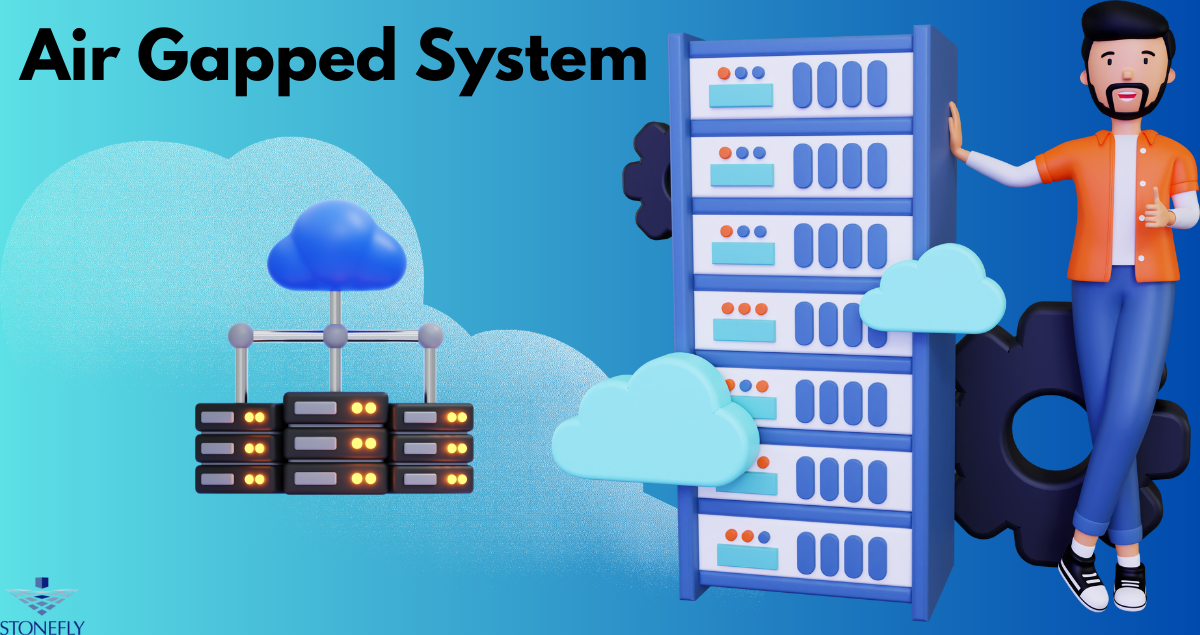
The systems that control our most vital infrastructure—power grids, financial networks, and military defenses—require a level of security that standard measures cannot provide. These environments are high-value targets for sophisticated cyberattacks, where a single breach could have catastrophic consequences. To achieve true resilience, security architects often turn to an Air-Gapped System. This is a security measure that ensures a computer or network is physically isolated, with no connection to the public internet or any other unsecured local area network. It creates a “moat” of air that digital threats cannot cross.
This article explores the crucial role of isolated computer systems in protecting the backbone of our society. We will examine their applications across various critical industries, discuss the principles behind their effective implementation, and outline how they serve as the ultimate defense against the most advanced cyber threats.
The Unseen Vulnerability in Critical Infrastructure
Many critical infrastructure operations rely on Industrial Control Systems (ICS) and Supervisory Control and Data Acquisition (SCADA) systems. Historically, these systems were designed in isolation, long before the internet became ubiquitous. They were proprietary, standalone networks that managed physical processes like water flow, electrical distribution, or manufacturing lines.
However, the drive for efficiency and remote management has led to increased connectivity. Many of these once-isolated networks are now connected to corporate IT networks and, by extension, the internet. This “IT/OT convergence” has introduced enormous operational benefits but has also created a massive attack surface. A threat that originates on a standard business computer can now potentially travel into the operational technology (OT) network that controls physical machinery.
Why Standard Cybersecurity Isn’t Enough
Conventional IT security tools like firewalls and intrusion detection systems are essential, but they have limitations in an OT environment:
- Network-Based Threats: Malware, especially ransomware, is designed to propagate across any available network connection. If there is a path, it will try to find it.
- Zero-Day Exploits: Attackers can use unknown vulnerabilities (zero-day exploits) to bypass even the most advanced security software.
- Human Factor: Accidental misconfigurations or successful phishing attacks on employees can provide an initial foothold for attackers to move from IT to OT networks.
When the consequence of failure isn’t just data loss but a power outage or a disruption to national defense, the security model must be fundamentally different. It must assume that a breach is possible and ensure the most critical components can never be touched.
The Principle of True Network Isolation
An air gap is the most extreme form of network segmentation. It isn’t just a firewall rule; it’s a physical and logical impossibility for data to flow between the secure network and the outside world via a network connection. Any data transfer that needs to happen is a deliberate, highly controlled, and often manual process.
How an Isolated System Functions
The core idea is to create a completely self-contained environment.
- Physical Disconnection: The secure computers and network hardware have no physical cables connecting them to other networks. Wi-Fi, Bluetooth, and any other wireless communication capabilities are disabled and often physically removed.
- Controlled Data Transfer: The only way to get data into or out of the isolated environment is through a controlled interface, often referred to as a “data diode” or a manual process using removable media (like a USB drive) that is rigorously scanned in a secure staging area.
- Strict Access Control: Human access to the air-gapped system is severely restricted to a few authorized personnel who must be physically present to operate the machines.
This fortress-like approach ensures that even if the organization’s entire corporate network is compromised, the isolated critical system remains unaffected and fully operational.
Applications Across Critical Sectors
The use of physically isolated networks is common in any field where the integrity and availability of a system are non-negotiable.
Military and National Defense
This is the classic use case. Networks that handle classify information, control weapons systems, or manage sensitive intelligence are almost always air-gapped. The risk of a foreign adversary gaining access to these systems is too great to allow any form of external connectivity.
Energy and Utilities
Power generation plants, water treatment facilities, and electrical grid control centers use SCADA systems to manage physical processes. A successful cyberattack could cause blackouts or contaminate public water supplies. By isolating these control systems, operators ensure that malware from the corporate network cannot interfere with essential public services. An air-gapped system provides the last line of defense for this vital infrastructure.
Financial and Banking Systems
Core banking systems that process major financial transactions or manage inter-bank settlement are often isolate. This prevents attackers from manipulating transactions or stealing massive sums of money. For example, the SWIFT network has specific controls that mandate the isolation of systems that connect to its platform to prevent fraud.
High-Tech Manufacturing and R&D
Companies with highly valuable intellectual property (IP), such as pharmaceutical formulas, semiconductor designs, or proprietary software source code, often store this data on isolated networks. This prevents corporate espionage and ensures their most valuable assets cannot be exfiltrate over the internet.
Best Practices for Implementing and Maintaining an Air Gap
Creating a truly secure isolated system requires more than just unplugging a network cable. It demands a rigorous and disciplined approach to security policy and procedure.
Establish a “Sneakernet” Protocol
“Sneakernet” is the slang term for the manual transfer of data using removable media. This process must be highly structure.
- Dedicated Media: Use USB drives or other media that are use exclusively for transferring data to or from the isolate system.
- Single Point of Entry: All data must pass through a single, controlled “transfer station.”
- Multi-Layered Scanning: The transfer station should be equip with multiple antivirus and anti-malware scanners from different vendors to scan all incoming media and files before they are introduced to the secure network.
Secure the Physical Environment
If the digital perimeter is impenetrable, attackers may resort to physical means. The room or data center housing the isolated system must have strong physical security controls, including locks, access card readers, and video surveillance, to prevent unauthorized access.
Train and Vet Personnel
The human element is often the weakest link. Personnel with access to the isolated system must undergo extensive background checks and receive specialized training on security protocols. They must understand that policies—like the prohibition of personal USB drives—are absolute and have no exceptions.
Conduct Regular Audits and Penetration Tests
A security posture can degrade over time. It’s crucial to conduct regular audits to ensure the air gap remains intact and that no unauthorized connections have been create. Specialize penetration testing teams can be hired to attempt to breach the air gap, helping to identify and remediate any potential weaknesses in policy or technology.
Conclusion
For the systems that underpin our modern world, “good enough” security is a recipe for disaster. The principle of physical isolation offers a powerful and definitive solution for protecting our most critical digital assets. By creating an electronic moat around vital networks, an air-gapped system ensures that control over essential infrastructure remains where it belongs—safe from the ever-present threats of the digital world.
While implementing and maintaining such a system requires discipline and investment, it is an essential strategy for any organization responsible for critical operations. It provides a level of assurance that no connected system can ever offer, guaranteeing integrity, availability, and security when it matters most.
FAQs
1. Can’t an air gap be breached?
While a true, perfectly maintained air gap is theoretically impenetrable to network-based attacks, breaches have occurred. These typically involve a human element, such as an employee being tricked into bringing a compromise USB drive into the secure environment (as seen in the Stuxnet attack). This is why rigorous physical security and strict personnel protocols are just as important as the electronic isolation itself.
2. Is an air-gapped system practical for a regular business?
For most day-to-day business operations, a full air gap is not practical due to the need for collaboration and internet access. However, a business could use an isolated system for a specific, highly sensitive function, such as storing critical intellectual property or managing a secure backup repository. For general business use, strong network segmentation is a more practical alternative.
3. What is a data diode?
A data diode is a hardware device that can be used to strengthen an air gap. It is a security solution that sits between two networks and allows data to flow in only one direction (e.g., from a less secure network to a more secure one, but never the other way). This can be used to send monitoring data out of a secure environment without creating a pathway for an attack to get in.
4. How does an air gap differ from a firewall?
A firewall is a device that filters network traffic based on a set of rules. It allows “good” traffic to pass while blocking “bad” traffic. However, it still maintains a live connection between networks. An air gap is a complete physical disconnection. There is no live network path for any traffic—good or bad—to cross.
5. Are wireless signals a risk to air-gapped systems?
Yes. A truly isolated system must have all wireless capabilities (Wi-Fi, Bluetooth, cellular) physically disabled or removed from the hardware. Sophisticated attacks can use radio frequencies or other electromagnetic signals to exfiltrate data from a compromised but air-gapped machine. Securing against these advanced threats requires specialized shielding and analysis, a practice known as TEMPEST in government circles.



























Leave a Reply