Pay-Per-Click Advertising and Its Business Impact
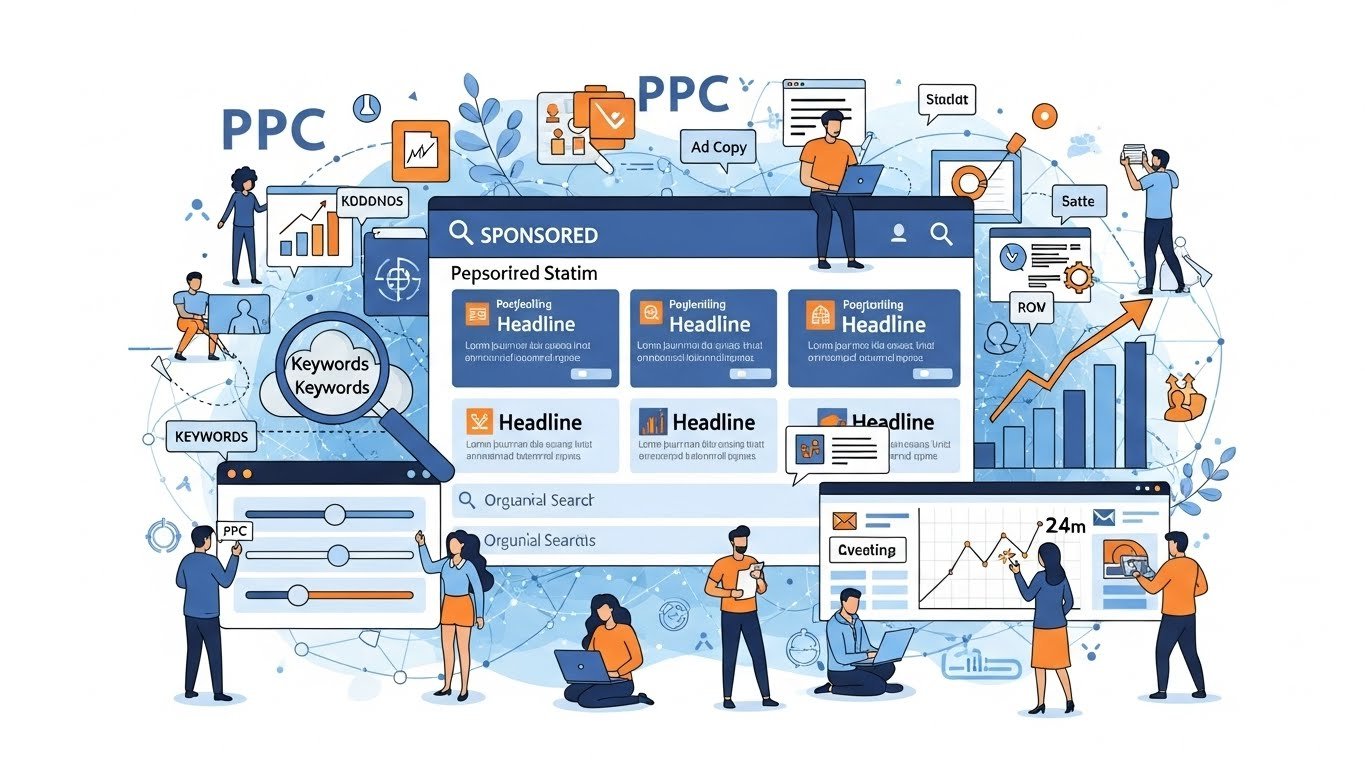
Pay-Per-Click Advertising
In today’s highly competitive digital marketplace, businesses can no longer rely solely on organic reach to generate consistent leads and sales. Consumers are actively searching for products and services across search engines, social platforms, and content networks, and brands must position themselves at the right moment with the right message. This is where performance-driven digital advertising plays a decisive role in business growth.
Among the most results-oriented models available today, Pay-Per-Click Advertising has emerged as a powerful channel that enables businesses to reach high-intent audiences, control marketing spend, and measure performance with precision. When implemented strategically, it can accelerate visibility, support revenue goals, and create a scalable growth engine for brands across industries.
This blog explores the fundamentals of paid advertising, its real business impact, and how organizations can use it to drive sustainable success in the digital era.
Understanding the Core Concept of Paid Advertising
Paid advertising is a digital marketing model where businesses pay platforms to display their ads to specific audiences. Instead of waiting for organic rankings or word-of-mouth exposure, brands can instantly appear in front of users who are actively searching or browsing relevant content.
Unlike traditional advertising methods, digital paid campaigns offer:
- Advanced audience targeting
- Budget control
- Real-time performance tracking
- Data-driven optimization
The goal is not just visibility, but meaningful engagement that leads to measurable actions such as website visits, form submissions, or purchases.
How the Pay-Per-Click Model Works
The pay-per-click model allows advertisers to pay only when a user interacts with their ad. Campaigns are typically run across search engines, social media platforms, and display networks.
Key elements of this model include:
- Keywords or audience targeting based on user intent
- Ad auctions that determine placement and visibility
- Landing pages designed to convert traffic into leads or sales
- Analytics and reporting to track performance
The strength of this approach lies in its accountability. Every click, impression, and conversion can be measured, making it one of the most transparent marketing investments available.
Business Impact of Performance-Driven Advertising
1. Immediate Market Visibility
Paid campaigns allow businesses to bypass long organic growth cycles. New brands, product launches, and time-sensitive offers can gain instant exposure in competitive markets.
2. High-Intent Traffic Generation
Unlike broad awareness campaigns, paid ads can target users who are already searching for specific solutions. This significantly improves lead quality and conversion potential.
3. Budget Flexibility and Cost Control
Businesses can start with small budgets, test campaigns, and scale only what performs. Spending can be adjusted daily based on performance data.
4. Measurable ROI
Every campaign delivers actionable insights. Marketers can clearly identify which keywords, ads, and audiences generate revenue, making optimization a continuous process.
5. Support for Multi-Channel Growth
Paid campaigns often complement SEO, content marketing, and social media strategies, strengthening the overall digital ecosystem.
Strategic Role of Pay-Per-Click Advertising in Growth
When aligned with business objectives, Pay-Per-Click Advertising becomes more than just a traffic source. It evolves into a strategic tool that supports:
- Lead generation pipelines
- E-commerce sales acceleration
- Brand authority in competitive niches
- Market testing for new offerings
Businesses that treat paid advertising as a long-term investment rather than a short-term expense often see compounding returns over time.
The Importance of Expertise and Execution
While the model itself is straightforward, achieving consistent results requires expertise. Campaign success depends on data interpretation, creative testing, and continuous optimization.
This is where partnering with a professional internet advertising company adds significant value. Expert teams understand how to:
- Identify profitable keywords and audience segments
- Write compelling ad copy aligned with user intent
- Optimize landing pages for conversions
- Reduce wasted spend through smart bidding strategies
Without strategic oversight, paid campaigns can quickly become expensive with limited returns.
Common Challenges Businesses Face
Despite its advantages, paid advertising comes with challenges if not managed correctly:
- Rising competition and increasing bid costs
- Poorly structured campaigns leading to low quality scores
- Irrelevant traffic due to weak targeting
- Lack of conversion tracking and data clarity
An experienced internet advertising company mitigates these risks by applying proven frameworks, performance benchmarks, and continuous testing.
Data-Driven Optimization and Continuous Improvement
One of the strongest advantages of paid advertising is the ability to optimize campaigns in real time. Businesses can analyze performance metrics such as:
- Click-through rates
- Conversion rates
- Cost per acquisition
- Return on ad spend
Using this data, campaigns can be refined to improve efficiency and profitability. Over time, this creates a predictable and scalable acquisition system.
Industry Applications and Use Cases
Paid advertising delivers value across industries, including:
- E-commerce brands seeking sales growth
- B2B companies generating qualified leads
- Education and training providers driving enrollments
- Real estate and service-based businesses increasing inquiries
Regardless of the industry, success depends on aligning campaign strategy with business objectives and customer behavior.
Choosing the Right Digital Partner
Selecting the right internet advertising company is a critical decision. Businesses should look for partners that emphasize transparency, data ownership, and long-term growth rather than short-term wins.
At Adomantra, campaigns are designed with a performance-first mindset, focusing on measurable outcomes and sustainable scaling. The emphasis is always on aligning advertising investments with business goals and market realities.
Long-Term Value Beyond Clicks
While clicks are the foundation of paid campaigns, true value lies in what happens after the click. Strong post-click experiences, relevant messaging, and conversion-focused design determine whether traffic turns into revenue.
When paid advertising is integrated with analytics, CRM systems, and customer journey mapping, it becomes a growth engine rather than a cost center.
The Future of Paid Advertising
As digital platforms evolve, automation, artificial intelligence, and audience modeling will continue to reshape paid campaigns. However, strategic thinking, creative messaging, and data interpretation will remain human-driven advantages.
Businesses that invest early in structured advertising frameworks will be better positioned to adapt to algorithm changes and competitive shifts.
Conclusion: Turning Investment into Impact
In a results-driven digital economy, visibility alone is not enough. Businesses need channels that deliver accountability, scalability, and measurable growth. Pay-Per-Click Advertising provides exactly that when executed with expertise and strategic intent.
By combining data-driven decision-making, continuous optimization, and the support of a skilled digital partner, brands can transform paid campaigns into a consistent revenue driver. For organizations looking to compete and grow in crowded markets, this approach offers clarity, control, and long-term business impact.
Read More: techners
About The Author