Why Regular Dental Scale and Polish Matters for Gum Health
A lot of patients treat the scale and polish as an optional part of a dental visit. Something nice to have, but not medically essential. That view is not completely wrong, but it significantly undersells what the procedure actually does.
The cosmetic benefit is real. Your teeth look cleaner, feel smoother, and surface staining disappears. But the clinical case for regular scaling has nothing to do with appearances.
What a scale and polish actually removes
Brushing and flossing remove soft plaque, the sticky film of bacteria that forms on teeth throughout the day. But some plaque that is not removed hardens over time into a substance called calculus, also known as tartar. Once it calcifies, no amount of brushing will shift it. It can only be removed with professional instruments.
Calculus is not inert. It provides a rough surface that plaque clings to even more easily, and it harbours bacteria that sit in direct contact with gum tissue. Left in place for months and years, it contributes directly to gum disease. The relationship between calculus build-up and gum inflammation is well-established and well-documented.
The link between calculus and gum disease
Gum disease progresses in stages, and the early stage, gingivitis, is almost entirely reversible. The gums become red, puffy, and bleed easily when brushed. At this point, a combination of improved home care and a professional clean can resolve the condition completely.
If calculus buildup continues without being addressed, gingivitis can progress to periodontitis. This is where the infection spreads below the gum line and begins to damage the bone and ligament that hold the teeth in place. This stage is not reversible. The tissue and bone lost to periodontitis do not grow back. The condition can be managed and slowed, but the damage already done remains.
The dental scale and polish, done regularly, is one of the most straightforward ways to prevent gingivitis from reaching that point.
Who is most at risk from skipping it?
For patients with excellent home oral hygiene and no tendency toward gum disease, the risk of occasional gaps between appointments is lower. But very few people remove all plaque consistently. The areas between teeth and along the gum line are routinely missed, even by patients who brush twice a day and floss regularly.
Certain groups face a significantly higher risk if they go long periods without professional cleaning:
- Smokers, in whom gum disease tends to progress faster and with fewer obvious warning signs
- Diabetics, who have a well-documented two-way relationship with gum disease
- Patients taking medications that cause dry mouth or gum overgrowth
- Those with a personal or family history of periodontitis
- Patients undergoing orthodontic treatment, where cleaning around brackets and wires is harder
For anyone in these categories, skipping regular scaling is a genuine clinical risk, not just an aesthetic lapse.
How often do you actually need one?
The standard recommendation of twice a year is a guideline, not a fixed rule. It is a sensible default for patients with average oral health, but it is not right for everyone.
Patients with excellent oral hygiene and minimal calculus build-up can often extend their appointments to once a year. Patients with active gum disease or a history of periodontitis may need appointments every three to four months. Your hygienist will set the cleaning interval based on your individual clinical needs rather than a standard schedule.
Ask your hygienist how often you need a scale and polish instead of automatically assuming that every six months is right for you.
Airflow cleaning: a more thorough option for some patients
At Manningtree dental practice root canal treatment , hygiene appointments can include Airflow cleaning. This technique uses a pressurised stream of air, water, and fine powder particles to remove biofilm and staining in a way that is more thorough than traditional scaling alone for certain types of deposits.
The powder reaches between teeth and below the gum line more easily than a manual instrument in some areas. It is also considerably gentler on gum tissue, which makes it particularly suitable for patients who find traditional scaling uncomfortable.
Airflow is especially effective for:
- Patients with heavy external staining from tea, coffee or smoking
- Those undergoing or following orthodontic treatment
- Patients with implants, where standard metal instruments are not recommended
- Anyone who has found conventional scaling uncomfortable in the past
The gum-health and whole-body connection
The reasons to keep on top of gum health go beyond the mouth. There is a growing body of research connecting chronic gum disease to systemic conditions, including cardiovascular disease, diabetes complications, and adverse pregnancy outcomes.
The mechanism remains unclear, but multiple large studies consistently show a strong enough association to warrant serious consideration. Chronic oral infection means a sustained low-level inflammatory response, and that does not stay isolated to the gum tissue. Keeping the gums healthy is not just a dental consideration.
What to expect at a hygiene appointment
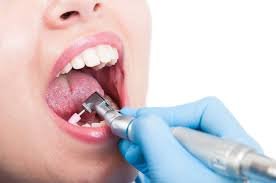
At Manningtree Dental and Implant Centre, your scale and polish appointment typically includes a full assessment of your gum health, including pocket depth measurements to identify signs of disease below the gum line. The hygienist removes calculus using an ultrasonic scaler and hand instruments, then polishes your teeth to remove residual surface staining.
If the hygienist identifies early signs of gum disease, they will provide personalised advice on improving your home care and recommend a suitable return interval based on your clinical needs. The appointment provides both a thorough clean and an important check of your gum health.
Frequently asked questions
1. Does a scale and polish damage tooth enamel?
No. When carried out by a trained dental professional, scaling does not damage enamel. The instruments remove calculus and deposits from the tooth surface while protecting the enamel. This is a common concern and a durable myth.
2. Why do my teeth feel sensitive after a scale and polish?
Calculus can cover areas of the root surface, and once we remove it, those areas become exposed to the oral environment, which can cause temporary sensitivity. This usually settles within a few days. A sensitive toothpaste used in the days following the appointment can help reduce the discomfort.
3. Can I have a scale and polish at the Manningtree dental practice if I have gum disease?
Yes, and it can be even more important for patients with gum disease. For active gum disease, your hygienist may recommend a deeper cleaning below the gum line, such as root planing or periodontal debridement, alongside or instead of a standard scale and polish. At Manningtree Dental, the hygienist will assess your gum health, determine the treatment you need, and recommend the most appropriate approach.
About The Author