

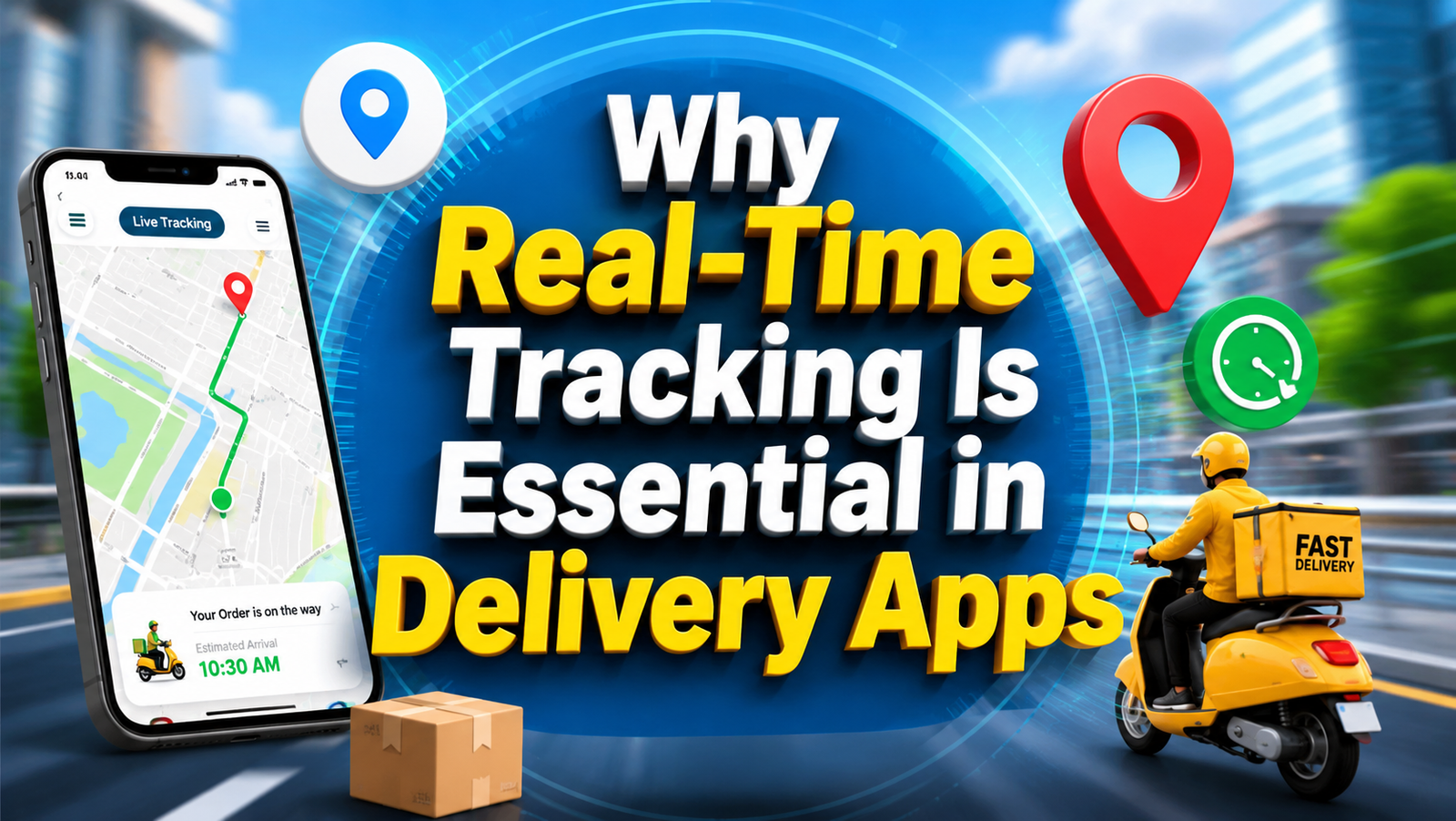
In today’s fast-paced digital world, customers expect more than just quick deliveries—they want complete visibility into where their orders are at every stage of the journey. Whether it’s food, groceries, parcels, medicines, or retail products, users no longer want to wait without updates. This growing demand has made real-time tracking one of the most valuable features in modern delivery applications.
For businesses, real-time tracking is no longer just a competitive advantage; it has become a necessity. It improves customer satisfaction, streamlines logistics, enhances operational efficiency, and builds trust between businesses and consumers. From small local stores to enterprise-level delivery services, companies are investing heavily in tracking technology to meet customer expectations.
This blog explores why real-time tracking is essential in delivery apps and how it benefits customers, delivery partners, and businesses alike.
What Is Real-Time Tracking?
Real-time tracking is a technology that allows customers and businesses to monitor the live location and status of a delivery. Using GPS technology, mobile networks, and cloud-based systems, delivery apps continuously update the driver’s location and estimated arrival time. This feature has become a key component of modern delivery solutions, especially in the top pickup delivery apps, where customers expect accurate updates, better transparency, and a seamless delivery experience from order placement to final arrival.
Instead of wondering when an order will arrive, customers can simply open the app and view the delivery progress on an interactive map. The system also sends notifications for important milestones, such as:
- Order confirmed
- Order picked up
- Driver on the way
- Nearby arrival
- Successfully delivered
This transparency significantly improves the delivery experience.
Why Customers Expect Real-Time Tracking
Consumer expectations have evolved dramatically over the past decade. Companies like Amazon, Uber Eats, DoorDash, and Instacart have set new standards by providing detailed delivery tracking.
Customers now expect:
- Accurate delivery estimates
- Live driver location
- Instant notifications
- Delivery status updates
- Reliable arrival times
Without these features, users may feel uncertain or frustrated, which can negatively impact customer satisfaction and brand loyalty.
Builds Customer Trust
Trust is one of the biggest factors in online shopping and delivery services. Customers are handing over their money before receiving their products, so they want assurance that everything is progressing as expected.
Real-time tracking provides transparency throughout the delivery process. Customers can see:
- When the driver starts the journey
- Current location
- Expected delivery time
- Route progress
This visibility reduces anxiety and creates confidence in the service.
Businesses that prioritize transparency often receive higher customer satisfaction ratings and stronger brand loyalty.
Reduces Customer Support Requests
One of the biggest operational challenges for delivery businesses is handling customer inquiries.
Questions like:
- “Where is my order?”
- “Has my package left the store?”
- “How much longer will it take?”
can overwhelm customer support teams.
Real-time tracking eliminates much of this uncertainty. Customers can answer these questions themselves by checking the app.
As a result, businesses experience:
- Fewer support calls
- Lower operational costs
- Faster response times
- Better customer service efficiency
Support teams can then focus on more complex issues instead of answering repetitive tracking questions.
Improves Delivery Accuracy
Delivery delays often happen because of traffic, weather conditions, incorrect addresses, or unexpected route changes.
Real-time tracking helps businesses monitor these situations instantly.
Managers can:
- Identify delays immediately
- Reroute drivers
- Communicate with customers
- Optimize delivery schedules
GPS-based navigation also helps drivers avoid traffic congestion and choose faster routes, improving delivery accuracy.
Enhances Customer Experience
Customer experience has become a major differentiator in competitive industries.
Imagine ordering dinner without knowing when it will arrive. Now compare that with watching your driver’s progress live on a map and receiving updates every few minutes.
The second experience feels far more reliable and engaging.
Real-time tracking provides customers with:
- Peace of mind
- Better planning
- Accurate arrival expectations
- Reduced uncertainty
- Greater convenience
Happy customers are much more likely to become repeat customers.
Boosts Delivery Efficiency
Delivery managers need visibility into their fleet to ensure smooth operations.
Real-time tracking allows businesses to:
- Monitor all active deliveries
- Analyze driver performance
- Detect delays
- Optimize delivery routes
- Improve dispatch decisions
These operational insights help businesses complete more deliveries with fewer resources.
Efficiency improvements also reduce fuel costs and vehicle wear, resulting in long-term savings.
Better Communication Between Drivers and Customers
Communication is another key benefit of real-time tracking.
Instead of repeated phone calls asking for directions or delivery updates, customers receive automatic notifications throughout the delivery journey.
Many delivery apps also include features such as:
- In-app messaging
- One-tap calling
- Delivery instructions
- Contactless delivery updates
This improves coordination while reducing unnecessary interruptions for drivers.
Increases Business Transparency
Transparency is becoming increasingly important for modern consumers.
Customers appreciate businesses that openly share delivery progress instead of leaving them guessing.
Real-time tracking demonstrates that a company values honesty and accountability.
Businesses can also notify customers immediately if:
- There is unexpected traffic
- Weather causes delays
- The driver needs additional time
- Delivery schedules change
Being proactive about communication often leads to greater customer understanding and satisfaction.
Supports Better Route Optimization
Modern delivery applications combine GPS with intelligent route optimization algorithms.
These systems evaluate:
- Current traffic
- Road closures
- Driver location
- Delivery priorities
- Distance between stops
The result is faster deliveries and improved resource utilization.
Optimized routes also help businesses reduce fuel expenses and carbon emissions while increasing driver productivity.
Helps Prevent Delivery Fraud
Real-time tracking creates a digital record of every delivery.
Businesses can verify:
- Pickup location
- Driver route
- Delivery time
- Customer location
- Proof of delivery
This information helps resolve disputes quickly.
For example, if a customer claims an order never arrived, GPS tracking and delivery confirmation can provide supporting evidence.
Similarly, customers are protected from inaccurate delivery claims because they can monitor the driver’s progress.
Improves Driver Accountability
Drivers also benefit from tracking technology.
Managers can evaluate:
- Driving routes
- Delivery speed
- Time spent at stops
- Idle time
- Completed deliveries
This data helps businesses identify training opportunities and reward high-performing drivers.
Drivers who consistently deliver efficiently and professionally contribute to stronger customer satisfaction.
Provides Valuable Business Analytics
Real-time tracking generates valuable operational data.
Businesses can analyze:
- Average delivery times
- Peak delivery hours
- Driver efficiency
- Delivery success rates
- Geographic demand patterns
These insights support smarter decision-making.
Companies can optimize staffing, improve delivery zones, and identify areas requiring operational improvements.
Essential for Multi-Delivery Operations
Businesses managing hundreds or thousands of daily deliveries cannot rely on manual tracking.
Real-time monitoring allows dispatchers to oversee entire fleets from a centralized dashboard.
Managers can quickly:
- Assign new orders
- Balance workloads
- Monitor delays
- Reallocate deliveries
- Improve fleet utilization
This level of visibility is especially valuable for grocery delivery, courier services, pharmacies, and logistics companies.
Many of the top pickup delivery apps rely on this capability to manage large delivery volumes while maintaining fast and reliable service.
Supports Contactless Delivery
Since the rise of contactless services, customers increasingly prefer minimal physical interaction.
Real-time tracking allows customers to know exactly when the driver is arriving, making contactless delivery smoother.
Customers can prepare designated drop-off locations and receive instant confirmation once the package has been delivered.
This improves both convenience and safety.
Strengthens Brand Reputation
Reliable delivery experiences directly influence online reviews and customer recommendations.
Businesses offering accurate tracking often receive positive feedback because customers appreciate transparency and reliability.
Satisfied customers are more likely to:
- Leave positive reviews
- Recommend the service
- Place repeat orders
- Trust the brand
In today’s competitive market, these advantages can significantly impact long-term business growth.
Competitive Advantage in a Crowded Market
The delivery industry has become highly competitive.
Businesses that fail to provide real-time tracking risk losing customers to competitors offering greater convenience.
Consumers naturally prefer platforms that provide:
- Live tracking
- Accurate ETAs
- Instant notifications
- Delivery transparency
This is one reason why many of the top pickup delivery apps have made real-time tracking a core feature rather than an optional add-on.
Future of Real-Time Tracking
Technology continues to improve delivery tracking capabilities.
Emerging innovations include:
- AI-powered delivery predictions
- Machine learning route optimization
- Predictive traffic analysis
- IoT-enabled fleet monitoring
- Drone delivery tracking
- Autonomous vehicle integration
These advancements will make delivery services even faster, more efficient, and increasingly reliable.
Businesses that embrace these innovations early will be better positioned to meet evolving customer expectations.
Final Thoughts
Real-time tracking has transformed the delivery experience for customers and businesses alike. It offers far more than simple location updates—it enhances transparency, improves operational efficiency, reduces customer support requests, increases delivery accuracy, and strengthens trust throughout the delivery process.
As customer expectations continue to rise, delivery businesses can no longer afford to overlook this essential feature. Whether you’re managing a local courier service, a grocery delivery platform, or one of the top pickup delivery apps, implementing real-time tracking can significantly improve customer satisfaction while optimizing day-to-day operations.
In an increasingly competitive marketplace, businesses that invest in reliable tracking technology will not only deliver products more efficiently but also build lasting relationships with customers who value convenience, reliability, and complete visibility into every order.







Leave a Reply