How HCQS 200mg Tablet Helps in Malaria Treatment
Malaria is a life-threatening disease caused by Plasmodium parasites, transmitted through the bite of infected female Anopheles mosquitoes. It remains a significant global health challenge, especially in tropical and subtropical regions. Antimalarial medications play a crucial role in both treatment and prevention, with HCQS 200mg Tablet (Hydroxychloroquine) being one such drug that has been explored for its potential in managing malaria. This article delves into how HCQS 200mg works, its effectiveness, dosage, side effects, and precautions for treating and preventing malaria.
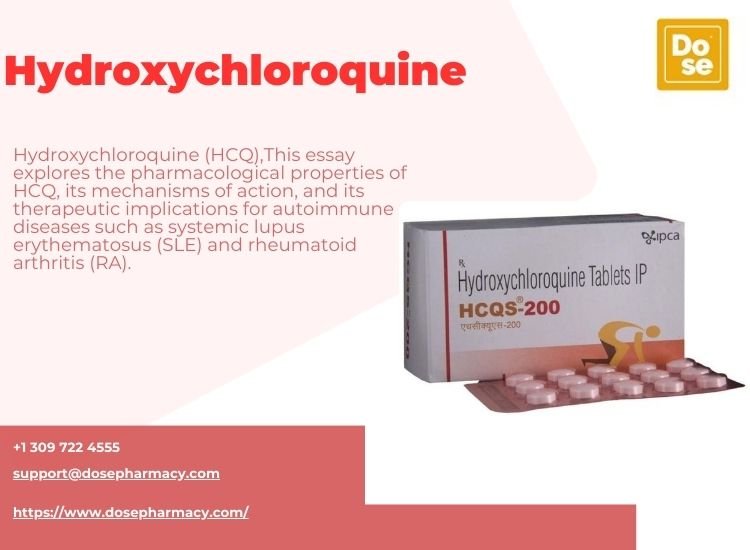
HCQS 200mg Tablet
HCQS 200mg Tablet contains Hydroxychloroquine Sulfate, a derivative of chloroquine, which is an established antimalarial agent. While originally developed to combat malaria, hydroxychloroquine has gained recognition for treating autoimmune disorders such as rheumatoid arthritis and lupus. Its role in malaria treatment and prevention stems from its ability to interfere with the parasite’s growth and replication within the red blood cells.
Buy Hydroxychloroquine online at DosePharmacy and enjoy a 5% discount using coupon code FLAT5. Get high-quality medication at the best prices with fast and secure delivery. Order now and save on your essential healthcare needs!
Mechanism of Action in Malaria Treatment
Hydroxychloroquine works by accumulating inside the acidic food vacuole of Plasmodium parasites, disrupting their ability to digest hemoglobin. This interference leads to the accumulation of toxic heme, which is lethal to the parasites. The primary mechanisms include:
- Inhibiting Hemoglobin Breakdown: Malaria parasites digest hemoglobin for survival. HCQS disrupts this process, causing toxic buildup.
- Blocking DNA Synthesis: The drug interferes with nucleic acid synthesis, preventing parasite replication.
- Raising Lysosomal pH: HCQS increases the pH in the parasite’s digestive vacuole, which hampers its survival.
Effectiveness of HCQS 200mg in Malaria Treatment
Although hydroxychloroquine has antimalarial properties, chloroquine remains the preferred choice for malaria treatment. However, due to chloroquine resistance in many malaria-endemic regions, hydroxychloroquine’s role has been limited. Studies suggest that HCQS can be effective against certain chloroquine-sensitive strains of Plasmodium falciparum and Plasmodium vivax but is ineffective against drug-resistant strains.
When is HCQS 200mg Used for Malaria?
- Chloroquine-Sensitive Malaria: It may be prescribed where chloroquine resistance is not a concern.
- Alternative to Chloroquine: In regions where chloroquine is still effective, HCQS might be used interchangeably.
- Combination Therapy: It can be used with other antimalarials to improve efficacy.
Dosage and Administration for Malaria Treatment
The dosage of HCQS 200mg for malaria treatment varies based on age, severity, and weight. Below is a general guideline:
- Adults: An initial dose of 800 mg, followed by 400 mg after 6-8 hours, and then 400 mg daily for two days.
- Children: Dosage depends on body weight (usually 10 mg/kg initially, then smaller doses over the next 48 hours).
- Pregnant Women: HCQS is considered safe in pregnancy for treating malaria, but dosage adjustments may be necessary.
Role of HCQS 200mg in Malaria Prevention
Hydroxychloroquine has also been investigated as a malaria prophylactic (preventive measure) for travelers and individuals in endemic areas.
How Does HCQS Help in Prevention?
- Pre-Exposure Prevention: Taking HCQS before traveling to malaria-prone regions may reduce the risk of infection.
- Suppressing Parasite Growth: If parasites enter the bloodstream, HCQS prevents their development.
- Long-Term Protection: Regular intake helps in preventing recurrent infections.
Recommended Dosage for Prevention
- Adults: 400 mg once a week, starting one to two weeks before exposure and continuing for four weeks after leaving the area.
- Children: Dose is adjusted according to weight.
Safety and Side Effects of HCQS 200mg
While HCQS is generally safe when taken as prescribed, it can cause some side effects, especially with prolonged use.
Common Side Effects
- Nausea and vomiting
- Headache
- Dizziness
- Loss of appetite
- Stomach pain
Serious Side Effects (Rare but Severe)
- Retinal Damage: Long-term use can lead to vision problems (retinopathy).
- Cardiac Issues: Prolonged use may cause heart rhythm abnormalities.
- Liver and Kidney Problems: Patients with pre-existing conditions should use it cautiously.
- Severe Skin Reactions: Rare allergic reactions, including rashes and peeling skin.
Precautions and Warnings
To ensure safety and effectiveness, certain precautions must be followed:
- Eye Check-ups: Regular eye examinations are recommended for long-term users.
- Heart Monitoring: Those with heart conditions should be closely monitored.
- Avoid Alcohol: Alcohol consumption can increase liver toxicity.
- Pregnancy & Breastfeeding: Generally considered safe but should be taken under medical supervision.
HCQS 200mg vs. Other Antimalarials
Hydroxychloroquine is less commonly used than other antimalarials due to resistance concerns. Here’s how it compares:
| Drug | Use in Malaria | Resistance Concerns | Preferred for Prevention? |
|---|---|---|---|
| Chloroquine | Yes (sensitive strains) | High resistance | Yes |
| HCQS (Hydroxychloroquine) | Limited use | Some resistance | Yes (specific cases) |
| Artemisinin-based drugs | Most effective | Low resistance | No |
| Mefloquine | Effective for prevention | Moderate resistance | Yes |
Conclusion
HCQS 200mg Tablet, containing hydroxychloroquine, has historically played a role in malaria treatment and prevention, particularly for chloroquine-sensitive strains. However, due to the rise of drug-resistant malaria, its use has become less common compared to modern antimalarials. While HCQS remains an option for certain cases, travelers and patients should always consult healthcare professionals to determine the best treatment or prophylactic regimen for their needs.
By following proper dosage, precautions, and medical advice, HCQS 200mg can still serve as a useful tool in specific malaria scenarios, ensuring better health outcomes in malaria-endemic regions.
About The Author