Fitness App Development Company Guide: Key Features, Costs, and Benefits
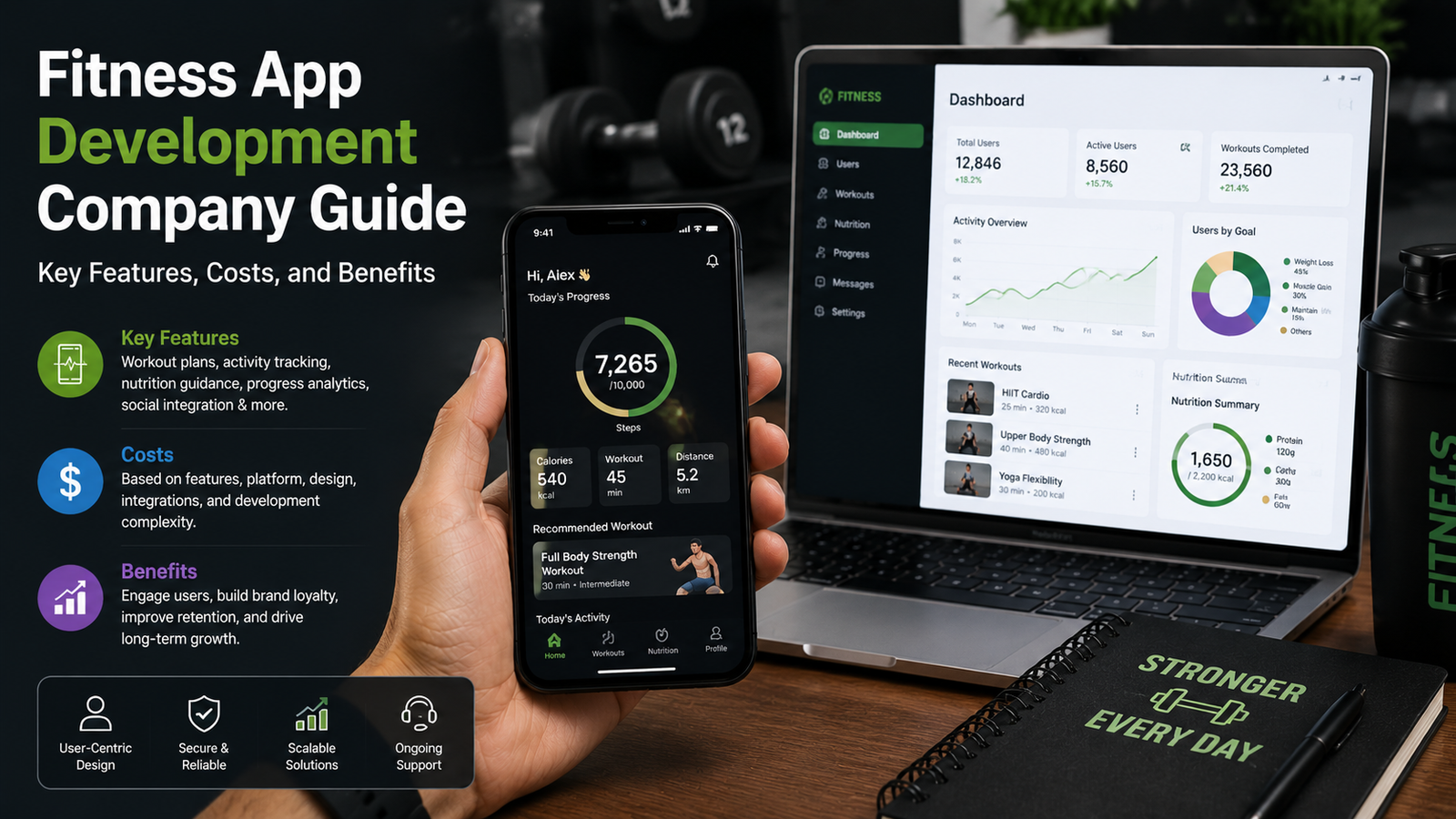
fitness app development company
Marcus had been a personal trainer for eleven years before he decided to build something of his own. Not a gym, not a certification course, but a training platform, an app where he could deliver programs to remote clients, track their progress, and communicate without juggling three different tools at once. He’d watched bigger fitness brands build their own platforms and figured the technology had become accessible enough that someone at his level could do the same. So he started calling agencies.
The first thing he discovered was that not all agencies are the same kind of different. Some had built workout timer apps. Some had built gym booking systems. Very few had built what he was actually describing, a coach-to-client training platform with programming logic, progress tracking, and communication tools built specifically around how a fitness professional actually works. Finding the right fitness app development company took him longer than he expected, and what he learned during that process is worth passing along to anyone starting from the same place.
What a Fitness-Specialized Agency Actually Brings
The difference between a generalist mobile agency and one with genuine fitness domain experience shows up in the details. A generalist team will build whatever the spec document says. A specialist team will push back on the spec document when it describes something that won’t work in practice for fitness users.
Workout logging UX is a good example. An app where logging a set of squats requires navigating three screens and tapping twelve times is an app that trainers and clients stop using within two weeks, regardless of how well-designed the rest of it is. A team that has shipped fitness apps before has been through exactly this and knows how to design compact, one-handed, mid-session logging flows that work when someone is standing in a squat rack and needs to record something in five seconds.
Progressive overload logic is another. Strength training programs aren’t just lists of exercises. They involve week-to-week progression rules, substitution trees when a client can’t perform a specific movement, deload protocols, and RPE-based adjustments. Building this logic properly requires understanding it from a coaching standpoint, not just a software standpoint, and agencies that lack that domain understanding tend to build flat exercise lists that look like training programs but don’t function like them.
Core Features Worth Discussing Before a Contract Is Signed
The feature list for a fitness app varies significantly by audience and use case, but certain categories come up consistently enough that they’re worth understanding in advance.
Workout programming and delivery is the core of most coach-facing platforms. This means a programming interface that lets a trainer build structured plans, assign them to specific clients, and see completion and feedback. The complexity of this feature is often underestimated because the UI for it needs to serve both the trainer building the program and the client executing it, two completely different mental models in the same product.
Progress tracking and analytics needs to capture the right data in a way clients actually engage with. Weight logged, reps completed, personal records, body measurements, progress photos with comparison views: the specific combination depends on the coaching methodology, and building it generically often means building it in a way that doesn’t fit any methodology particularly well.
Wearable and health platform integration is increasingly expected. Apple HealthKit, Google Fit, Apple Watch, Garmin, Whoop, Fitbit: clients who already track their training with hardware want to see that data in one place rather than switching between apps. Each integration is a separate technical project, and the quality of that integration, how reliably it syncs, how it handles data conflicts, how it behaves when a wearable API updates, varies significantly between teams.
In-app messaging that doesn’t feel like an afterthought matters more than most product specifications acknowledge. Trainer-client communication is a core part of the coaching relationship, and a chat experience that feels like a patched-in feature rather than a native one communicates something about the product that clients notice even if they can’t articulate why.
Push notifications for session reminders, program updates, and coach check-ins need to be implemented thoughtfully on both iOS and Android, with proper handling of notification permissions that have become increasingly restrictive on both platforms. A fitness app with broken or absent push notifications loses one of its most effective retention tools.
Health Data, Privacy, and Compliance
Fitness apps that collect health metrics operate in regulated territory whether they’re built with compliance in mind or not. Apps integrating with Apple HealthKit are bound by Apple’s data usage agreements, which restrict how health data can be shared with third parties. Apps serving European users fall under GDPR. Apps with California users need CCPA consideration built into their data architecture.
Beyond legal compliance, users in the fitness space are increasingly privacy-conscious about health data specifically. An app that clearly communicates what data it collects, gives users genuine control over it, and doesn’t share it with advertising platforms builds trust that generic privacy policies don’t. An agency that hasn’t navigated health data compliance in previous projects will need to learn it on your timeline, which affects both cost and quality of the result.
What Development Actually Costs
Fitness App Development Cost depends on the same variables that drive mobile app cost generally, platform choice, backend complexity, number of integrations, and team location, with additional complexity from fitness-specific features that don’t have off-the-shelf implementations.
A basic fitness app covering workout delivery and basic tracking, built cross-platform with Flutter or React Native, runs $30,000 to $80,000 with a quality Eastern European or South Asian team, and $80,000 to $180,000 with a North American or Western European agency. A platform with coach-facing programming tools, multi-client management, wearable integrations, and in-app messaging is more complex and typically runs $80,000 to $200,000 on the lower end and $200,000 and up with a premium team or significant custom backend requirements.
Ongoing maintenance runs 15 to 20 percent of the original build cost annually. This covers OS compatibility updates when Apple and Google release new versions, SDK updates when wearable manufacturers change their APIs, bug fixes, and security patches. Fitness apps with active wearable integrations tend to sit at the higher end of that maintenance range because wearable API changes are frequent and sometimes breaking.
The Benefits That Compound Over Time
The case for a custom fitness platform over a white-label solution or third-party coaching tool comes down to ownership and differentiation. A trainer or fitness brand building on a third-party platform is building an audience on someone else’s infrastructure, with pricing, features, and terms set by someone else. A custom platform is an asset that builds equity over time, can be differentiated in ways generic tools can’t, and doesn’t carry per-user fees that compress margins as the audience grows.
For Marcus specifically, the economics became clear once he mapped out what he was paying per month across the tools he was using and multiplied it against his client count projections for two years. The custom platform cost more upfront. It cost less in aggregate over a two-year horizon, and unlike a third-party tool it could evolve to reflect exactly how he coached rather than how the platform vendor thought coaching should work.
What Marcus Built
His platform launched five months after he signed the contract. It covered program delivery, session logging, progress photo tracking with side-by-side comparisons, Apple Watch integration for heart rate data during sessions, and a messaging system his clients actually used rather than texting him separately. His client capacity went from twenty to forty within six months of launch because the admin overhead per client dropped significantly.
The thing he said when I asked him what he’d do differently: he’d have asked earlier which agencies had actually used their own fitness apps. The team he ended up working with had a developer who trained seriously and had strong opinions about what made workout logging feel right in practice. That perspective showed up in the product in ways that a team without it wouldn’t have produced.
About The Author