

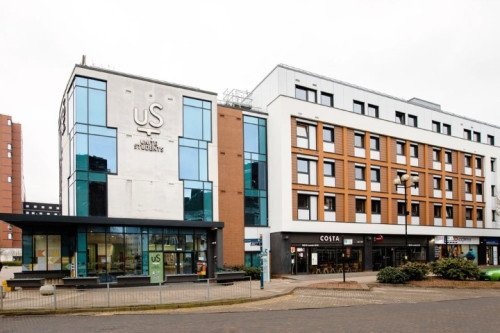
Birmingham is in the middle of one of the most significant urban transformations in modern UK history. HS2, the high-speed rail project connecting Birmingham to London, has triggered a wave of regeneration across the city reshaping neighbourhoods, attracting investment, and quietly but meaningfully redrawing the map of where students want to live.
For anyone searching for affordable student accommodation in Birmingham city centre, the timing of this transformation matters. The areas that were overlooked five years ago are becoming tomorrow’s most sought-after student postcodes and understanding that shift could save you money and get you into a better location than you’d expect.
What Is HS2 and Why Does It Matter for Birmingham?
HS2 High Speed 2 is a high-speed railway designed to dramatically cut travel times between Birmingham and London, with Birmingham Curzon Street set to become a major new city terminal. The project has already triggered billions in surrounding investment, with developers, retailers, and hospitality brands all repositioning themselves around the anticipated footfall and connectivity boost.
For Birmingham, this isn’t just a transport upgrade. It’s a citywide signal that Birmingham is a serious, long-term growth destination and that signal is reshaping everything from office development to residential housing to, increasingly, student accommodation.
Which Birmingham Neighbourhoods Are Being Transformed by Regeneration?
The regeneration ripple effect is visible across several key areas and each one is telling a slightly different story for students.
Digbeth is the most dramatic transformation. Once known primarily as Birmingham’s warehouse and nightlife district, Digbeth is now at the centre of a creative and residential boom. New PBSA developments are appearing alongside independent cafes, tech startups, and arts venues. For students who want a vibrant, urban lifestyle, Digbeth is rapidly becoming Birmingham’s most exciting postcode.
Eastside sits directly adjacent to the HS2 Curzon Street terminal site and Birmingham City University making it one of the most strategically positioned areas in the city for students. Significant public realm investment, new student housing developments, and improved transport infrastructure are all converging here simultaneously.
Newtown and Aston are emerging neighbourhoods seeing increased residential investment as regeneration spreads outward from the city core. Proximity to Aston University makes these areas increasingly relevant for students looking for value without sacrificing connectivity.
The Jewellery Quarter has already completed much of its transformation from an industrial heritage district to a desirable mixed-use neighbourhood. Student accommodation options here are limited but growing, appealing particularly to postgraduate and mature students who want a quieter, characterful base.
How Is Regeneration Shifting Traditional Student Accommodation Hotspots?
For decades, Birmingham student life has been anchored around two poles Selly Oak for University of Birmingham students, and the city centre for everyone else. Regeneration is beginning to complicate that picture in interesting ways.
Selly Oak remains popular and will continue to be its proximity to the University of Birmingham campus is irreplaceable. But as Digbeth and Eastside develop, students at Birmingham City University and Aston University have genuinely compelling alternatives that didn’t meaningfully exist even three years ago.
The shift matters for two reasons. First, newer PBSA developments in regenerating areas tend to offer more modern facilities at competitive prices because developers are incentivised to attract tenants into emerging locations. Second, improved transport links mean that living slightly further from your campus is becoming less of a compromise than it once was.
For international students in particular, this expanding map of viable student locations is a genuine opportunity for more choice, more variety in price points, and accommodation options in neighbourhoods that feel genuinely exciting to live in.
What Does Better Connectivity Mean for Student Accommodation Choices?
One of the most direct effects of Birmingham’s regeneration push is infrastructure investment and that feeds directly into how students think about where to live.
Improved cycling infrastructure, expanded bus rapid transit routes, and the longer-term connectivity gains from HS2 itself are all making Birmingham a more navigable city. For students, this means the mental calculus around accommodation location is changing.
A room in Digbeth that’s a 15-minute bike ride from campus now competes seriously with a room in Selly Oak that’s a 10-minute walk especially if the Digbeth option is newer, better equipped, and part of a livelier neighbourhood.
Transport connectivity is increasingly a feature that students actively research before booking. The best student accommodation Birmingham platforms now include transport maps and commute time calculators precisely because students particularly international students unfamiliar with the city want to understand journey times before they commit.
Are New Student Accommodation Developments Keeping Pace With Birmingham’s Growth?
Birmingham’s student population has grown consistently year on year, and PBSA development has broadly kept pace but not evenly across the city. The regenerating areas are seeing the newest stock, while some established student neighbourhoods have aging housing that hasn’t been updated in years.
This creates a clear quality gap that savvy students are learning to exploit. A brand-new studio apartment in Eastside will often be better specified faster Wi-Fi, better sound insulation, smarter room technology than an older private terraced house in a more traditionally popular area, sometimes at a comparable price.
For the 2026/27 academic year, several new PBSA developments are either completing or opening in Birmingham’s regenerating neighbourhoods meaning students who act early have access to genuinely new-build quality in locations that will only become more desirable over time.
Should Students Factor Birmingham’s Regeneration Into Their Accommodation Decision?
Absolutely and here’s the practical case for doing so.
Students who choose accommodation in regenerating areas tend to benefit from lower initial pricing before an area fully establishes itself, newer and better-equipped buildings, a more dynamic neighbourhood environment, and the satisfaction of living somewhere that’s visibly improving around them.
The counterargument is that regenerating areas can feel like unfinished construction noise, patchy amenities, and streets that haven’t yet fully activated. That’s a legitimate consideration, particularly for students who value an immediately settled environment.
The honest answer is that it depends on what you’re optimising for. If price, modernity, and neighbourhood energy are priorities, Birmingham’s regenerating hotspots deserve serious consideration. If proximity to a specific campus and an established student community matter more, traditional areas still deliver.
Final Thoughts
Birmingham in 2026 is not the same city it was five years ago and it won’t be the same city five years from now. HS2 and the regeneration it has catalysed are permanently reshaping the city’s geography, and student accommodation is moving with it.
The smartest students will look beyond the obvious postcodes, understand where the city is heading, and position themselves in neighbourhoods that offer genuine value today and even more in the years ahead.





















Leave a Reply