Rapid CNC Machining for Aerospace and Automotive Industries
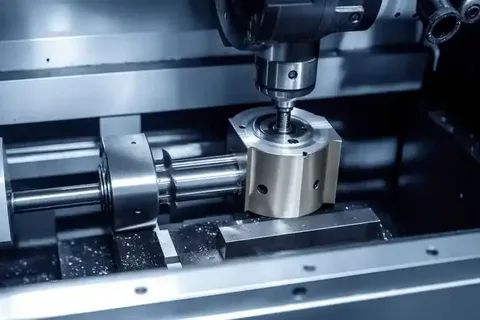
In today’s highly competitive manufacturing landscape, rapid CNC machining has become a critical technology for both aerospace and automotive industries. These sectors demand extreme precision, fast production cycles, and consistent quality, all of which CNC machining can deliver efficiently when optimized for speed and accuracy.
As product development cycles shorten and performance expectations rise, manufacturers increasingly rely on advanced machining solutions to produce complex components quickly. Whether it is aircraft structural parts or automotive engine components, rapid CNC machining bridges the gap between design innovation and physical production.
The Role of Rapid CNC Machining in Modern Manufacturing
The adoption of rapid CNC machining has transformed traditional manufacturing methods by significantly reducing production time while maintaining exceptional precision. In aerospace and automotive industries, where safety and performance are critical, this technology ensures components are produced with tight tolerances and repeatable accuracy.
Manufacturers use computer-controlled systems to automate cutting, drilling, and shaping processes, allowing complex designs to be produced without manual errors. This improves consistency across large production runs and supports rapid prototyping for new product development.
Key advantages include:
- Faster production cycles for prototypes and final parts
- High precision and repeatability in complex designs
- Reduced human error through automation
- Improved scalability for mass production
- Seamless integration with CAD/CAM systems
Enhancing Precision in Aerospace Components
Aerospace engineering requires extremely tight tolerances because even the smallest deviation can affect safety and performance. Rapid CNC machining ensures that components such as turbine blades, landing gear parts, and structural frames are manufactured with exact precision.
This technology allows engineers to translate digital models directly into physical parts with minimal variation. As a result, aerospace manufacturers can meet strict regulatory standards while maintaining efficiency in production.
Precision benefits in aerospace manufacturing:
- Micron-level accuracy for critical components
- Consistent replication of complex geometries
- Reduced risk of structural failure
- Compliance with strict aviation safety standards
- Improved aerodynamic performance of parts
By maintaining such precision, rapid CNC machining plays a vital role in ensuring aircraft reliability and operational safety in demanding environments.
Improving Efficiency in Automotive Production
In the automotive sector, speed and efficiency are essential to meet market demand and production deadlines. Rapid CNC machining enables manufacturers to produce engine parts, transmission systems, and custom components quickly without sacrificing quality.
This technology supports both high-volume production and custom vehicle manufacturing. It also reduces the time required for tooling and design adjustments, allowing automotive companies to respond faster to market trends.
Efficiency improvements in automotive manufacturing:
- Faster turnaround time for vehicle parts
- Reduced production bottlenecks
- Cost-effective mass production capabilities
- Quick design-to-production transition
- Enhanced flexibility for custom car builds
With these advantages, automotive manufacturers can optimize their production lines and introduce new models more efficiently than ever before.
Material Flexibility and Complex Part Manufacturing
One of the strongest advantages of rapid CNC machining is its ability to work with a wide range of materials used in aerospace and automotive applications. These include aluminum alloys, titanium, stainless steel, and advanced composites.
This flexibility allows engineers to design lightweight yet durable components that meet performance requirements. Additionally, CNC machines can produce highly complex geometries that would be difficult or impossible to achieve using traditional methods.
Material and design advantages:
- Compatibility with metals and advanced composites
- Ability to machine lightweight structural parts
- Production of intricate and detailed designs
- Reduced material waste during machining
- Support for high-strength aerospace-grade materials
By enabling complex part production, rapid CNC machining supports innovation in vehicle efficiency, fuel consumption reduction, and structural performance.
Cost Reduction and Innovation in Manufacturing
Although advanced machining technology may seem expensive initially, rapid CNC machining ultimately reduces manufacturing costs by minimizing waste, labor, and production time. Both aerospace and automotive industries benefit from long-term savings and improved operational efficiency.
It also accelerates innovation by allowing engineers to quickly prototype and test new designs. This reduces the time it takes to bring new products from concept to market, giving companies a competitive advantage.
Cost and innovation benefits:
- Lower long-term production costs
- Reduced material wastage and scrap rates
- Faster prototyping and product testing
- Decreased reliance on manual labor
- Improved return on investment (ROI)
These advantages make CNC machining a strategic investment for companies aiming to stay competitive in fast-moving global markets
Conclusion
Rapid CNC machining has become an essential technology in both aerospace and automotive industries due to its ability to combine speed, precision, and efficiency. From producing highly accurate aircraft components to manufacturing complex automotive parts, this technology supports every stage of modern industrial production.
As industries continue to evolve, the demand for faster turnaround times, higher precision, and cost-effective manufacturing will only increase. Rapid CNC machining stands at the center of this transformation, enabling manufacturers to innovate, optimize production, and meet the growing demands of advanced engineering applications.
About The Author