

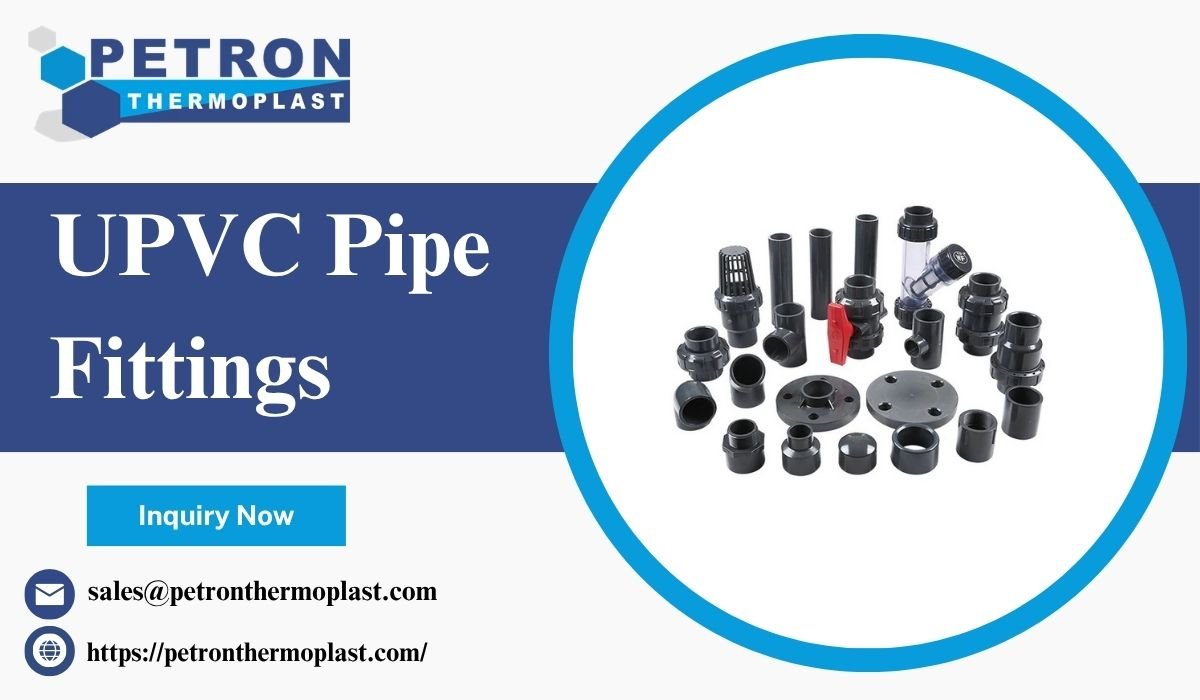
Unplasticized Polyvinyl Chloride (UPVC) pipe fittings are widely utilized in industrial, commercial, and municipal piping systems due to their excellent hydraulic performance, corrosion resistance, and durability. In fluid transport systems, minimizing pressure loss and ensuring smooth flow are critical for operational efficiency, energy savings, and system reliability. UPVC pipes fittings are engineered with precise geometry and smooth internal surfaces to optimize flow characteristics and reduce frictional losses across pipelines.
This article provides a detailed technical overview of UPVC pipe fittings, focusing on their role in achieving smooth flow and minimal pressure loss in modern piping systems.
Overview of UPVC Material
UPVC is a rigid thermoplastic material produced without plasticizers, resulting in enhanced strength and chemical resistance. It is widely used for piping applications where structural integrity and long service life are required.
Key Material Properties
- Density: 1.38 – 1.45 g/cm³
- Tensile Strength: 45 – 60 MPa
- Modulus of Elasticity: 2.5 – 3.5 GPa
- Maximum Operating Temperature: Up to 60°C
- Thermal Conductivity: Low
- Surface Roughness Coefficient: Very low
These properties contribute directly to improved flow efficiency and reduced hydraulic losses.
Importance of Smooth Flow in Piping Systems
Smooth flow in pipelines ensures:
- Reduced energy consumption in pumping systems
- Stable flow rates and pressure distribution
- Lower turbulence and vibration
- Extended equipment life
Any irregularities or rough surfaces in piping components can cause turbulence, increasing friction losses and reducing system efficiency.
Pressure Loss in Piping Systems
Pressure loss occurs due to friction between the fluid and the internal surface of pipes and fittings, as well as turbulence caused by changes in direction, diameter, or flow velocity.
Types of Pressure Loss
- Major Losses: Frictional losses along straight pipe lengths
- Minor Losses: Losses due to fittings such as elbows, tees, valves, and reducers
UPVC pipe fittings are specifically designed to minimize both types of losses.
Hydraulic Performance of UPVC Pipe Fittings
Smooth Internal Surface
UPVC fittings have a very low surface roughness, which reduces friction between the fluid and pipe wall.
- Minimizes energy loss
- Maintains laminar flow conditions
- Reduces scaling and deposition
Optimized Geometry
- Gradual curvature in elbows reduces turbulence
- Streamlined design in tees and reducers
- Uniform internal diameter across joints
Low Friction Coefficient
UPVC has a significantly lower friction factor compared to metal pipes, resulting in:
- Higher flow efficiency
- Reduced pressure drop
- Improved system performance
Design Features for Minimal Pressure Loss
Precision Manufacturing
- Injection molding ensures dimensional accuracy
- Smooth and uniform internal surfaces
- Consistent wall thickness
Proper Jointing Techniques
- Solvent cement joints create smooth internal connections
- Eliminates internal protrusions
- Prevents flow obstruction
Wide Range of Fittings
- Elbows (45°, 90°) with optimized curvature
- Reducers for smooth transition between pipe sizes
- Tees designed to minimize flow disruption
Technical Specifications
Typical specifications of UPVC pipe fittings include:
- Size Range: 20 mm to 400 mm
- Pressure Ratings: PN6, PN10, PN16
- Temperature Range: Up to 60°C
- Standards: ASTM D2466, DIN 8063, ISO 1452
- Jointing Method: Solvent cement, threaded
Flow Efficiency Analysis
The efficiency of a piping system can be evaluated using hydraulic equations such as the Darcy-Weisbach equation, which relates pressure loss to friction factor, pipe length, and flow velocity.
Factors Affecting Pressure Loss
- Internal surface roughness
- Flow velocity
- Pipe diameter
- Type and number of fittings
UPVC fittings, with their smooth surfaces and optimized design, significantly reduce these losses.
Applications of UPVC Pipe Fittings
Water Supply Systems
- Municipal water distribution
- Industrial water transport
Chemical Processing
- Handling of non-reactive chemicals
- Corrosion-resistant pipelines
Irrigation Systems
- Efficient water distribution
- Reduced energy consumption
HVAC Systems
- Cooling water circulation
- Condensate drainage
Wastewater Treatment
- Transport of treated and untreated water
- Resistance to chemical exposure
Advantages Over Conventional Materials
| Parameter | UPVC Pipe Fittings | Metal Fittings |
| Surface Roughness | Very Low | Higher |
| Corrosion Resistance | Excellent | Prone to corrosion |
| Pressure Loss | Minimal | Higher |
| Weight | Lightweight | Heavy |
| Maintenance | Low | High |
Installation Best Practices
Proper Alignment
- Ensure accurate alignment of pipes and fittings
- Avoid stress on joints
Correct Jointing
- Use appropriate solvent cement
- Ensure clean and dry surfaces before bonding
System Design Optimization
- Minimize unnecessary bends and fittings
- Use gradual transitions
- Maintain appropriate pipe sizing
Maintenance and Long-Term Performance
Maintenance Benefits
- No scaling or corrosion
- Minimal cleaning requirements
- Consistent flow performance over time
Lifecycle Advantages
- Long service life (up to 50 years)
- Stable hydraulic performance
- Reduced operational costs
Sustainability and Efficiency
- Energy savings due to reduced pumping requirements
- Recyclable material
- Reduced environmental impact
- Lower carbon footprint over lifecycle
Role in Modern Infrastructure
UPVC pipe fittings are widely used in:
- Smart water distribution systems
- Industrial process networks
- Infrastructure development projects
- Sustainable engineering solutions
Conclusion
UPVC pipe fittings are engineered to deliver smooth flow and minimal pressure loss, making them an ideal choice for modern piping systems. Their low surface roughness, optimized design, and corrosion resistance contribute to superior hydraulic efficiency and long-term reliability.
By reducing frictional losses and maintaining consistent flow conditions, UPVC fittings help improve system performance, lower energy consumption, and minimize maintenance requirements. Their versatility and compliance with international standards make them a preferred solution for water supply, chemical processing, irrigation, and industrial applications.
For industries seeking efficient, durable, and cost-effective piping solutions, UPVC pipe fittings provide a technically advanced and reliable option for achieving optimal fluid flow performance.














Leave a Reply