

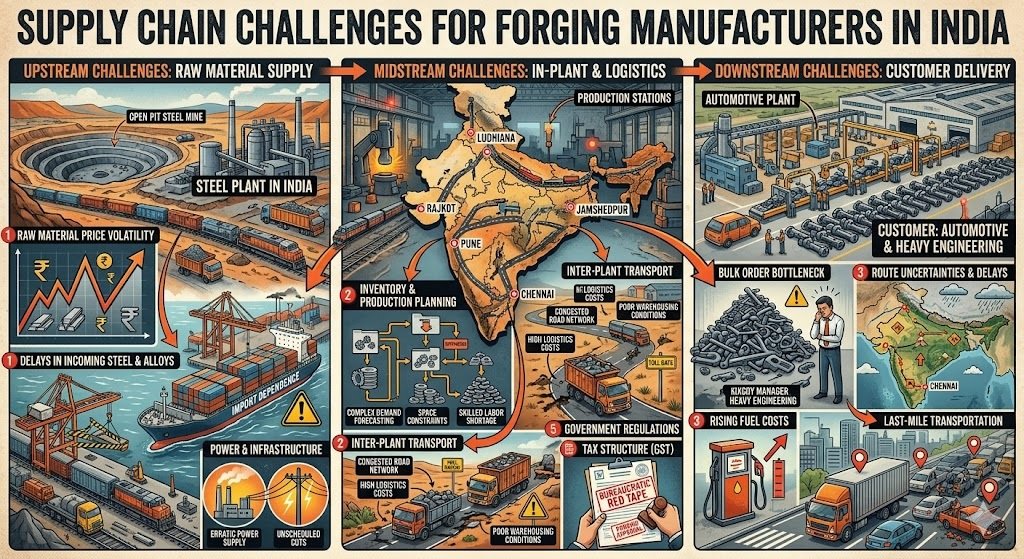
The forging industry is a critical component of the supply chain for many industries, including the automotive, aerospace, oil and gas, rail, construction, and heavy engineering, among others. The forgings produced by forging manufacturers in India are high-strength and precision-engineered metal components used by manufacturers in these different industries. One of the biggest challenges forging manufacturers india are facing is maintaining an effective and efficient supply chain.
The management of a supply chain within the forging business includes purchasing Raw Materials, Transporting, Inventory Control, Production Scheduling, Quality Assurance, and Providing Timely Delivery of Finished Goods to Domestic and International Customers. Any interruption to the Supply Chain can have a direct effect on Production Efficiency, Delivery Timeliness and ultimately Customer Satisfaction.
Rising Cost and Availability of Raw Materials
Fluctuating costs and irregular access to steel, alloy steel, stainless steel, aluminium, and any special metals are major issues for Indian forging makers; due to variable global market conditions, restrictions on imports, pricing of currency and transportation costs, the cost of raw materials has fluctuated enough to where the raw material pricing can be very difficult to manage; if the cost of materials has increased, then the manufacturer will have a major decrease in profit; delay in obtaining materials can halt production schedules, and lead to backlog of product to be able to deliver to the customer;
Transportation and Logistics Delays
The timely import and export of all required raw materials needed to forge products as well as finished, forged products will depend on efficient transportation methods. There are many different logistics problems that exist in the forging industry, which can include high fuel prices, a lack of good roads, port congestion, railroad delays, and interstate transportation regulations. Export-oriented forging manufacturers encounter logistics problems that affect their ability to supply products to customers on time, such as shipping delays, customs clearance problems, and limited availability of containers for shipment. All of these logistics problems can result in late shipments and damaged customer relationships.
Dependency on Multiple Vendors
Forging manufacturers utilize numerous vendors for raw materials, machining tools, heat treatment services, and packaging solutions. It can be challenging for manufacturers to manage a number of different vendors while also maintaining consistency in quality and being able to get their products in a timely manner. Any one weak vendor can interrupt the entire production cycle. Dependency on vendors becomes even more of a risk to manufacturers that are using limited back-up vendors or are highly reliant on imported materials.
Inventory Management Problems
Another challenge in supply chains is how to balance your inventory. Holding too much stock means that your storage costs are too high and that you have blocked working capital; holding too little means that you will have to stop producing while purchasing material quickly. Therefore, a good forging company in India will try to forecast their demand properly to ensure an adequate amount of inventory is on hand and will avoid inefficiencies in its operations and impacting customer commitments due to inadequate stocks of finished product available.
Quality Control Across the Supply Chain
Quality assurance is very important in forging. Forged parts can be used in applications where there are performance and safety-critical requirements. The finished product may not be able to pass testing or be able to operate if the raw materials do not meet specifications.
Consistency of quality assurance must be maintained from manufacturing and all suppliers. There must be strict vendor management and compliance monitoring in order to have consistent inspections and testing throughout the supply chain.
Skilled Labor and Workforce Shortages
Trained human resources are an important supply chain efficiency metric. When there aren’t enough skilled workers to assist production planning, warehouse management, logistics coordination and/or procurement functions, it has a negative impact on operational performance. Forging manufacturers in India typically do not have access to a sufficient number of experienced staff members who possess the capacity to effectively execute demanding manufacturing operations and understand the broader industrial supply chain systems.
Technology Gaps in Supply Chain Operations
Numerous conventional forging companies still make use of manual processes throughout their supply-chain operations regarding inventory control, purchasing, and vendor relations. Digital technology is not being used in most cases by these companies resulting in errors, delays, as well as poor visibility along the supply chain. Small to medium-size manufacturers (SMM) do not normally have the means (e.g., finances or knowledge) to invest in the use of today’s ERP (Enterprise Resource Planning) systems, automation systems, and utilizing technologies to improve the way Supply Chain work (i.e., improve the Supply Chain process through automation).
Compliance and Regulatory Challenges
The forging industry faces various regulations such as safety, export rules, basic environmental compliance and taxation. Government Policy changes such as GST, regulation, tariff or documentation will affect Supply Chain. The amount of effort put forth by the forging company to remain compliant with these changes means that if documentation is not present or accurate, the possibility of delays to the supply chain will greatly increase.
Customer Demand Fluctuations
Rapidly evolving market dynamics with respect to automotive, construction and other sectors can cause significant shifts in demand for manufacturers’ products. Such rapid fluctuations in order volume can make it difficult to manage production requirements. Forging Manufacturers India who forge products in India are required to change their supply chains in accordance with the changing needs of their customers in order to keep operating costs down and be able to compete without incurring significant additional costs.
Strategies to Improve Supply Chain Efficiency
To address these supply chain issues, forging suppliers will need to do several things such as expand the variety of their suppliers, digitally manage their supply chains, better forecast their inventory levels through improved planning processes and establish more effective logistics partnerships.
Long-term contracts with suppliers can also help to minimize the possibility of disruptions in the supply chain and reduce the procurement process risk. Additionally, organizations can use technological solutions (such as ERP systems), process automation, and quality management systems to gain greater visibility into their operations; thus improving their operational control. Businesses can diminish dependence on global suppliers and mitigate transportation delays through establishing a network of local suppliers.
Conclusion
Supply chain management is integral to the forging manufacturers India and plays a significant part in the success of the manufacturer’s product line. Manufacturers encounter multiple hurdles such as fluctuating prices for materials, lengthy waits for parts shipment and/or delayed shipment, dependence upon sub-par suppliers, and ongoing compliance problems which all negatively impact their ability to produce efficiently, resulting in decreased profits.
Manufacturers who have been successful create stronger and more resilient supply chains by taking a smart approach to planning, developing the use of technology, and building solid relationships with their suppliers. In addition, effective supply chain management is a foundational component of the operation of many manufacturers in today’s competitive industrial environment and is an excellent method for achieving a competitive edge that leads to sustainable growth.



















Leave a Reply