

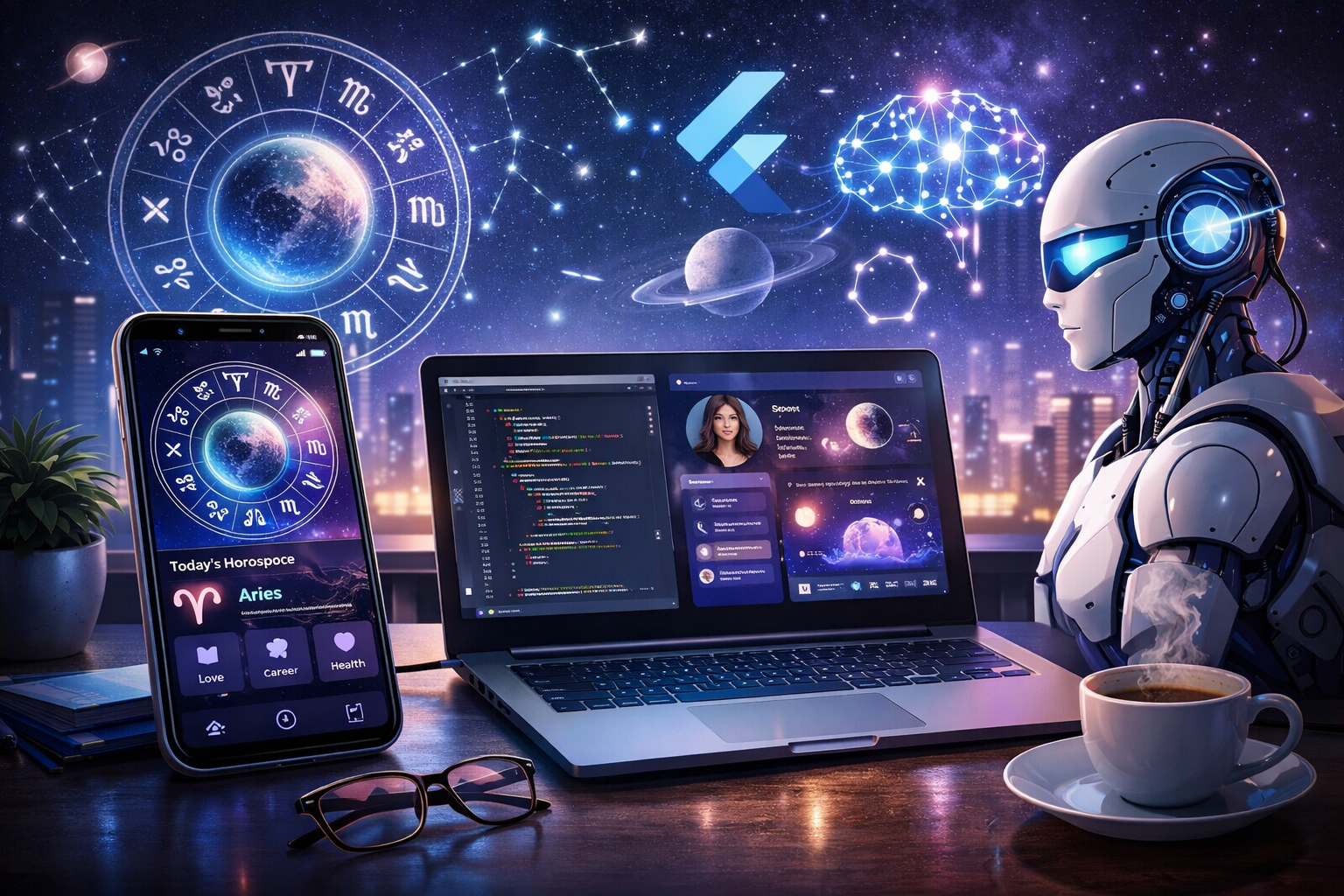
Astrology apps have transformed significantly over the past decade. Once simple horoscope generators, today’s leading astrology platforms offer personalized birth charts, predictive insights, live consultations, AI‑based recommendations, and vibrant community features that rival mainstream social networks. With growing interest in personal wellness, spirituality, and self‑discovery, users around the world are downloading astrology apps in record numbers — but not all astrology apps succeed.
Behind the scenes, developers face a series of technical, design, legal, and product challenges that can make or break an app. In this article, we’ll explore why astrology apps are popular, the key obstacles teams encounter during development, how to overcome them, the tangible benefits of solving these issues, and what the future holds for this fast‑evolving space.
Why Astrology Apps Are Popular
Astrology has experienced a major digital revival, driven by the combination of easy access to technology and a growing interest in self‑discovery, personal guidance, and reflection. This rising demand has created the need for astrology app development solutions that are accurate, engaging, and tailored to user needs.
1. Personalized Insights
Modern users want more than generic horoscopes. They expect customized predictions based on their precise birth charts, zodiac signs, and even real‑time planetary movements.
2. Convenience and Accessibility
Astrology apps are available 24/7 on mobile devices. Users no longer need to visit calculators or manual tables — everything is delivered instantly.
3. Community and Engagement
Many astrology platforms allow users to read content, participate in discussions, join groups, or interact with expert astrologers. This sense of community fosters long‑term engagement.
4. Self‑Discovery and Mental Wellness
People are increasingly turning to astrology for guidance, introspection, and reflective thought — making astrology apps part of personal wellness routines.
5. Technological Enhancements
AI, machine learning, AR/VR experiences, and gamified journeys have transformed astrology apps from novelty tools into immersive lifestyle platforms.
With demand growing across demographics, competition in this vertical is rising — and users are becoming more selective. This brings us to the real challenges of astrology app development.
Key Challenges in Astrology App Development
Developing a high‑quality astrology app requires careful planning and execution across various dimensions — from backend architecture to user experience. Below are the most critical challenges teams commonly face.
Challenge 1: Ensuring Accurate and Credible Predictions
The Problem:
Astrology is rooted in precise astronomical calculations and age‑old interpretive frameworks. Delivering inaccurate predictions, wrong birth charts, or inconsistent results can erode user trust overnight. In contrast to simple daily horoscope apps, modern users expect depth, reliability, and consistency.
Solution Strategies:
- Use Verified Astronomical Databases – Tools like the Swiss Ephemeris offer accurate planetary positions and ephemeris calculations. Integrating such trusted data sources ensures computational precision.
- Work with Certified Astrologers – Partnering with experts during algorithm design and interpretation ensures that predictions reflect authentic astrological practices rather than generic content.
- Incorporate AI for Personalization – Machine learning models can tailor content based on user behavior, preferences, and historical interactions, making insights feel more individual.
Challenge 2: Handling Data Privacy and Regulatory Compliance
The Problem:
Astrology apps often collect sensitive personal data such as birth date, time, and location — which can be deeply personal. This raises privacy concerns and exposes apps to strict legal standards in many jurisdictions.
Solution Strategies:
- Implement Strong Encryption – Protect sensitive user data both at rest and in transit using industry‑standard encryption protocols like AES‑256 and TLS.
- Transparent Consent Mechanisms – Use clear permission dialogues that explain why data is collected and how it will be used. For example, offering granular controls allows users to opt in or out of specific data requests.
- Comply with Global Regulations – Ensure alignment with laws like GDPR (European Union), CCPA (California), and other regional data protection standards, including data access and deletion options.
By adopting a privacy‑first mindset, developers not only reduce legal risk but also build trust and credibility with their audience.
Challenge 3: Managing High Traffic and Scalability
The Problem:
Astrology apps often experience sudden traffic surges — especially around significant celestial events like eclipses, solstices, or planetary retrogrades. Without proper infrastructure, these spikes can lead to slow performance, crashes, and frustrated users.
Solution Strategies:
- Cloud Auto‑Scaling – Use scalable cloud infrastructure (e.g., AWS, Google Cloud, Azure) that dynamically adjusts server resources based on usage patterns.
- Content Delivery Networks (CDNs) – CDNs help distribute static and dynamic content globally, ensuring fast loading times in different geographical regions.
- Load Balancing & Caching – Smart load balancers and server‑side caching reduce pressure on backend systems, ensuring smooth performance even under heavy loads.
Infrastructure investments early in the development lifecycle greatly enhance performance, uptime, and user experience.
Challenge 4: Designing Engaging & User‑Friendly Interfaces
The Problem:
Astrology data — such as charts, planetary cycles, and transit interpretations — can be inherently complex. Presenting this information without overwhelming users is a major design challenge. Poor navigation or cluttered layouts lead to user frustration and high drop‑off rates.
Solution Strategies:
- Minimalist, Intuitive UI – Present key features like horoscopes, charts, and personalized reports in clear, uncluttered views.
- Visual Aids and Infographics – Use graphics and animations that explain complex astrological concepts visually.
- Usability Testing and Feedback Loops – Conduct testing with real users to identify friction points and iteratively improve the interface.
A strong UX not only makes the app easier to use but also encourages repeat engagement.
Challenge 5: Supporting Multilingual and Cultural Relevance
The Problem:
Astrology practices and terminologies vary widely across cultures. Simple translation isn’t sufficient — cultural context and astrological traditions must be respected and properly integrated.
Solution Strategies:
- Professional Localization – Go beyond translation. Understand cultural beliefs, traditional terms, and region‑specific symbols.
- Support Multiple Traditions – Enable options for Vedic, Western, Chinese, and other astrology systems depending on your audience.
- Contextual Content – Include localized celebrations, lunar cycles, and beliefs that matter in specific regions.
Proper localization increases global appeal and user satisfaction.
Also read here: Astrology App Development: Understanding Costs and Must‑Have Features
Challenge 6: Incorporating Real‑Time Consultation Features
The Problem:
Users increasingly expect interactive experiences such as live chats, voice consultations, and video calls with astrologers. However, implementing real‑time communication is technically demanding and requires robust backend support.
- Reliable Communication SDKs – Platforms like WebRTC and Agora support low‑latency voice and video communication and are widely used in mobile apps.
- Quality and Connectivity Optimization – Provide fallback options such as text chat or reduced‑bandwidth audio when internet quality fluctuates.
- Security in Communication – Encrypt calls and conversations to protect user privacy — especially since these interactions often involve personal questions.
Real‑time features add significant value but must be implemented with reliability and security in mind.
Challenge 7: Monetization Strategy — Balancing Free and Paid Features
The Problem:
Astrology apps can monetize through ads, subscriptions, in‑app purchases, and premium services. But striking the right balance is essential — too many paywalls drive users away, while too much free content limits revenue.
Solution Strategies:
- Freemium Model – Offer basic horoscopes for free and charge for deeper insights, advanced charts, or expert sessions.
- Tiered Subscriptions – Provide multiple subscription tiers, each with increasing value (e.g., basic daily insights vs. expert readings and compatibility reports).
- Flexible In‑App Purchases – Allow users to buy individual premium features without committing to a subscription.
A well‑structured monetization model fosters long‑term user value and sustainable revenue.
Benefits of Solving These Challenges
Addressing core development challenges yields clear strategic advantages:
- User Trust and Retention – Accurate predictions and data privacy boost trust, encouraging users to stay and engage longer.
- Improved Performance and Reliability – Scalable infrastructure and intuitive UX reduce churn and increase positive reviews.
- Revenue Optimization – Smart monetization models convert more users into paying customers.
- Global Reach – Proper localization helps capture audiences across different regions and cultures.
- Competitive Positioning – Innovative features like AI personalization and real‑time consultations differentiate your app in a crowded market.
Apps that solve these challenges successfully not only retain users but also generate strong word‑of‑mouth and authority within the niche.
Preparing for the Future
The landscape of astrology apps is rapidly evolving. Today’s trends indicate that tomorrow’s winning apps will include:
AI‑Powered Personalization
Artificial intelligence will increasingly tailor predictions based on real‑time user behavior, engagement patterns, and unique birth chart elements.
Immersive AR/VR Experiences
Augmented reality and virtual reality can visualize planetary movements, interactive birth charts, and cosmic journeys — enhancing user engagement.
Wearable Integration
Smartwatch integration could deliver daily astrological notifications, mood predictions, and compatibility insights directly on wearable devices.
Voice Assistant Integration
Voice‑activated features may allow users to receive horoscopes, ask questions, and interact with the app hands‑free.
Gamification and Social Elements
Rewards, badges, challenges, and community features keep users engaged and encourage sharing.
Apps that embrace innovation while maintaining core usability and trust will lead the next wave of astrology platforms.
Conclusion
Astrology app development, while rewarding, poses a unique blend of technical, design, legal, and product challenges. From ensuring accurate predictions and handling data privacy to designing engaging interfaces and creating sustainable monetization, developers must navigate an evolving landscape with foresight and precision.
By addressing these challenges thoughtfully and strategically, teams can build astrology apps that are trusted, engaging, future‑ready, and commercially successful. In a world where users increasingly seek meaning, guidance, and community from digital platforms, a well‑built astrology app has the potential to become an indispensable part of daily life.














Leave a Reply