

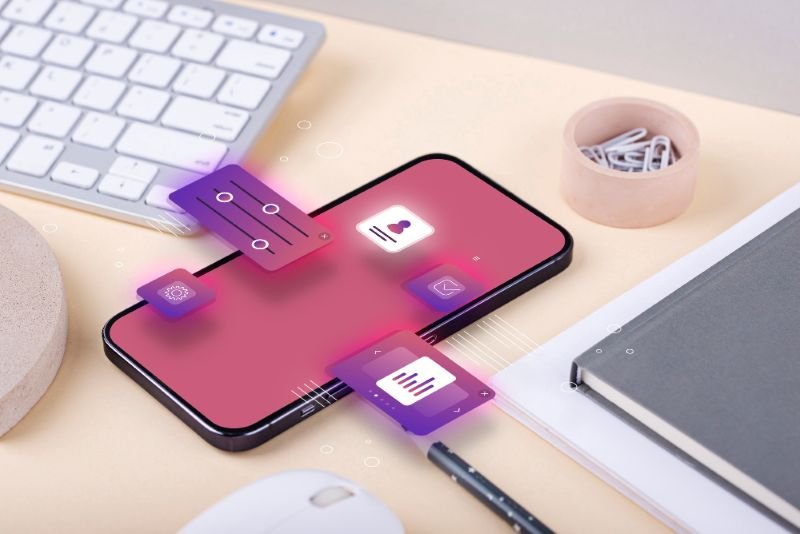
Every great app starts with a simple idea.
Maybe it’s a way to simplify payments for small businesses. Maybe it’s a smarter fitness tracker. Or maybe it’s an internal enterprise tool that eliminates hours of manual work. But here’s the reality: ideas don’t scale on their own. Execution does.
Turning a concept into a secure, scalable, revenue-generating product requires more than just coding. It demands strategy, architecture, design thinking, and long-term planning. That’s where custom mobile app development services come in.
In this article, we’ll break down what you should actually expect from a professional development partner—from discovery to deployment and beyond—and how to ensure your app is built for scale, performance, and profitability.
Understanding the Foundation: It Starts with Strategy
Before a single line of code is written, clarity is everything.
A strong development process begins with discovery workshops, stakeholder interviews, competitor analysis, and technical feasibility studies. The goal? Define:
- Your target users
- Core value proposition
- Revenue model
- Technical requirements
- Long-term scalability goals
For example, if you’re building a telemedicine platform, your priorities will include compliance, secure data storage, and real-time video integration. If it’s a consumer marketplace app, your focus may lean toward frictionless onboarding and scalable backend systems.
Professional custom mobile app development services don’t just build apps. They help you validate assumptions and reduce risk before heavy investment.
UX/UI Design: Where Vision Meets User Behavior
A common mistake founders make is underestimating design.
Good design is not just about aesthetics—it’s about behavior. It determines how users navigate, engage, and convert.
What to Expect in This Phase:
- Wireframing and user journey mapping
- Interactive prototypes
- Usability testing
- Accessibility compliance
- Design system creation
Consider apps like Uber or Airbnb. Their success isn’t accidental. Every tap, swipe, and interaction is intentional.
A strong design phase ensures:
- Faster onboarding
- Lower churn rates
- Higher engagement
And ultimately, better monetization potential.
Architecture & Technology Stack: Building for Scale
Scalability isn’t something you “add later.” It’s engineered from day one.
Your development team should define:
- Native vs cross-platform approach (Swift/Kotlin vs Flutter/React Native)
- Backend infrastructure (Node.js, Python, Java)
- Database selection (SQL vs NoSQL)
- Cloud hosting (AWS, Azure, GCP)
- API integrations
If your goal is rapid growth, microservices architecture and cloud-native deployment become essential.
For instance, apps like Netflix scaled globally because their infrastructure was designed to handle massive traffic loads from the beginning.
Without proper architecture, scaling later becomes expensive and risky.
Development Phase: Turning Blueprint into Product
Once strategy and architecture are clear, development begins.
This stage typically includes:
- Front-end development
- Backend logic implementation
- API integrations
- Admin panel development
- QA testing and automation
The best teams follow agile methodologies, delivering features in sprints. This approach allows flexibility, faster feedback loops, and incremental improvement.
Continuous Testing Matters
Quality assurance isn’t a final step—it runs parallel to development. Automated testing, security audits, and performance optimization are critical, especially for fintech, healthcare, and enterprise apps.
A well-structured development process reduces post-launch bugs, downtime, and costly patches.
Monetization Planning: Revenue is Not an Afterthought
One of the biggest misconceptions in product development is that monetization comes later.
In reality, revenue planning should begin early.
Whether you’re building a B2C app or an enterprise SaaS solution, your monetization model influences UX, feature prioritization, and infrastructure.
Common app monetization strategies include:
- Subscription models
- In-app purchases
- Freemium upgrades
- Advertising integrations
- Commission-based marketplaces
Take Spotify as an example. Its freemium-to-premium funnel is deeply integrated into user experience—not forced.
When evaluating app monetization strategies, your development partner should help you align business goals with user psychology. Monetization must feel natural, not disruptive.
Security & Compliance: Non-Negotiable in Modern Apps
Users trust apps with their data. Breaking that trust can destroy a brand overnight.
Expect your development partner to address:
- Data encryption
- Role-based access control
- GDPR / HIPAA compliance (if applicable)
- Secure authentication (OAuth, MFA)
- Regular vulnerability testing
Security architecture is especially critical for fintech, healthcare, and enterprise solutions.
Scalable apps are secure apps.
Deployment & Go-to-Market Support
Launching an app is more than uploading it to the App Store or Google Play.
The deployment phase should include:
- Performance monitoring setup
- CI/CD pipeline configuration
- Cloud optimization
- Store optimization (ASO basics)
- Analytics integration
Tracking tools help measure:
- User acquisition
- Retention rates
- Revenue performance
- Feature adoption
Without analytics, scaling becomes guesswork.
Post-Launch: Iteration Drives Growth
The first version of your app is rarely the final version.
Real growth happens after launch.
User feedback, behavioral data, and market trends guide continuous improvement. A reliable development partner provides:
- Ongoing maintenance
- Feature updates
- Performance optimization
- Server scaling
- Security patches
Apps like Instagram didn’t become global leaders overnight. They evolved continuously—adding Stories, Reels, monetization tools, and AI-driven recommendations over time.
Iteration separates scalable products from short-lived experiments.
Cost Expectations: Investment vs Expense
Custom development isn’t cheap—but it’s strategic.
Costs depend on:
- App complexity
- Feature set
- Integrations
- Compliance needs
- Team location
- Timeline
Simple MVPs may range from $30,000–$50,000. Enterprise-level platforms can exceed six figures.
However, when done right, the ROI justifies the investment. Especially when your product is built with scalability and strong app monetization strategies in mind from the start.
Cheap development often leads to expensive rebuilds.
What Makes a Development Partner Truly Valuable?
Not all agencies operate the same way.
Look for teams that offer:
- Product thinking, not just coding
- Transparent sprint reporting
- Clear communication
- Strong portfolio of scalable apps
- Long-term support model
The best custom mobile app development services focus on outcomes—user growth, revenue generation, and operational efficiency.
They become strategic partners, not just vendors.
Final Thoughts: From Idea to Impact
Building an app is exciting. Scaling it is challenging. Sustaining it is strategic.
From discovery to deployment, and from launch to optimization, every phase matters. A well-executed development process ensures your product is:
- Technically sound
- User-focused
- Secure
- Revenue-ready
- Built for scale
If you’re serious about turning your idea into a market-ready, high-performance product, partner with experts who understand both technology and business growth.
Because in today’s competitive landscape, success isn’t about launching fast—it’s about scaling smart.




















Leave a Reply