LLM Software Engineering Services for Generative AI
LLM software engineering services
The generative AI era has fundamentally reshaped how enterprises approach software engineering. At the heart of this transformation lies a deceptively simple concept: programs that understand, reason, and generate human-quality language. Yet delivering business value from these capabilities requires far more than downloading a pretrained model. It demands end-to-end large language model development expertise spanning data curation, architecture selection, training infrastructure, evaluation frameworks, and production deployment. This article explores what modern LLM software engineering services look like and why organisations that invest in them outpace competitors locked in the era of rule-based automation.
What Are LLM Software Engineering Services?
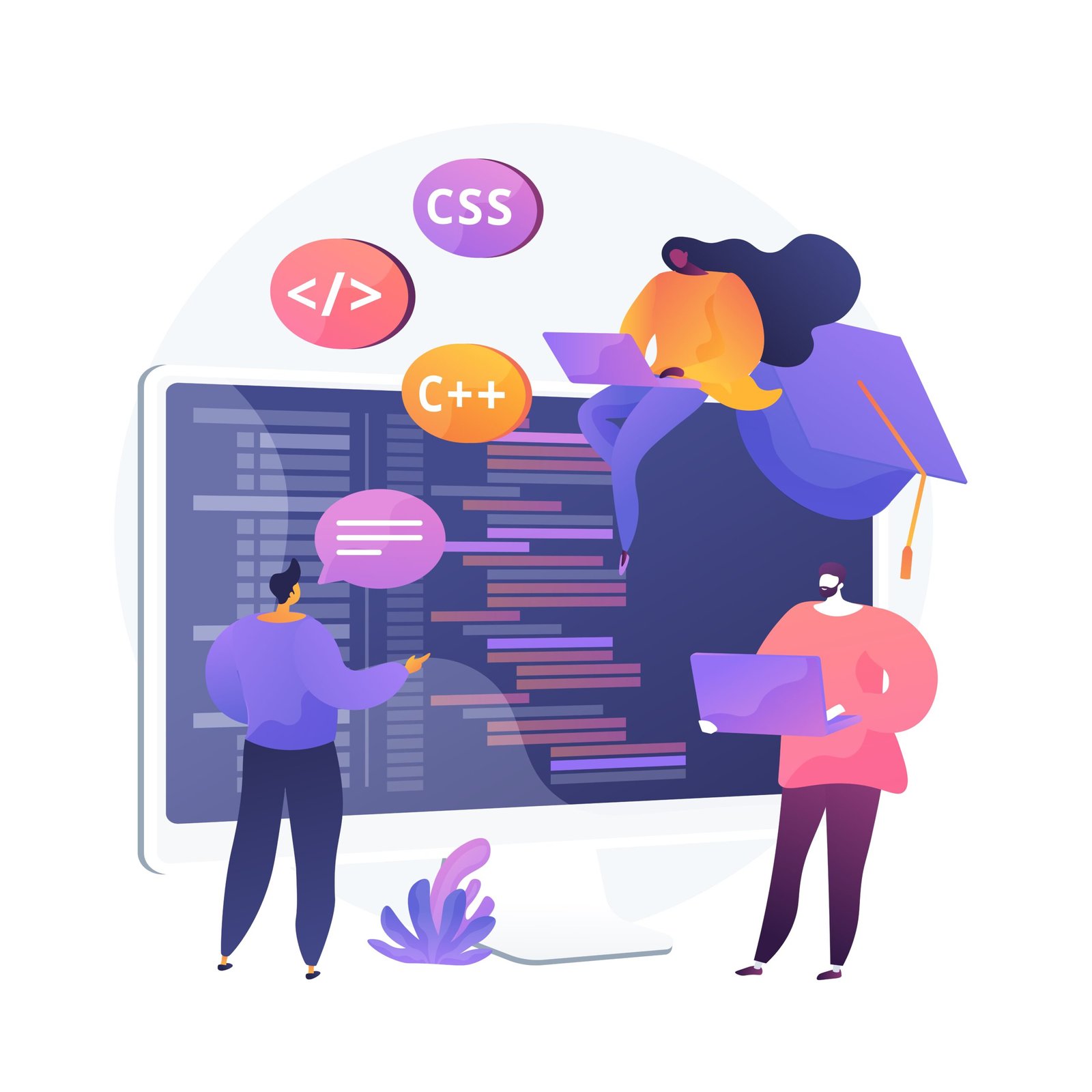
LLM software engineering services encompass the full lifecycle of building, adapting, and operating language models within commercial systems. Unlike generic AI consulting, these services focus specifically on the engineering disciplines required to move a model from research prototype to reliable product. The scope typically includes requirements analysis, dataset construction, model training or fine-tuning, retrieval-augmented generation (RAG) pipelines, prompt engineering, safety alignment, API development, and ongoing monitoring.
Providers of these services bring expertise in the toolchains that underpin the field — frameworks such as PyTorch, JAX, and TensorFlow; orchestration tools like LangChain and LlamaIndex; vector databases including Pinecone, Weaviate, and Chroma; and cloud GPU infrastructure from AWS, Azure, and GCP. The breadth of skill required is precisely why many companies turn to specialised partners rather than attempting to hire every competency in-house.
Core Engineering Disciplines
Successful large language model development rests on several interlocking disciplines. Data engineering is foundational: models learn from data, and the quality of that data determines the ceiling of model performance. Engineering teams must build pipelines that collect, clean, deduplicate, and version training corpora at scale. For domain-specific applications, proprietary datasets often provide the competitive moat that generic open-source models cannot replicate.
Model architecture and training are equally critical. Practitioners must decide between full pretraining, continued pretraining on domain data, supervised fine-tuning, and reinforcement learning from human feedback (RLHF). Each choice carries implications for cost, latency, and capability. An experienced engineering team navigates these trade-offs systematically, leveraging techniques such as LoRA, QLoRA, and parameter-efficient fine-tuning to achieve strong results on constrained hardware budgets.
Retrieval-Augmented Generation and Grounding
One of the most impactful architectural patterns in modern generative AI is retrieval-augmented generation. Rather than relying solely on knowledge embedded in model weights, RAG systems retrieve relevant documents at inference time and condition generation on that retrieved context. This approach dramatically reduces hallucinations, keeps knowledge current without costly retraining, and enables precise citation of sources — qualities that are non-negotiable in regulated industries such as finance, healthcare, and legal services.
Building a production-grade RAG system involves embedding pipelines, chunking strategies, metadata filtering, re-ranking models, and careful prompt design. LLM software engineering teams design these systems end-to-end, ensuring that retrieval latency does not degrade user experience and that relevance metrics are continuously monitored in production.
Safety, Alignment, and Responsible Deployment
Generative AI systems introduce novel risks that traditional software does not. Outputs can be biased, factually incorrect, or, in adversarial scenarios, actively harmful. Responsible large language model development embeds safety considerations at every stage. Red-teaming exercises probe models for jailbreaks and unintended behaviours. Constitutional AI and preference-based alignment techniques steer models toward helpful, harmless responses. Content moderation layers intercept policy violations before they reach end users.
Compliance requirements add further dimensions. GDPR and CCPA mandate data minimisation and user privacy protections. Emerging AI regulations in the EU and elsewhere impose transparency and explainability obligations. Engineering teams that understand both the technical and regulatory landscape help clients deploy AI confidently, with audit trails, access controls, and governance frameworks that satisfy regulators and enterprise procurement teams alike.
Why Partner with a Specialist Provider?
Building LLM capabilities in-house is possible, but the talent market is fiercely competitive. Senior ML engineers with production LLM experience command six-figure salaries, and the tooling landscape evolves so quickly that internal teams risk falling behind without dedicated research investment. Partnering with a specialist provider accelerates time to value, reduces risk, and transfers knowledge to internal teams through collaborative engagements.
Technoyuga stands out as a provider that combines deep technical proficiency in large language model development with a pragmatic focus on business outcomes. By aligning engineering effort with measurable KPIs — reduced support ticket volume, improved content throughput, higher customer satisfaction scores — Technoyuga ensures that AI investment translates into competitive advantage rather than an expensive science project.
The Road Ahead
The trajectory of generative AI points toward ever-larger multimodal models, longer context windows, autonomous agents that orchestrate complex workflows, and tighter integration with enterprise data systems. Organizations that establish strong large language model development foundations today will be best positioned to adopt these capabilities as they mature. LLM software engineering services are not a one-time project; they are an ongoing capability that compounds in value as the technology advances and as organisational knowledge accumulates. The time to build that foundation is now.
About The Author