

When the grid goes dark, the immediate priority is restoring power to your facility. However, the biggest danger during a blackout is the accidental introduction of power back into the utility lines. This phenomenon, known as backfeeding, occurs when a generator is connected to a building’s wiring without a proper disconnect or isolation system.
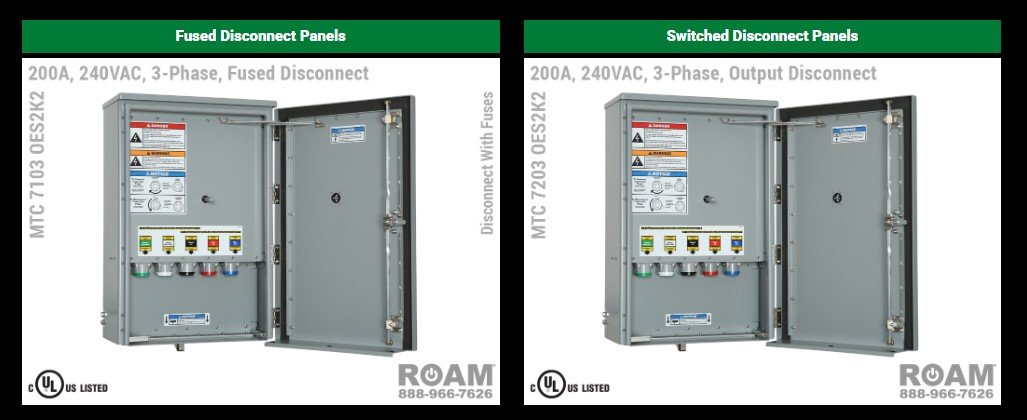
For industrial sites, healthcare facilities, and commercial buildings, preventing this requires a robust interface using Output Disconnect Panels Cam-Locks systems. These panels provide a physical and mechanical safeguard, ensuring that your backup power stays where it belongs: inside your building.
Understanding the Lethal Mechanics of Backfeeding
Backfeeding is the process of electricity flowing in the opposite direction of its intended path. Under normal conditions, power flows from the utility transformer into your building. During an outage, if you engage a generator without disconnecting from the utility, your generator sends power back out through your meter and into the neighborhood lines.
The Transformer Effect: How 120V Becomes 7,200V
The danger is amplified by the transformers that serve your building. Transformers are bi-directional. A transformer that normally steps down 7,200 volts to 120/240 volts for your building will work in reverse if power is fed from the “load” side.
If your generator feeds 240 volts back into the transformer, that device will “step up” the voltage back to 7,200 volts. This energizes the “dead” utility lines that line workers are currently trying to repair. It is a silent killer because workers have no reason to expect a line to be live during a localized blackout.
The Role of Output Disconnect Panels Cam-Locks in Safety
A dedicated Output Disconnect Panel is the industry-standard solution for preventing this hazard. These panels are specifically engineered to provide a safe, accessible point for connecting a portable generator or a load bank.
The inclusion of Cam-Locks (single-pole connectors) allows for high-amperage connections that are secure and color-coded. Because these panels are often integrated with a manual or automatic transfer switch, they provide a “break-before-make” connection. This means the building must be physically disconnected from the utility grid before the generator can feed the panel.
Mechanical Interlocks vs. Manual Disconnection
For many facilities, a manual disconnect is the preferred method. In these setups, the panel features a mechanical interlock. This is a sliding metal plate or a heavy-duty handle that physically blocks the generator breaker from being turned on until the main utility breaker is switched off. This eliminates human error, making it impossible to have both power sources active simultaneously.
Why Cam-Lock Connectors are Essential for Emergency Power
When an outage occurs, time is of the essence. Cam-Lock connectors facilitate a “quick-connect” environment that is far safer than traditional hard-wiring.
- Speed: Cables can be connected and locked in seconds without tools.
- Security: The “turn-and-lock” mechanism prevents cables from being pulled out under load, which would cause a massive arc flash.
- Standardization: Using standardized Cam-Locks ensures that any rental generator service can immediately interface with your building using standard 4/0 cables.
Step-by-Step: Safely Isolating Your Building from the Grid
If you are using a manual system with a Cam-Lock interface panel, follow this professional sequence:
- Shut Down High Loads: Turn off heavy equipment, HVAC units, and motors to prevent a massive surge when the generator starts.
- Verify the Disconnect: Move the transfer switch or interlock to the “OFF” or “Neutral” position. This is the moment your building is completely isolated from both the utility and any potential generator input.
- Connect the Cables: Following the F.A.S.T. rule (First in, Always Stay Together), connect the Ground (Green), then Neutral (White), then the Phases (Black, Red, Blue) to the Cam-Lock receptacles.
- Engage the Generator: Start the generator and allow it to reach its operating voltage and frequency.
- Switch to Backup Power: Move the interlock or transfer switch to the “Generator” position.
Essential Compliance: NEC Article 700 and 702
In the United States, the National Electrical Code (NEC) provides the legal framework for these installations.
- Article 700: Governs emergency systems required for life safety.
- Article 702: Covers optional standby systems for commercial use.
Both articles require a permanent and safe means of disconnection. Using a UL-listed Output Disconnect Panel ensures that your facility passes inspection and protects you from liability in the event of an accident involving utility personnel.
FAQ
What is the difference between a tap box and a disconnect panel? A tap box is generally just a connection point. A disconnect panel includes a means of overcurrent protection or a physical switch to isolate the load from the source. For safety, a disconnect panel is preferred for permanent installations.
Can I install a Cam-Lock panel myself? No. High-amperage electrical work requires a licensed electrician. Incorrectly bonding the neutral or ground during installation can create a shock hazard even when the generator is off.
Does a transfer switch prevent backfeeding? Yes. A transfer switch is specifically designed to prevent both power sources from being connected at once. An Output Disconnect Panel often works in tandem with a transfer switch to provide the physical connection point.








Leave a Reply