

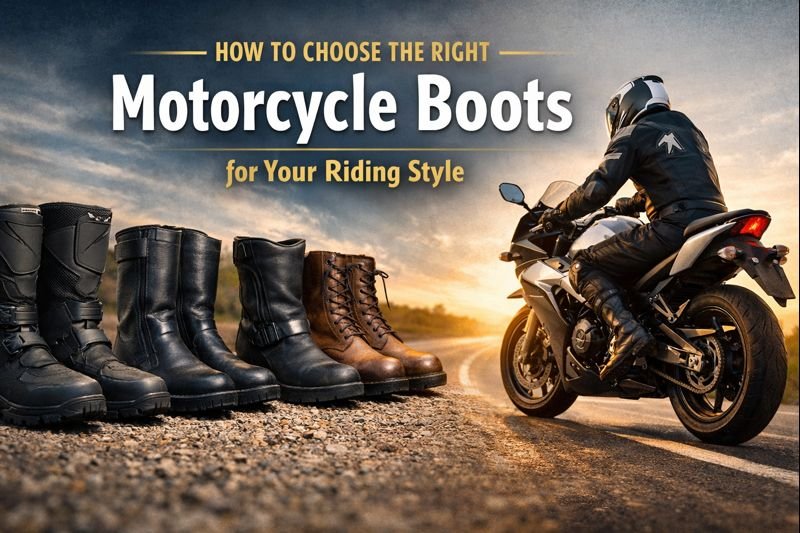
Motorcycle boots are a critical component of rider safety systems, providing protection, stability, and comfort while controlling a motorcycle. Unlike casual footwear, motorcycle boots are engineered to prevent injuries from impact, abrasion, twisting, and environmental exposure. Selecting the appropriate boots for a rider’s style—whether touring, sport riding, commuting, or off-road adventure—directly influences overall safety and performance.
This article offers a comprehensive, fact-driven analysis of motorcycle boots, with a focus on Men’s Motorcycle Boots and Women’s Motorcycle Boots. It examines materials, structural design, safety standards, and use-case applications, providing an expert guide for selecting boots that optimize protection, ergonomics, and long-term durability.
Understanding Motorcycle Boot Functionality
Motorcycle boots operate within a layered protection framework, complementing helmets, jackets, gloves, and body armor. Their primary functions include:
- Impact Protection: Reinforced areas around ankles, toes, and heels absorb collision forces.
- Abrasion Resistance: High-quality leather or textile resists tearing during slides or falls.
- Twist and Flex Control: Stiff soles and shank plates prevent ankle sprains and hyperextension.
- Environmental Shielding: Water resistance, insulation, and ventilation support riding in diverse climates.
Boots also contribute to control and ergonomics, enhancing pedal manipulation, weight distribution, and rider confidence.
Men’s Motorcycle Boots: Durability and High-Performance Design
Men’s Motorcycle Boots are designed with robust materials and construction to meet the demands of high-speed, long-distance, and heavy-duty riding.
Material Characteristics
- Full-Grain Leather: Provides maximum abrasion resistance and longevity.
- Synthetic Reinforcements: Thermoplastics or TPU protect critical impact zones.
- High-Density Soles: Shank plates and slip-resistant rubber provide stability on footpegs and ground surfaces.
Structural Design Features
- Ankle and shin protection with reinforced padding
- Gear shift guards on the top or toe areas to prevent abrasion
- Zipper or buckle closure systems for secure fit and quick adjustment
Optimal Use Cases
- Cruiser and touring riding with extended leg exposure
- High-speed or long-distance touring requiring stability and foot fatigue reduction
- Riders who navigate both highway and urban environments
Women’s Motorcycle Boots: Ergonomic and Adaptive Solutions
Women’s Motorcycle Boots incorporate design adaptations to accommodate female anatomical structure while providing the same protection standards as men’s boots.
Design Considerations
- Narrower heel and midfoot profiles for improved fit
- Adjustable closures and stretch panels for enhanced flexibility
- Lightweight construction to reduce fatigue during long rides
Material and Construction Features
- Abrasion-resistant leather or textile shells
- Reinforced TPU or plastic armor at toe, heel, and ankle areas
- Breathable liners for moisture management and temperature regulation
Practical Applications
- Urban commuting requiring agility and frequent foot deployment
- Touring across varied climates with comfort and environmental protection
- Casual cruising with focus on style, ergonomics, and moderate protection
Safety Standards and Industry Benchmarks
Motorcycle boots are tested and evaluated for impact, abrasion, and torsional protection. Key standards include:
- CE EN 13634: Specifies protection requirements for motorcycle boots, including abrasion resistance, impact absorption, and sole rigidity.
- ISO 20345/20347: Provides general occupational safety footwear standards relevant to off-road or dual-sport boots.
Compliance ensures boots perform reliably under controlled testing and real-world impact scenarios.
Expert Insights and Best Practices
Industry professionals recommend the following when selecting motorcycle boots:
- Match Boots to Riding Style: Touring, sport, urban, and off-road activities each require specific boot features.
- Ensure Correct Fit: Boots should fit snugly without restricting circulation, allowing full pedal control.
- Evaluate Protective Features: Prioritize reinforced toe boxes, ankle support, and shank rigidity.
- Consider Environmental Adaptability: Waterproof membranes or ventilation panels should align with climate conditions.
- Maintenance and Lifecycle Awareness: Regularly inspect for wear, tear, or compromised armor; replace as necessary.
These practices are based on long-term professional riding experience, accident analysis, and ergonomic testing.
Common Mistakes and Misconceptions
Misconception 1: Fashion can replace protection
Boot aesthetics should never compromise armor placement, sole rigidity, or ankle support.
Misconception 2: All boots are universally safe
Boot safety varies based on materials, construction, and compliance with CE or ISO standards.
Misconception 3: Longer boots are always better
Excessively tall boots can limit flexibility, interfere with gear, and reduce comfort if poorly fitted.
Misconception 4: Waterproof boots are only for rain
Waterproof boots improve comfort and temperature regulation in variable conditions, not just rain exposure.
Frequently Asked Questions (FAQs)
1. How do motorcycle boots improve rider safety?
They protect feet, ankles, and lower legs from impact, abrasion, twisting, and environmental hazards.
2. Are men’s motorcycle boots suitable for touring and commuting?
Yes. High-quality men’s boots provide stability, comfort, and protection across long and short rides.
3. What makes women’s motorcycle boots different from men’s?
They feature gender-specific ergonomics, narrower profiles, and adjustable closures for enhanced fit and comfort.
4. Should boots be rigid or flexible?
Soles should be stiff enough for torsional protection but allow sufficient flex for gear shifting and foot control.
5. How do I ensure proper boot fit?
Boots should feel snug around the foot and ankle without causing pressure points; toes should have limited movement.
6. Are CE-certified boots necessary?
Yes. CE certification ensures tested impact, abrasion, and torsional protection.
7. How often should motorcycle boots be replaced?
After visible wear, structural compromise, or following a significant impact incident.
8. Can boots be used off-road and on-road interchangeably?
Dual-sport or adventure boots are designed for mixed terrain, but specialized boots offer optimal performance for specific riding types.
9. How does climate affect boot choice?
Waterproofing, insulation, and ventilation should be selected according to the riding environment.
10. Can motorcycle boots be repaired?
Minor issues like worn soles can sometimes be repaired, but structural armor damage requires replacement.
Conclusion
Motorcycle boots are essential for protecting the lower extremities, providing stability, and supporting control across all riding styles. Men’s Motorcycle Boots offer durability, reinforced protection, and stability for long-distance, high-speed, and urban riding. Women’s Motorcycle Boots integrate ergonomic design, adaptive fit, and climate versatility while maintaining high safety standards. Selecting boots that match riding style, anatomical fit, and regulatory compliance is crucial for maximizing rider safety, comfort, and long-term performance.




















Leave a Reply