


Financial security is a cornerstone of smart investing, and individuals seeking a balanced approach that prioritizes safety and reliability often turn to government-backed schemes like the National Savings Certificate (NSC). One primary reason NSC gains popularity among conservative investors is its assured interest rate, which serves as a significant tool for safe investment planning. This article explores how the NSC interest rate can help investors craft a sound financial strategy, examining its structure and applicability.
What is the National Savings Certificate (NSC)?
The National Savings Certificate is a fixed-income investment product offered by the Government of India through post offices across the country. Designed for risk-averse investors, the NSC is especially attractive for those seeking guaranteed returns coupled with relatively low risk. Available in two maturity periods—5 years (NSC VIII Issue) and 10 years (discontinued since July 2016)—the scheme offers competitive interest rates and tax benefits under Section 80C of the Income Tax Act.
As a government-backed product, the NSC is free from market-dependency, making it an integral part of safe investment planning. Investors commit their funds for a predetermined duration, during which their wealth grows steadily at the specified interest rate.
Understanding the NSC Interest Rate
The interest rate for NSC is determined and periodically revised by the Government based on prevailing market conditions. As of the October–December 2023 quarter, the interest rate for NSC stands at 7.1% per annum, compounded annually. Let’s break this down:
1. Compounding Mechanism
Unlike simple interest, NSC calculates interest on a compounded basis, meaning that accrued interest on the principal reinvests itself over the investment tenure. Compounding ensures wealth grows exponentially over time. However, the interest is paid out to the investor only upon maturity.
2. Fixed Interest Rates
Since the interest rate remains fixed for the duration of the investment, NSC provides stability and predictability—an excellent quality for investors wanting reliable returns. This aspect reduces financial planning uncertainty.
3. Impact on Wealth Accumulation
Given government backing, the NSC interest rate stands as one of the safest options for retail investors, and its ability to compound continuously ensures significant wealth-building potential.
How NSC Interest Rate Helps in Safe Investment Planning
1. Certainty of Returns
One of the standout advantages of NSC interest rates is their predictability. Investors know upfront how much wealth they can accumulate by the end of the scheme, independent of fluctuations in the financial market. This certainty makes NSC ideal for safe investment planning. Let’s look at a calculation with the current interest rate of 7.1%:
Example:
Suppose you invest ₹1,00,000 in NSC for 5 years at an interest rate of 7.1%, compounded annually.
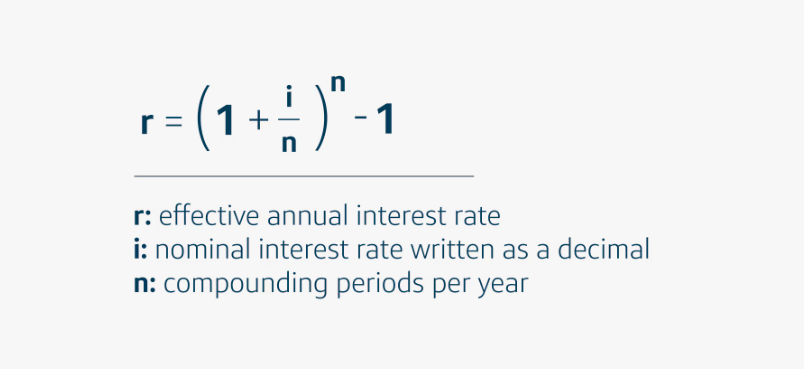
Using the compound interest formula:
A = P(1 + r/n)^(n*t)
Where:
A = Total Amount after maturity
P = Principal amount (₹1,00,000)
r = Annual interest rate (7.1% or 0.071)
n = Number of times interest applied per year (1, compounded annually)
t = Investment tenure (5 years)
Substituting values:
A = ₹1,00,000(1 + 0.071/1)^(1*5)
A = ₹1,00,000(1.071)^5
A ≈ ₹1,40,255
Here, ₹40,255 is the interest earned over 5 years—in a guaranteed and risk-free manner.
2. Tax Efficiency
Not only does the NSC interest rate promote effective wealth-building, but it also supports tax savings. The amount invested in NSC qualifies for deductions under Section 80C of the Income Tax Act, which allows a maximum deduction of ₹1.5 lakh per financial year. This aspect further incentivizes investment planning.
Note: While the interest earned on NSC (except during the final maturity year) is taxable, it is deemed reinvested during the tenure and thus eligible for a Section 80C deduction.
3. Reliable Alternative to Volatile Markets
One of the safest investment tools, NSC is insulated from risks stemming from unpredictable market changes, unlike stocks or mutual funds. Its fixed interest rate ensures that investors can shield their portfolio from the volatility of market-linked products.
As demonstrated in the above calculation, choosing NSC enables individuals to anticipate the exact returns on their money without worrying about external variables. This contrasts products like equity funds, where returns depend on unpredictable market factors.
4. Supports Long-Term Financial Goals
Financial planning often requires foresight over a lengthy time horizon. The fixed tenure of NSC aligns well with long-term financial objectives such as creating a retirement corpus, funding higher education, or accumulating capital for significant purchases. Investors can pick an amount suitable to their goals and use the NSC interest rate as a growth projection tool.
5. Low Entry Barrier and Accessibility
One need not be affluent to begin investment planning through NSC. The minimum deposit required per certificate is only ₹1,000, and any amount above ₹1,000 in multiples thereof can be invested. Since NSC is easily accessible via post offices, it’s an inclusive financial tool promoting safe planning among diverse investor demographics.
Limitations of NSC Interest Rate in Investment Planning
While NSC undoubtedly aids safe investment planning, it is also vital to consider its limitations:
Liquidity Constraints
NSC cannot be liquidated before its maturity period, making it unsuitable for emergencies or situations requiring quick fund access. Investments are locked for 5 years.
Tax Handling
Although the principal amount qualifies for Section 80C benefits, interest earned on NSC is taxable during each financial year (except the maturity year). Policies regarding reinvestment of interest should be understood thoroughly.
Fixed Interest Rate
While fixed interest rates assure safe growth, they cannot adapt to economic changes or periods of higher returns in other investment vehicles. Investors who wish to maximize returns might see NSC as comparatively restrictive.
Summary
The NSC interest rate plays an instrumental role in fostering secure investment planning, making the scheme an appealing option for risk-averse investors. With a fixed interest rate of 7.1% per annum, compounded annually, National Savings Certificate assures predictable and guaranteed returns, letting investors plan their finances with certainty. Whether you invest ₹1,000 or ₹10 lakh, wealth grows uniformly and reliably. The scheme’s immunity to market volatility, along with the benefit of tax deductions under Section 80C, further strengthens its position in safe investment planning.
For instance, investing ₹1,00,000 today in NSC for 5 years yields ₹40,255 in interest earned—a secure and predictable growth model immune to market risks. Additionally, NSC supports long-term goals such as retirement planning or educational financing through its set tenure structure and reliable interest rates.
However, individuals should weigh NSC’s limitations—such as lack of liquidity and taxable returns on interest—before committing their funds. A sound understanding of these aspects ensures optimal utilization of this savings instrument.
Disclaimer:
This article is intended solely for informational purposes. Investors are encouraged to conduct thorough research and assess both the pros and cons of NSC and other investment instruments before committing funds to the Indian financial market. Consultation with a licensed financial advisor is advisable for personalized recommendations tailored to individual goals and risk appetite.


















Leave a Reply